
Treat a change as information, not “just age”
If an older cat stops reaching a favorite perch, eats differently or changes toilet habits, record the change and discuss it with your veterinary team. Cornell emphasizes that aging is not itself a diagnosis and that access to food, water and litter matters [1]. A quieter routine can hide difficulties that deserve attention.
Start with the individual cat's current abilities and care instructions. There is no universal home checklist that establishes a senior cat is healthy.
Walk the routes they use today
Observe the route from sleeping space to food, water and litter. Does it require stairs, a high jump, a slippery surface or passing another pet? Check day and night access, including doors that household members close.
Offer an accessible alternative near the cat's current area while preserving familiar options. Cornell discusses low-sided trays and litter access on different floors [1]. Avoid creating a new obstacle by putting a helpful resource in an awkward corner.
A home adjustment example
Suppose a cat spends more time downstairs but the only tray is upstairs. Add an accessible downstairs option in a quiet location and check how they use it. Keep the old tray initially if safe. Record whether access changes, but do not conclude that using the new tray proves arthritis or rules out urinary disease.
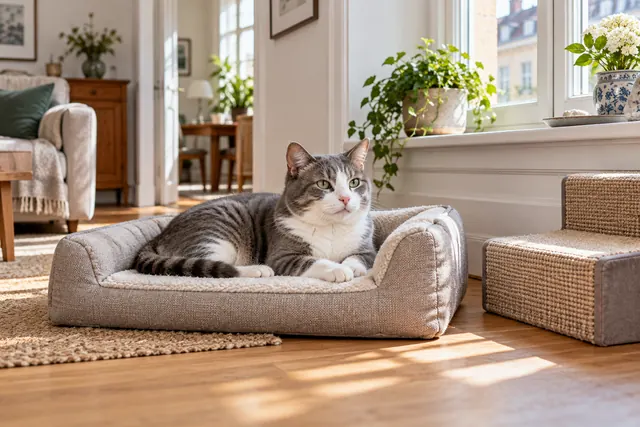
For resting, check a stable route to a comfortable bed. If a step or ramp is being considered, assess safe installation and ask your veterinary team about individual mobility limits. Heated products require particular care; a cat must be able to move away, and excessive heat can injure [1].
Keep a small, useful record
- Appetite: what food and amount you saw consumed, not simply whether a bowl was empty.
- Water: an observed change, while recognizing that shared bowls hide individual intake.
- Litter: the actual behavior seen and any difficulty reaching a tray.
- Movement: a specific task such as jumping to the chair, rather than “slow today.”
- Weight: dated measurements using the same units and circumstances where practical.
Use weight recording for measurement notes. Leave a field unobserved if you did not check it. A missed observation is not a normal result.
Coordinate care without improvising treatment
Write down prescribed instructions, the responsible caregiver and completed tasks. Keep medication questions with the veterinary team; do not add painkillers or adjust doses because an online description sounds familiar.
If brushing or play becomes uncomfortable, reduce the demand and seek advice. A cat that previously managed their coat may need individual support. Choose calm interaction the cat can leave rather than forcing a daily exercise target.
Prepare for the appointment
Export recent observations from your account, bring current food and medication details, and choose the changes you want to discuss. Ask whether the home arrangement and checkup schedule remain appropriate and which signs require urgent contact.
If a cat is repeatedly straining with little or no urine, Cornell identifies suspected urinary obstruction as an emergency [2]. Stop the routine review and seek immediate veterinary care. New appetite loss also warrants prompt contact [3]; a record should support care, not postpone it.
Review after one adjustment
Keep the rest of the routine as consistent as possible and observe the new option. Compare actual access and comfort with the earlier notes. If a difficulty remains, bring that evidence back to the team instead of adding more products or deciding the cat must accept aging.