
What makes a Maine Coon care plan different
The CFA describes a large, longhaired cat with a sturdy build and a generally gentle but active disposition [1]. Those features suggest practical questions about usable equipment and coat maintenance. They do not establish an individual cat's personality, adult weight or medical needs.
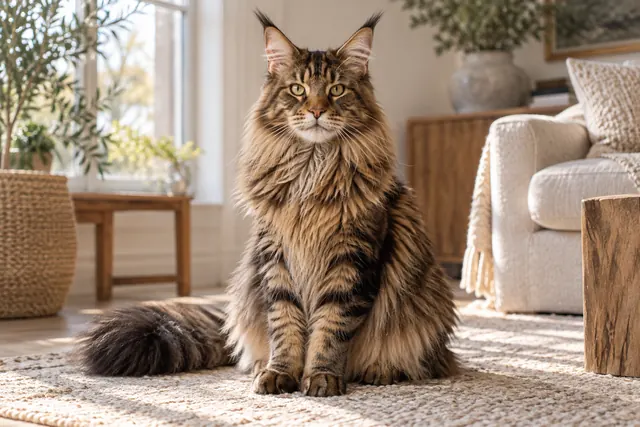
If you are considering a Maine Coon, start with the cat's actual size, history and handling preferences. A fluffy tabby photograph is not pedigree evidence, and the illustration on this page should not be used for breed identification.
Check dimensions before buying equipment
Measure a carrier's usable interior and opening, then check its stated capacity. Consider whether the cat can comfortably enter and turn; do not rely on a “large cat” marketing label. Test litter trays in the same practical way, watching whether the cat can position itself without crowding the sides.
For a cat tree or wall perch, check both load limits and secure installation. A narrow platform may carry the weight but still be awkward to rest on. Plan a route down as well as up, and revisit it as the cat grows or mobility changes.
Make coat checks comfortable and specific
Ask the current caregiver or a groomer experienced with longhaired cats to demonstrate the routine already tolerated. Begin with brief contact in a comfortable place, checking small sections rather than trying to finish the whole coat despite resistance.
Keep a note of areas that tangle or are difficult to reach, such as behind the front legs and around the hindquarters. Check the skin rather than judging only the top of the coat. If you find a tight mat, pain or altered skin, stop and ask for professional help; do not cut close to skin with household scissors.
A practical weekly review might ask: Which areas were comfortably checked? Is there a new tangle? Has the cat changed how it handles touch? The appropriate frequency depends on the actual coat, season and self-grooming ability, not a promise that longhair is maintenance-free.
Plan activity around the home you have
An active cat needs opportunities that fit its body and preferences. Offer stable scratching, interactive play and rest with room to leave. If the home is small, map routes and make equipment usable rather than filling every corner with furniture.
See indoor home planning and enrichment ideas. Gentle breed descriptions should not become a reason to let children carry a large cat unwillingly or to rush meetings with resident pets.
Ask for records before commitment
Request the individual cat's veterinary history, relevant parental screening documents when buying a kitten, and the exact food and handling routine. Ask your veterinary team which screening information is appropriate and what any result does and does not establish. A statement that a line is “healthy” is not the same as a named test, dated result and identified animal.
Use actual measurements and body-condition advice when discussing food. Large size does not justify copying an oversized portion from an online breed chart.
A first-week household check
Confirm the carrier and tray remain usable, offer a familiar grooming interaction, and observe which resting and play options the cat chooses. Keep diet and location predictable while settling. Follow gradual cat introductions if other cats live there.
Questions worth resolving
Can a Maine Coon live in an apartment? Assess the available routes, equipment dimensions and daily interaction, rather than room count alone. Does the breed guarantee a lap cat? No; ask about this cat's response to contact. What if grooming becomes difficult? Bring the specific problem to a groomer or veterinary team instead of restraining the cat to complete a checklist.
Prepare a large-cat equipment checklist
Before ordering equipment, write down the current cat's body length and the usable dimensions of the tray, carrier and resting platform. Ask the supplier about actual usable space and installation limits. Leave space for the cat to enter, turn and rest; a product title does not answer these questions.
Budget for accepted coat-care tools and a route to professional grooming help if tangles become difficult. Ask the current caregiver to show one successful grooming session. If nobody in the household can repeat it comfortably, resolve that support gap before collection. This checklist is more useful than purchasing the largest-looking cat tree first.