
If your cat keeps shaking its head, scratches at its ears, dislikes ear touch, or has discharge, odor, swelling or a head tilt, contact your veterinarian before repeatedly cleaning. Loss of balance, bleeding or disorientation should be reported promptly. These signs need assessment; they do not identify an ear mite or infection by themselves. [1]
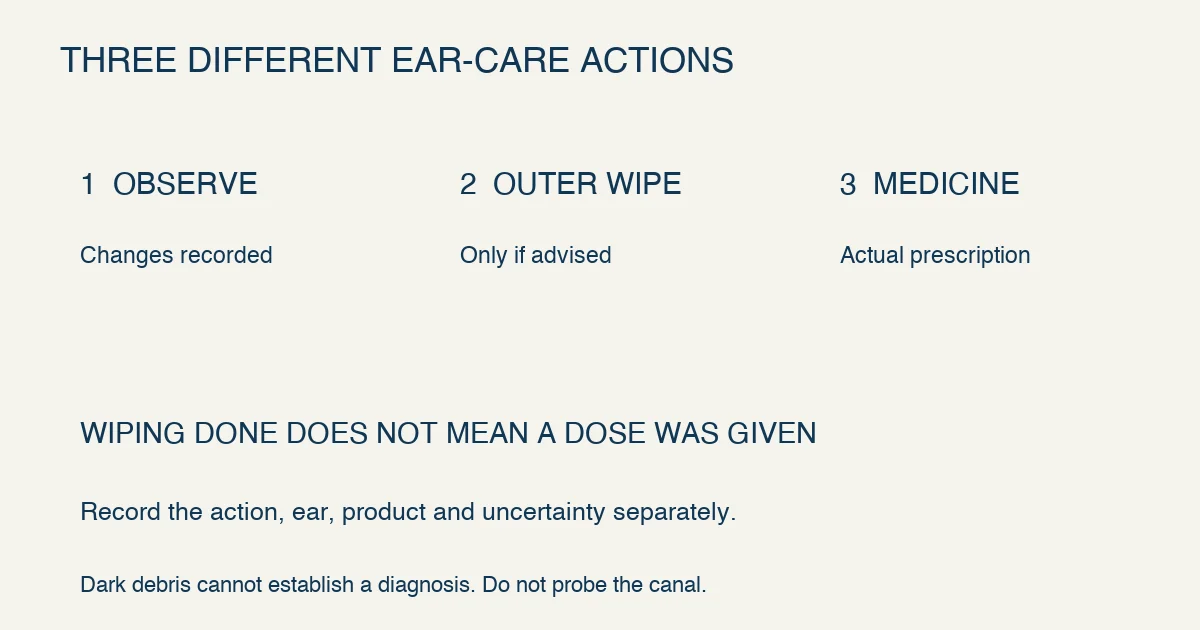
A comfortable ear check and gentle wiping of visible outer debris are different from cleaning the ear canal or delivering medicine. Start by deciding which of those tasks has actually been recommended for this cat.
Look without probing
Choose a quiet setting and look only if the cat is comfortable. Note differences between ears: redness, swelling, odor, visible material and whether one side is sensitive. ASPCA describes checking the visible ear and recommends veterinary examination for abnormal discharge, redness, swelling, wax buildup or odor. A clean-looking opening cannot prove that the deeper ear is healthy. [1]
Do not insert a cotton swab, finger, camera attachment or household instrument into the canal. Do not scrape out dark debris for a home diagnosis. ASPCA warns that probing the canal can injure it or introduce infection. If the cat resists, stop rather than holding more tightly; painful ears need a clinical plan. [1]
Record when head shaking began and whether it was happening before a product was applied. A short video of naturally occurring behavior may help the team, but do not trigger it by repeatedly touching the ear. Write which ear seems affected and whether hearing, walking or balance has changed.
Dark debris is a reason to investigate
Ear mites can produce dark material, inflammation, scratching and head shaking. Cornell explains that diagnosis involves examination with an otoscope or microscopic examination of collected material. That is different from matching wax to a photograph online. [2]
Tell the team about other animals with ear signs, recent additions and close contact. Ear mites can spread between cats, but the household plan depends on the diagnosis and animals involved. Ask whether other pets need examination or treatment. Do not share one cat's prescription or a dog ear product among them. [2]
Cleaning may remove visible material without treating the reason it accumulated. If the debris returns, report the recurrence and what was used. Do not interpret temporary improvement as proof that an oil or cleaner cured mites. Cornell's article includes an older baby-oil remedy within a discussion of treatment; this page does not turn that into an unexamined home protocol. Veterinary instruction matters for subsequent home care. [2]
Limit routine wiping to the visible outer area
If your team recommends outer-ear cleaning, ask which cleaner is appropriate. ASPCA describes applying a little recommended cleaner to a cotton ball or gauze, then gently lifting visible wax or debris from the underside of the ear flap. It explicitly advises against trying to clean the canal. [1]
Prepare the material first, use a gentle movement and stop if the cat is uncomfortable. Do not keep wiping until every trace of natural wax is gone. Avoid pouring water, peroxide, oils or human drops into an ear because a search result calls them gentle. A product's purpose and this ear's condition both matter.
No weekly cleaning quota is supplied here. Looking for a change is not the same as needing to clean each time. Ask how often this cat needs the recommended care and what amount of material or new sign should lead to a call rather than another cleaning.
If prescribed ear treatment is difficult
Request a demonstration with the actual product and cat. Confirm whether the instruction is to clean, apply medicine, or do both, and in what order. Ask about the appropriate amount, interval, treatment length, storage and what to do if a dose is uncertain. Do not borrow a canal-filling or massage duration from a generic article for a different medicine.
Label instructions for the cat's left and right ear. Record administrations, resistance and changes. In a hypothetical handover, one person cleans the ear while another thinks the medicine was already given. Two separate entries—“cleaner used” and “medicine administered”—prevent that activity from being mistaken for a completed dose.
Tell the team if the cat becomes more painful, shakes persistently after treatment, develops a head tilt or walks differently. Do not keep repeating treatment while assuming those changes are simply an expected reaction. ASPCA lists tilt, shaking and balance problems among signs needing veterinary checking. [1]
If handling is failing, pause and call for help. A treatment plan that cannot be safely carried out needs adjustment, not a silent missed course or repeated forced sessions. Bring the bottle, instructions and a factual administration record to the review.
Judge the result beyond a cleaner ear
The review should consider comfort, scratching, head shaking, odor, discharge and any balance or hearing changes. Ask whether the team wants a recheck even if the surface looks better. Cornell notes that untreated ear disease can affect deeper structures, hearing and balance; outer appearance alone cannot confirm recovery. [2]
For recurrent problems, bring dates and previous diagnoses rather than describing every recurrence as “mites again.” Include all products already used, even over-the-counter ones. Prepare a vet-visit record for that discussion. If hearing loss is assessed, deaf-cat home care addresses everyday adaptations; it does not establish why new ear signs occurred.