
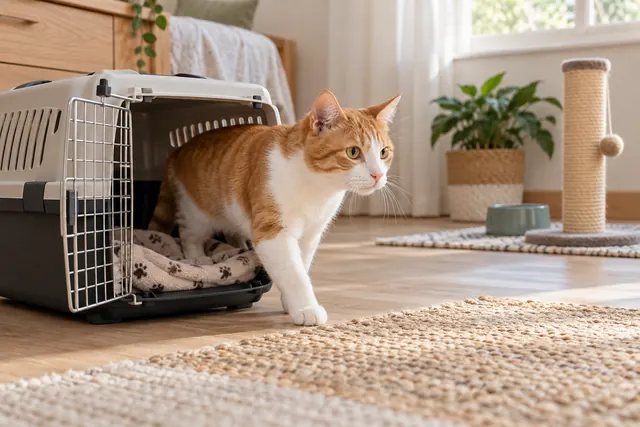
Ask about the cat's existing routine
Before arrival, collect the exact food, usual litter, known hiding preferences, medication instructions and veterinary records. If information is unavailable, record it as unknown rather than filling in a breed-based assumption. Ask how the cat responds to handling, other animals and time alone.
Cats Protection describes a quiet start and a gradual adjustment to a new home [1]. Your goal in the first days is dependable access to essentials and space to choose contact, not immediate friendliness.
Set up one dependable base
Choose a secure quiet room with food, water, litter, rest, a hiding option and a scratching surface. Separate the toilet from feeding areas. Check windows, doors, loose cords and gaps behind furniture before the carrier arrives.
The room needs to be usable while you are asleep or away. Tell everyone which door should remain closed. Keep the resident pets' resources available elsewhere, so a newcomer does not unexpectedly remove their access.
The first night
Bring the carrier directly to the room and let the cat leave it voluntarily. Keep the carrier accessible if it offers a familiar refuge. Offer the known food and water, reduce noise and leave the cat a way to withdraw.
Some cats explore quickly; others hide. Check essentials and observe discreetly rather than repeatedly pulling the cat out to reassure yourself. A cat that is not eating, seems ill or has concerning elimination changes needs veterinary advice; do not assume every symptom is normal relocation stress [2].
A first-week observation plan
- Record the food offered and what you saw eaten. Identify who checked it.
- Note actual tray use or leave it unobserved; do not infer use merely because the tray is present.
- Watch which resting and hiding options the cat chooses.
- Let the cat approach during brief quiet interactions; stop when they move away.
- Open another prepared area only when exploration is manageable, keeping the base available.
This is a sequence to adapt, not a seven-day guarantee. A confident cat and a fearful cat may need different amounts of time.
If the cat hides or avoids you
Check whether people or pets repeatedly pass the hiding entrance. Move your own activity farther away and make resources reachable without requiring contact. Sit quietly rather than leaning into the hiding space. Record any eating or exploration that occurs when the room is quiet.
Do not change food, litter, room and handling routine all at once. If progress is difficult, discuss the history and your observations with the rescue or a veterinary professional. Ask for a plan appropriate to that cat rather than a universal settling deadline.
Other cats, dogs and children
Keep unfamiliar animals separated initially and plan introductions deliberately. The cat introduction guide explains stages for resident cats. A dog requires its own safe management and professional guidance where necessary; do not adapt cat-to-cat steps without considering the dog.
Children can help by protecting quiet rest and letting the cat choose interaction. Adults remain responsible for handling and access. A sociable breed description does not make forced carrying appropriate.
Before allowing unsupervised exploration
Check the next area's windows, exits and appliance access. Make sure the cat can find their base again and that other pets cannot trap them on the route. Use indoor home planning to review the expanded space.
Keep arrival records, known food and your veterinary contacts together. The kitten checklist addresses additional preparation for kittens; this page focuses on settling into a new home at any age.