
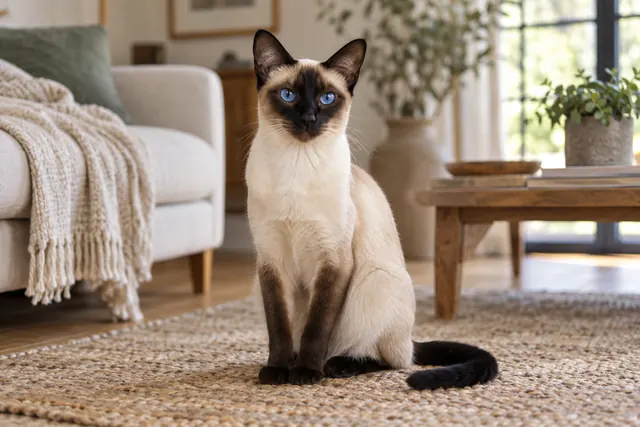
Plan for interaction, not just a distinctive appearance
TICA describes Siamese as social, people-oriented and active, with a short coat and a pointed color pattern [1]. CFA's breed profile provides additional background and the breed standard [2]. Those descriptions make interaction and enrichment important planning topics, but they do not predict an individual cat's voice, confidence or response to another animal.
Ask about the actual cat's routine before committing. How do they spend time when people are working? Which activities do they choose? What happens when a familiar person leaves? Specific examples are more useful than a label such as “very affectionate.”
Build contact into a realistic day
Look at your ordinary workday, including the longest period away. Decide who can offer regular attention and care, and which safe activities remain available when nobody is interacting. Keep quiet rest and independent choice alongside shared play.
A practical day plan could include a familiar short game when you are available, an easy food puzzle using part of the established allowance, and a resting place away from household activity. These are planning options, not a prescribed number of minutes for every Siamese.
Adding another cat is not an automatic solution to time alone. Review resources, each cat's history and the ability to introduce them gradually before making that decision.
Offer height safely
TICA highlights the breed's activity and interest in climbing [1]. Check that platforms are stable, reachable and securely installed, with a usable route down. Secure windows and cupboards containing hazardous products rather than assuming a clever cat will avoid them.
If an activity produces frustration, make it easier instead of continually making the puzzle harder. A play station in a noisy corridor may need relocation before another toy. See enrichment planning for observation-based trials.
Listen to changes without guessing a cause
Some owners seek Siamese because of their reputation for vocal interaction. Ask about this cat's existing behavior and distinguish it from a new change. Record when the sound occurs, what happened just before it and whether appetite, movement or toilet use also changed.
Do not dismiss a new pattern as “just a talkative breed.” Discuss a persistent or concerning change with your veterinary team. Behavior observations can support an assessment; they cannot establish a medical or emotional cause by themselves.
Keep short-coat care comfortable
Ask which grooming method the cat accepts and begin with brief gentle checks. A short coat is easier to inspect than a heavy long coat, but skin, claws, mouth and handling tolerance still require attention appropriate to the individual.
Have your veterinary team demonstrate any unfamiliar grooming or dental task. Do not keep working through pain or use a breed page to choose medical products.
Questions before bringing one home
Request veterinary history, known diet, relevant screening records and concrete examples of handling and time alone. If choosing a kitten, ask how experiences were introduced and what support follows collection. Bring the records to your own veterinary team to plan ongoing care.
Is a Siamese suitable for a busy household? Assess predictable interaction, safe resources and the cat's actual history. Will they enjoy every visitor? A social breed description is not a guarantee. Must they have a second cat? No; evaluate the individual and the household rather than prescribing companionship by breed.
Follow new-cat settling steps, protect voluntary contact and use private observations to build a record around the cat you actually live with.
Test whether your workday fits the cat's routine
Write out your longest usual absence, the person responsible for each meal and the opportunities for voluntary interaction before and after work. Ask the current caregiver what this cat actually does when people leave; a breed label alone cannot answer that question.
Prepare one familiar independent activity and an undisturbed resting option. Arrange a caregiver for absences that exceed your normal routine, leaving food instructions and contact details. If time alone is associated with persistent distress or a new behavior change, seek individual guidance. Buying a second cat is a separate commitment, not an automatic fix for an unsuitable daily plan.