
Stop touching at the first warning
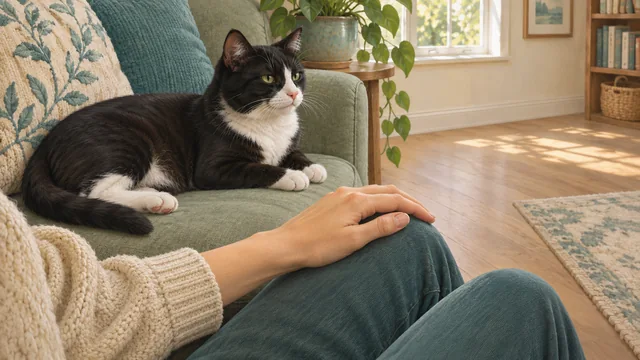
If your cat turns toward your hand, flicks their tail, stiffens, flattens their ears or starts growling during petting, stop the contact. Rest your hands away from the cat and leave an easy route to walk off. If the cat stays beside you, enjoy their company without restarting the stroking. These warning signs and the advice to stop are described by San Francisco SPCA [2].
Biting during petting can reflect a low tolerance for touch, but pain, play and a reaction to something nearby also need consideration. Cornell recommends veterinary assessment for medical causes of aggression before relying on a behavior plan [1]. A cat who suddenly objects to previously comfortable touch needs a veterinary conversation, rather than a longer petting session to see whether they get used to it.
If your cat is struggling to breathe or breathing with an open mouth, seek an emergency veterinarian immediately [4]. If a person has been bitten, stop the interaction and deal with the wound as well as the cat's needs.
Use the pattern to choose a safer next step
| Pattern you notice | What to change now | What to tell the veterinarian |
|---|---|---|
| Your cat seeks company, then reacts after repeated strokes | Offer shorter contact and stop before the first warning; allow lap time without petting | Where you touched, the first signal and whether this is a new pattern |
| Touching one area triggers a new reaction | Leave that area alone; arrange a check rather than pressing it again | The location, onset and any changes in grooming, jumping or eating |
| A kitten stalks moving fingers or grabs feet during play | Keep hands out of the game and plan play with a toy held away from your body | The context, frequency and whether contact also happens during ordinary handling |
| Your cat reacts after seeing another cat or hearing a bang | Give space, reduce the trigger when safe and avoid picking the cat up | What happened immediately before the bite, including other animals nearby |
Cornell distinguishes petting-related, play, redirected and pain-related aggression [1]. This table helps organize observations and reduce contact while you seek advice; it does not identify a diagnosis from a single incident.
Try a brief interaction with a clear pause
Choose a quiet moment when your cat approaches voluntarily. Leave their route away from you open. Avoid reaching into a hiding place or starting while the cat is eating. Cornell advises avoiding uninvited handling, restraint and interaction during eating when managing petting-related aggression [1].
Offer a relaxed hand for the cat to approach. If the cat chooses contact, stroke lightly in an area they have comfortably accepted before. Then stop and observe. San Francisco SPCA recommends brief contact in preferred areas and ending before irritation develops [2]. A practical way to apply that is to pause after a small amount of touch, rather than keep stroking while distracted by a phone or television.
Continue only while the cat remains comfortable and actively chooses the interaction. Turning away, tensing or watching your hand means it is time to finish. Sitting still on your lap is compatible with wanting company alone. There is no need to increase the amount of touch each day.
Do not work toward a universal number of minutes. The useful limit is earlier than the point at which this cat becomes uncomfortable. If you cannot predict the response safely, stop hands-on practice and ask your veterinarian for a plan. You can still share a room and offer suitable play without touching.
Read the whole cat and the room
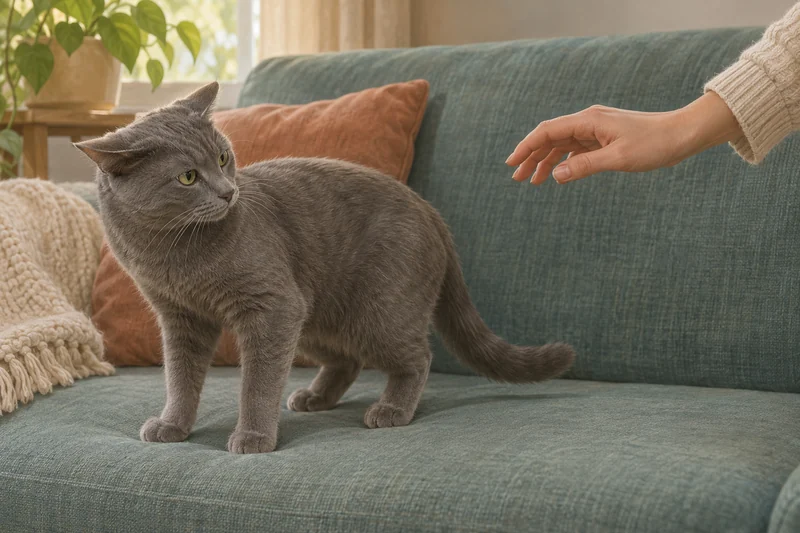
Watch for a quick head turn toward your hand, a flicking tail, skin movement over the back, flattened ears or a suddenly tense body [2]. One sign is enough to pause; you do not need to wait for a growl or bite. A sudden change in the room matters too, such as someone entering or another animal appearing.
The early response may be easy to miss when your hand keeps moving automatically. Make your own attention part of the setup: put the phone down, keep the interaction brief and watch the cat. If you miss a warning, make the next interaction easier to end instead of deliberately repeating the trigger.
For more general retreat and behavior observations, see what to check when a cat starts hiding. Reaching into a hide to test whether the cat is still upset removes their option to avoid contact.
Adjust for age, children and other cats
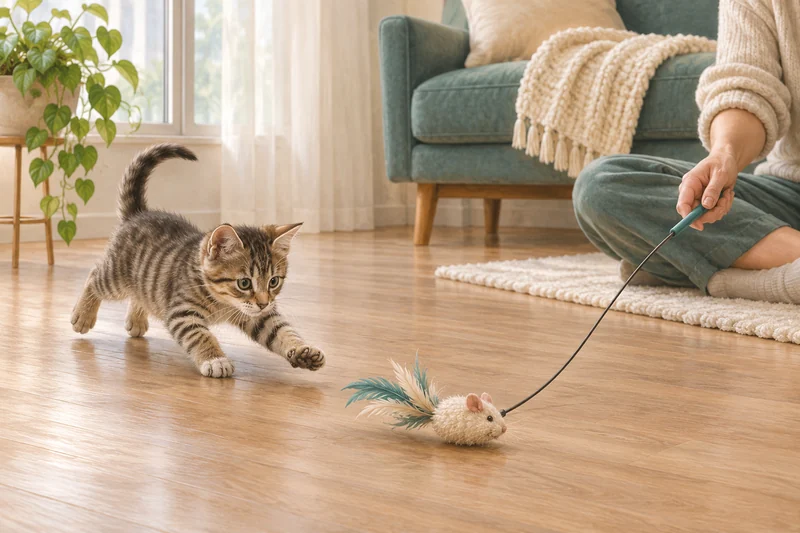
A kitten who chases hands needs an appropriate play outlet as well as gentle handling. Use a wand or other suitable toy that keeps claws and teeth away from skin; Cornell recommends keeping play targets at a distance from hands [1]. The play and enrichment guide helps choose an activity, and the safe toy guide covers supervision and storage. Put string and wand toys away after supervised use.
For an adult cat with a longstanding low tolerance, comfortable companionship may mean sitting nearby with little physical contact. For an older cat whose tolerance has changed, take observations of movement and grooming to the veterinarian. Cornell identifies painful conditions, including osteoarthritis, as potential contributors to aggression [1]. Avoid repeatedly touching the sensitive spot to demonstrate the problem.
Keep small children from petting a cat with a history of petting-related aggression; Cornell recommends preventing that contact because children can miss the warning signals [1]. Offer another shared activity at a safe distance, with adult supervision. Visitors should follow the same rule.
In a multi-cat home, watch the interaction before and after another cat enters. Allow separate routes and resting options rather than gathering cats together on a lap. The multi-cat home guide helps review resource access. In a single-cat home, a cat outside the window or a sudden noise can still precede a redirected reaction [1].
If a bite happens
End the contact. Avoid shouting, hitting, chasing, spraying water or holding the cat down. Physical punishment can worsen fear and aggression, and Cornell advises against restraint for petting-related aggression [1]. Give the cat space; do not immediately stroke them again as reassurance. Keep children and other pets away until the situation is calm.
If a bite or scratch breaks skin, wash it promptly with warm water and soap. CDC advises medical attention for a serious wound, signs such as redness, warmth, pain or swelling, a cat that appears sick, or uncertainty about the cat's rabies vaccination. Seek medical advice as well if it has been more than 5 years since your last tetanus shot [3]. Even a small-looking injury deserves attention to those risks.
Make the veterinary conversation useful
Arrange assessment for new, increasing or difficult-to-predict biting. Write down the body area touched, what the cat did first, nearby noises or animals, whether skin was broken and any changes in appetite, grooming, movement or litter use. Describe what you saw without assigning a cause.
A short video can help only if an ordinary interaction is already being recorded safely. Do not provoke another bite for footage. Ask the clinic how to approach transport if handling is difficult; preparing for a cat's vet visit covers planning that conversation.
The first goal is an interaction the cat can comfortably leave. Once medical concerns and household safety have been addressed, your veterinarian can help decide whether further handling work is useful for this cat.