
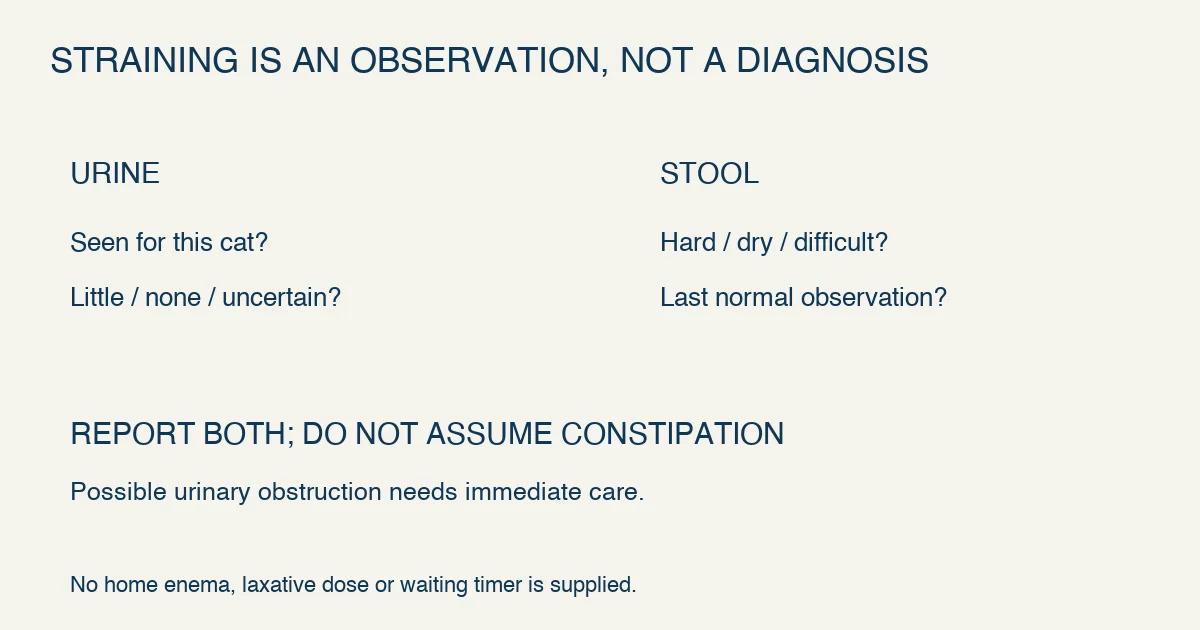
A cat repeatedly straining in the litter box may have trouble passing stool, urine, or both. If little or no urine is coming out, seek immediate veterinary attention: urinary obstruction is an emergency. Do not spend the next day trying pumpkin or a laxative while assuming the problem is constipation. [1]
If stool is hard, dry or difficult to pass, or your cat has stopped passing its usual stool, contact your veterinary team. This page helps you report the right observations and organize an agreed home-care plan. It does not teach a home enema or supply a medicine dose.
Check output, not just the posture
Constipation means difficult or infrequent passage of hard, dry feces. That definition does not make every squat constipation. Cornell describes urinary obstruction as producing repeated attempts and little or no urine, sometimes with increasing distress. Owners do not have to determine the diagnosis before seeking help. [1][2]
Tell the clinic what you have actually seen: a small dry stool, urine clumps, drops, blood, repeated attempts, crying, vomiting or reduced appetite. If you cannot tell whether the cat is urinating, say so immediately. An old clump in a shared tray does not establish that this cat has passed urine today. Do not press or squeeze the abdomen to test for a blockage.
Photograph an observed stool if helpful, but prioritize the call and transport. Note when normal output was last seen and when a change was first noticed; those may be different times. “No stool found since yesterday” is more accurate than “has not pooped for 36 hours” when your cat also toilets outdoors.
Do not wait for a universal number of days
Search results often give a 48- or 72-hour limit. A painful or repeatedly straining cat, a cat vomiting or eating less, or a cat with uncertain urine output needs advice earlier. Cats Protection recommends prompt veterinary assessment for digestive changes and treats possible obstruction as an emergency. [3]
A record of the cat's usual routine can help the team interpret a change, but there is no safe timer that applies to every cat. Age, hydration, other illness, previous constipation and medicines all affect the decision. Cornell notes that constipation has several possible causes and should be treated to prevent progression. [2]
Do not dismiss a small amount of loose material as proof the problem is over. Report the whole sequence, including continued effort and discomfort, so the team can decide what examination is needed. Home observation can supply information; it cannot rule out retained stool or another obstruction.
Make the consultation more useful
Prepare a short history rather than a list of internet diagnoses. Include:
- Stool: last normal observation, hardness, approximate amount and current effort.
- Urine: what was seen for this cat, and what is unknown in a shared box.
- Intake: actual meals eaten, changes in drinking, vomiting and any weight change.
- Treatment: exact medicines, supplements and previous constipation instructions, including anything already given today.
- Access: whether getting into the tray, climbing stairs or squatting seems difficult.
These are observations to discuss, not a scoring system. Cats Protection identifies pain, pelvic problems and an unsuitable toileting site among possible contributors, while Cornell includes drug effects, obstruction and other disorders. The history does not replace examination. [2][3] Prepare a factual vet-visit record.
If you have old instructions, bring the document and identify whether they were for this cat and this situation. A previous episode's medicine may not be the right response now. Tell the team if medicine was missed or if you cannot administer it safely; do not quietly change the dose.
Improve access while the medical problem is assessed
A cat with pain or mobility changes may postpone using a difficult box. Make a familiar clean tray available on the same level as the cat's resting area, with an approach that other animals cannot block. Avoid making the only accessible option an unfamiliar automatic box while the cat is unwell. [3]
Observe the route and entry separately. In a hypothetical apartment, an easy-entry tray still fails to help if it sits upstairs and the cat is reluctant to climb. A ground-floor tray removes one access obstacle; it does not prove that the stool problem is behavioral or cured. Arthritis home adaptations and litter-box setup explain those practical decisions.
Keep fresh water accessible and tell the team what the cat is actually taking in. A fountain or wet meal may change the setup, but cannot substitute for assessment and treatment of dehydration. Do not force fluids or start a home fluid procedure without prescribed instructions. [2][3]
Get an individual diet and medicine plan
Constipation treatment can involve hydration support, dietary changes, medicines and, in severe cases, other procedures. That range is a reason to ask for a plan rather than combine home remedies. Fiber can change stool bulk and water content, and excess supplementation can have disadvantages; “more fiber” is not a universal target. [2]
Ask which food is appropriate, whether a supplement is needed, its exact instructions, and how to judge the response. If the cat already has a prescribed diet for another condition, mention that before changing food. Do not replace a complete diet with pumpkin, oil or a homemade mixture. Record the food name and amount actually offered and eaten.
Do not administer a human laxative, oil or enema from a search result. Cornell describes medical procedures and notes that even home enemas require veterinary training for an appropriate cat; this page does not convert that clinical discussion into DIY instructions. If the team prescribes home treatment, request a demonstration, written directions and what to do if the cat resists or treatment fails. [2]
Ask about missed doses and reduced eating before the next dose is due. A liquid medicine concentration matters as well as its name; photographs of the label and prescription can help the clinic resolve confusion. Giving a prescribed tablet addresses handling, not the choice of constipation medicine.
Define recovery and the next review
Before going home, confirm when stool is expected, which signs require an urgent call, and when to recheck if the response is incomplete. Keep urine and stool observations separate. Passing one stool does not erase persistent discomfort, vomiting or poor appetite.
For recurring constipation, bring the history across episodes: intervals, treatment response, food changes and any difficulty accessing the box. Cornell describes progression to more serious colonic dysfunction in some severe cases; a recurring problem deserves reassessment rather than an indefinite cycle of increasing home remedies. [2]
The useful outcome is an identified next step, accessible toileting, and a treatment record your team can interpret. It is not a self-diagnosis of megacolon or a promise that a single household change will prevent every recurrence.