
New eye discharge with squinting, rubbing, swelling, cloudiness or difficulty opening the eye needs prompt veterinary advice. Do not choose a treatment by discharge color or spend days cleaning an eye that appears painful. Cats Protection recommends contacting a vet when an eye problem is noticed; Cornell specifically advises examination for discomfort with discharge to rule out more serious disorders. [1][2]
The immediate task is to arrange assessment, describe what has changed and avoid making the eye worse. Gentle external cleanup, when tolerated, is different from treating the underlying problem.
Describe both eyes separately
Say whether the change is in the cat's left eye, right eye or both. Use the cat's perspective, not the side of a photograph. Record when it began, whether the cat can open the eye normally, and whether discharge is recurring after wiping. Include rubbing, blinking, redness, swelling, a cloudy surface, sneezing, appetite and activity changes. These details help the team decide how quickly to see the cat. [1][3]
Take a photograph in ordinary light if the cat is comfortable. Do not force the eyelids apart, hold the cat's head under a bright lamp, or delay transport to obtain a better picture. Record the original image time and whether it was before or after cleanup. A photograph cannot measure eye pressure, check the entire surface or establish that the eye is safe.
Watery or dark discharge can occur with conjunctivitis, but discharge also accompanies injuries, ulcers and other disorders. A color chart cannot tell you which medicine is appropriate. Similarly, one affected eye does not prove a foreign body, and two affected eyes do not establish a virus. [1][2][3]
Call with the changes that alter urgency
Tell the clinic immediately if the eye is held closed, looks swollen or cloudy, or the cat is rubbing it, seems in pain or has other illness signs. Maddie's Fund lists these as reasons for veterinary attention and warns that eye problems can deteriorate rapidly. A kitten with eye changes should not simply inherit the monitoring plan previously given for an adult cat. [3]
Maddie's Fund's 2019 guidance permits brief monitoring only for mild symptoms with normal appetite, energy and no other illness signs. Cats Protection recommends veterinary advice first. Because an owner cannot reliably identify the cause, this page follows the advice-first approach rather than making “a few days” a waiting rule. [1][3]
Mention possible trauma, a fight or exposure to a cleaning product. Tell the team the exact product and when exposure might have happened; do not improvise a flushing solution or extraction procedure from a general eye-care article. Ask for immediate instructions and where to go. If the regular practice is closed, contact its emergency service instead of waiting for the next cleaning session.
Cleanup is external and optional
If the team advises gentle cleaning and the cat allows it, use a clean damp cotton pad to remove discharge around the eye. Use a fresh pad for each eye. Do not scrub the eye surface, insert a cotton swab under the lid, pull off stuck material or force an eye open. Stop if the cat resists or appears painful. Cats Protection and Maddie's Fund describe gentle wiping; they do not make forceful cleaning a treatment. [1][3]
The useful distinction is “discharge removed from the surrounding area” versus “the eye disorder resolved.” Keep observing after cleanup. Repeatedly wiping away fresh discharge can conceal how quickly it returns unless you note the times.
Do not add tea, peroxide, contact-lens products, human eye drops or leftover pet medicine on your own. Maddie's Fund advises against over-the-counter drops unless a veterinarian specifically instructs their use. A medicine previously prescribed for another episode or another cat is not automatically suitable now. [3]
Make the prescribed plan unambiguous
If treatment is prescribed, ask the team to demonstrate how to administer it to this cat. Confirm which eye or eyes, the medicine name and strength, amount, frequency, treatment length and storage instructions. If several products are prescribed, ask about their order and interval; this page cannot infer those from the word “eye drops.”
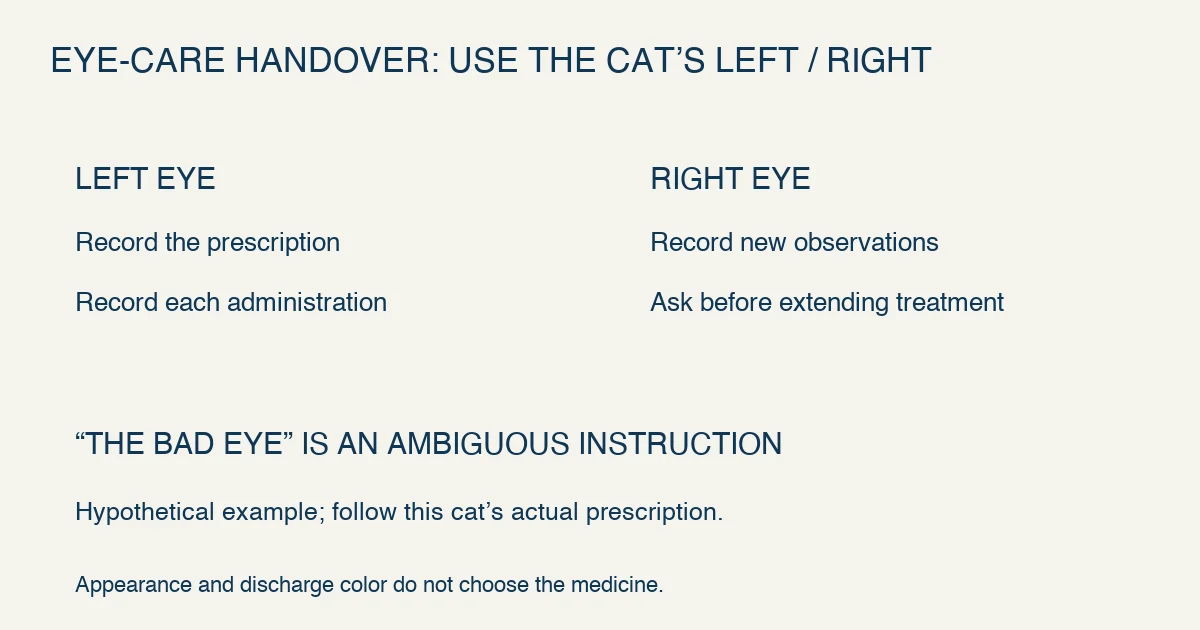
Use the cat's left and right labels consistently. A hypothetical caregiver handover reading “drops in the bad eye” becomes ambiguous when a second eye develops discharge. “Prescription says left eye; new right-eye discharge reported to clinic” preserves both the instruction and the new observation. Do not independently extend the prescription to the second eye.
Record each administration and uncertainty. If the tip touched the eye or coat, or you are unsure whether medicine entered, ask what to do with that product rather than automatically giving more. Ask about a missed dose, worsening signs and inability to handle the cat. The clinic can change the method or reassess; repeated restraint is not evidence the treatment is being delivered correctly.
If a protective collar is recommended, ask for fitting and monitoring instructions. Do not remove it solely because discharge looks cleaner. Cats Protection includes following prescribed treatment and wearing the recommended collar among home-care measures. [1]
Protect the household without guessing the cause
Cornell describes infectious and noninfectious causes of conjunctivitis. Discharge alone therefore cannot tell you whether separation, treatment of other cats or environmental changes are needed. Inform the team about other affected cats and ask what handling and shared-equipment precautions fit the actual concern. Use separate cleanup pads regardless. [2][3]
Keep other cats' observations separate, including when each change started. Do not share prescribed medicine among them. If dust, a spray or another irritant is suspected, report the exposure and remove access when safe; improvement after removal does not by itself prove the diagnosis.
Recheck comfort as well as appearance
Confirm when to return and which changes require an earlier call. Record eye opening, rubbing, recurrence of discharge and appetite alongside medicine administration. A cleaner-looking eye does not demonstrate that deeper damage has healed, so follow the team's review plan rather than stopping treatment early. [3]
Use a vet-visit record to bring the timeline and actual prescription. If sight seems to have changed, seek assessment first. Living with a blind cat covers home adaptations after that conversation; it cannot identify the cause of new eye signs.