
When you find fleas, plan for both the cat and the places it uses. Treating only the coat can leave a continuing household problem; cleaning only the room leaves the animal without an appropriate treatment plan. Ask your veterinary team what is suitable for each pet and coordinate that with environmental work. [1][2]
Do not apply a dog product to a cat, combine several flea treatments, or repeat a dose early because you still see fleas. Product suitability and instructions come before speed. A heavily infested kitten or a cat that seems unwell needs prompt veterinary advice; flea feeding can cause anemia in kittens. [2]
Confirm what you found and the cat's condition
A fine flea comb can collect adult fleas and dark material from the coat. If the cat tolerates it, examine the collected material and keep a photograph or sample for the team. EPA identifies combing as a way to remove adult fleas, and Cornell describes clinical confirmation when infestation is suspected. Itching alone is not a diagnosis: sores and other skin problems also need attention. [1][2]
Tell the clinic about the cat's age, approximate weight, illness, medicines and all flea products already used. Keep the actual package rather than relying on the color of a tube or a family member's memory. Include other animals in the household and whether they have been treated.
If the cat has painful skin, feels too unwell to tolerate handling or is a young kitten with many fleas, do not make a prolonged combing or bathing session the first priority. Seek the team's instructions. A bath is not a substitute for a suitable treatment plan, and this page does not prescribe dish soap or a homemade insecticide.
Map where the cats actually spend time
Start with sleeping and resting areas, then carpets, upholstered furniture, floor cracks, edges and spaces underneath furniture. Include family bedding used by the pets, the carrier, and a second room where a cat rests when another animal is present. EPA specifically emphasizes pet sleeping areas and these indoor surfaces. [1]
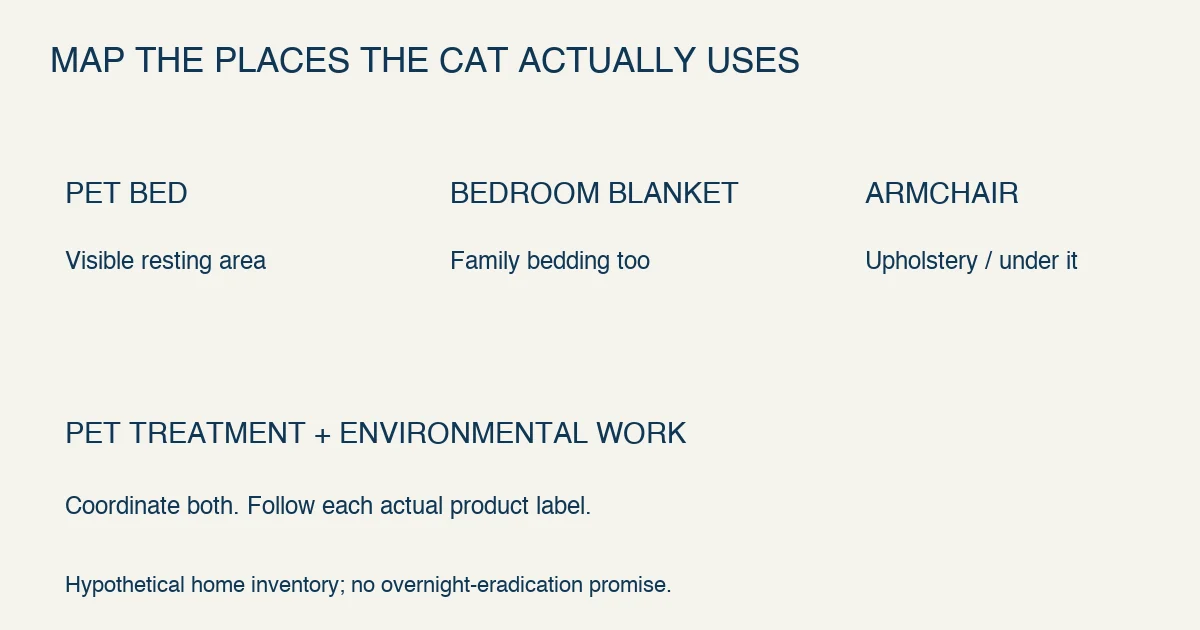
A hypothetical home has one visible cat bed in the living room, but the cat spends afternoons on a bedroom blanket and nights under an upholstered chair. Washing only the marketed “pet bed” misses the cat's actual routes. The useful inventory is based on use, not the product label on the furniture.
Assign the work by area and date: vacuuming completed, washable bedding cleaned, inaccessible item awaiting advice. Keep an untreated comfortable resting option while materials dry or are replaced. Do not move every contaminated item into another room and then call that room clear.
Clean without creating a pesticide exposure
EPA recommends daily vacuuming for initial flea control, including carpets, cushioned furniture, floor crevices and baseboards. It also describes steam cleaning carpets and washing bedding used by pets in hot soapy water. Follow the fabric and appliance instructions so cleaning does not damage an item or create an unsafe hot surface. Ask how to handle delicate or nonwashable items rather than giving them an improvised chemical soak. [1]
Combing can remove fleas from the cat; EPA describes depositing collected fleas into hot soapy water. Keep that container away from the cat and children. The water is for the removed fleas, not a recipe for applying concentrated detergent to the animal. [1]
For a severe infestation or areas you cannot handle safely, discuss professional pest control. Give the operator a complete list of pets and their feeding, resting and toileting locations. Ask which product and application method are proposed, what areas must be cleared, and exactly when each animal can return.
Do not assume “dry to the touch” is the only re-entry requirement. EPA directs owners to follow the product label, keep pets away from treated areas as specified, avoid spraying near food or water dishes, and retain original containers. A general webpage cannot replace that product's precautions. [3]
Coordinate the pet treatment with the home plan
Ask the veterinary team which pet needs which product, the correct weight and age range, dose interval, and whether existing medicines or recent treatments affect the choice. Record each animal and administration separately. Do not split a large-dog tube among cats or borrow a product because it has a similar brand name. Cornell warns that some dog flea products can be toxic to cats, including exposure through contact with a treated dog. [2]
Ask about separation after any topical product and follow its actual instructions. The plan for one product cannot set the drying or contact precautions for every other product. If the label is missing or unreadable, resolve that before use.
Seeing another flea does not authorize an early extra dose. Report when treatment was given, what was applied, where fleas are now being found and which environmental work is complete. Your team can assess whether the plan was carried out, whether exposure continues and whether treatment needs adjustment.
A household spray belongs only where its label permits; a product intended for surfaces is not automatically suitable for the cat. Store it in the original container out of reach, with the contact number and precautions available. [3]
Track whether the whole plan is working
Keep three separate observations: fleas or collected material, the cat's skin and comfort, and completion of environmental work. Less scratching may be encouraging, but is not a count of all flea life stages in the home. Conversely, a clean floor does not show that every animal has received its appropriate treatment.
At the planned review, describe persistent scratching, sores or illness, missed treatments, new animal contact and rooms that remain difficult to clean. Cornell describes the need to address both animal and environment; the purpose of this record is to find a gap without automatically blaming the product or escalating doses. [2]
If a reaction or accidental exposure is suspected, contact the veterinary team promptly with the package, amount, time and animal involved. EPA advises keeping the label available when calling for help. Do not induce vomiting or add another chemical on your own. [3]
Bring the timeline in a vet-visit record. This guide does not promise overnight eradication, rank untested products or prescribe a year-round schedule for every location. Ask for prevention advice based on this cat's circumstances and local exposure.