
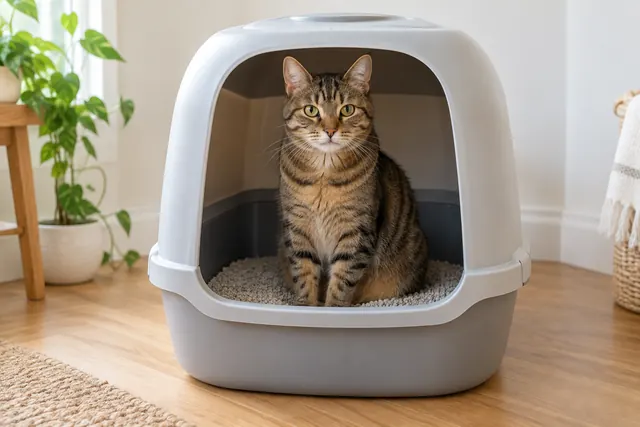
Start with access, not just a box count
If you are arranging a home, begin with one litter box for each cat plus an extra, spread across useful locations. Cats Protection recommends separate locations rather than a row of trays [1]. A box behind a closed door, beside a noisy appliance or beyond another cat's usual resting place may be present but difficult to use.
Walk the route from your cat's sleeping area to each box. Check whether they can reach it at night and leave without being cornered. For a cat struggling with steps, put an accessible box on the floor they use. Use the litter box planner for a starting count, then make these location decisions yourself.
Choose a tray your cat can actually use
Watch the cat entering, turning and digging. A kitten-sized tray may no longer suit an adult; a high entrance may be difficult for a cat with reduced mobility. Do not assume a covered box will feel private to every cat. Try an accessible alternative while retaining the familiar setup, so a change does not remove their only usable toilet.
Record the tray type and litter already used. If you want to test another litter, offer a separate trial tray and observe the choice instead of changing every box at once. Appearance and perfume that appeal to a person do not establish a cat's preference.
Build a repeatable cleaning routine
- Check each box and remove waste at least twice a day, the starting routine advised by Cats Protection [1]. A cat may need a clean sooner after using the tray; record which box is receiving use.
- Follow the litter manufacturer's replacement instructions; a product label cannot replace observing actual soiling.
- Cats Protection advises a complete tray clean at least weekly using hot soapy water or a cat-safe cleaner [1]. Rinse and dry before refilling.
- Avoid strong fragrance and check that the tray remains available while cleaning. In a multi-cat home, clean in a sequence that leaves alternatives accessible.
These steps concern ordinary household care. Ask your veterinary team about separate hygiene requirements when infection or treatment changes the routine.
A two-cat apartment example
Three trays next to the washing machine create three containers but one noisy destination. A more useful plan might keep one familiar tray there and assess a second quiet location and a third separate route. Check doors, household traffic and whether one cat watches the approach. This is an illustrative layout exercise, not a promise that adding boxes will resolve house-soiling.
Write down the location, cat observed, date and cleaning change. If you did not see which cat used a tray, leave the identity unknown. Compare the next observations with your original arrangement.
When changing the setup is not enough
A new change in elimination warrants veterinary advice; do not label it spite or diagnose stress from a checklist. Cornell identifies urinary obstruction as an emergency [2]. A cat repeatedly straining with little or no urine needs immediate veterinary attention. Do not wait for a new box to arrive.
For a non-urgent access problem, change one factor, keep alternatives and review the result. If the pattern persists, bring dates, photographs of the layout and your observations to the appointment. In a multi-cat home, also review resource routes and tension.
Questions owners often ask
Do adjacent trays count as separate resources? They add capacity, but shared access can still be blocked. Can an automatic box replace every ordinary tray? Observe whether each cat will enter and use it; retain an accessible alternative while assessing any change. Is a clean tray proof the cat is well? No: cleaning and medical assessment answer different questions.