
If the noise has started, make the home safer first
Keep your cat indoors during fireworks, close escape routes and give it access to familiar, safe places to retreat. Close curtains or blinds against flashes. Cats Protection and PDSA both recommend these measures, with indoor food, water and a litter tray available [1][2]. The immediate goal is usable shelter and containment, not making a frightened cat perform a training exercise.
If the cat is hiding in a safe place, do not pull it out for reassurance. If it approaches you, you can offer calm attention without restraining it. PDSA advises respecting whether the cat wants company or space, and never punishing fearful behaviour [2]. Being quiet under furniture does not tell you that the cat is comfortable; observe without repeatedly disturbing it.
If you cannot find the cat, check the home and possible escape routes rather than assuming it is hiding safely. If it has escaped, use the lost-cat action guide. A current chip record helps identification after a cat is found; it cannot locate the cat during the display.
Keep safe choices available inside
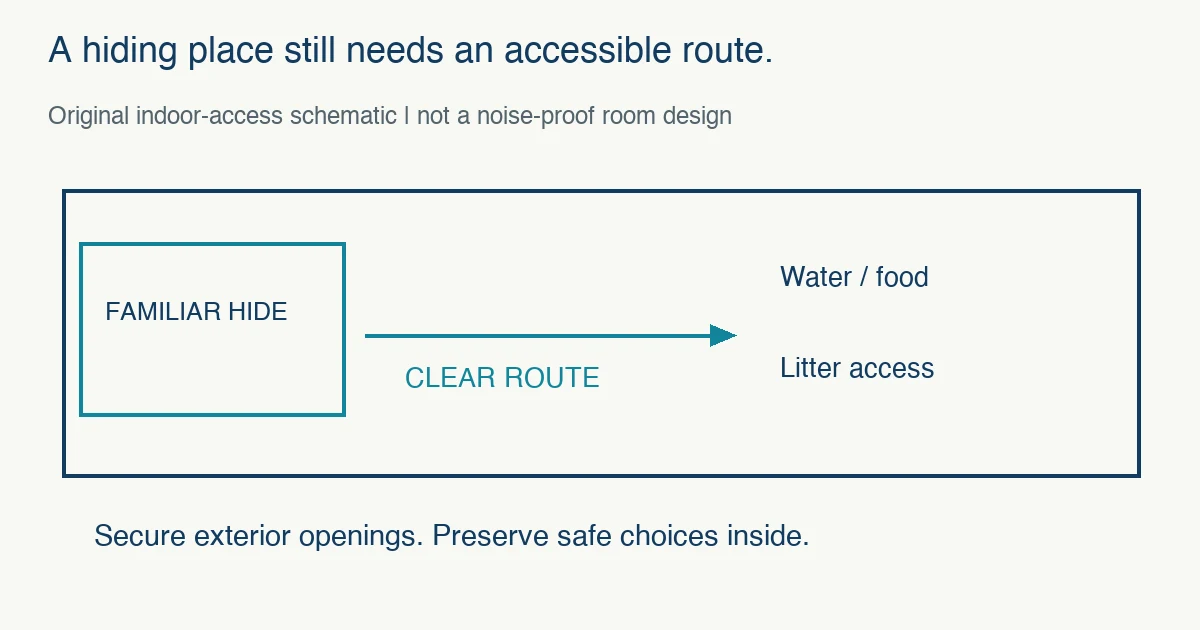
Set up a hiding option where the cat already feels secure. A familiar box or covered bed may be useful; it does not need to be a newly bought “fireworks product.” PDSA says a den should be accessible, secure and never used to shut the cat inside [2]. If it chooses another safe location, you have not failed.
Check the route to food, water and litter from the hiding area. A cat that must cross a gathering of visitors to reach its only tray has shelter but poor access. In a multi-cat home, distribute resources so one cat cannot prevent another reaching them. Use the home resource checklist to review the arrangement rather than buying duplicate items without deciding where they go.
Avoid automatically confining every cat to a single unfamiliar room. Cats Protection and PDSA warn that this can increase stress and advise keeping suitable familiar indoor areas accessible [1][2]. That is different from keeping an exterior door securely closed. If your circumstances require separation for safety or a clinical reason, ask your veterinarian how to provide an appropriate space rather than applying a blanket rule.
Block access to unsafe hiding gaps without trapping a cat already inside. Confirm its location before moving furniture, closing a cupboard or operating an appliance. Keep a normal, safe indoor temperature and ventilation while securing openings; shutting escape routes is not a reason to allow the room to overheat.
Reduce disturbance without adding louder disturbance
Familiar background sound can help reduce the impact of sudden bangs, but keep it at a volume the cat is comfortable with. PDSA specifically cautions against loud music [2]. Do not turn a speaker up to overpower every explosion. If the television or radio introduces sharp noises, choose a quieter alternative or switch it off.
Keep household movements and voices calm. If the cat voluntarily plays or accepts food, offer familiar activities without forcing participation. A refusal to engage is not a reason to move the toy or food into its face. Keep string toys attended and put them away after use, as explained in choosing cat toys.
Pay attention to interaction between pets. PDSA notes that a frightened cat may be more irritable around other animals [2]. Do not move all the animals together into one small “safe” space merely because the noise is outside. Give them routes to avoid one another and intervene safely if tension develops.
Coordinate visitors and doors
If you are hosting, tell visitors which doors must stay closed and where the cat should be left undisturbed. AAHA's July Fourth guidance recommends keeping guests from disturbing pets and securing doors during celebrations [3]. Decide who will answer the door; “everyone knows the cat is indoors” does not ensure someone checks an opening.
Move household traffic away from the cat's resting and hiding areas where possible. Keep unfamiliar bags and equipment from blocking its routes. An otherwise quiet corner beside the doorbell and coat rack may become busy as guests arrive.
Firework timing is local and can be unpredictable. Check actual nearby events, but do not treat the advertised end of one show as proof that all neighbourhood noise has stopped. The sources include UK and US celebrations; their holiday dates and regional advice are not a local fireworks timetable or legal ruling for your address.
Before a likely event, verify the microchip registry contact record and keep a recent identifying photo available. Updating a PurrAtlas profile or a veterinary practice's telephone record does not establish that the registry now has the right contact information.
Prepare before the next event rather than trialling products tonight
If the cat has a history of marked fear, contact the veterinarian well in advance. PDSA advises discussing medication beforehand and never giving a cat medication that the veterinarian has not prescribed [2]. Do not borrow another pet's prescription or assume an over-the-counter calming product is appropriate because it is advertised for animals.
You can ask about pheromone products and other support as part of the cat's plan. Their instructions, placement and the cat's response matter. This guide has not tested products, compared active ingredients or verified a promise of immediate relief. A product does not close a window, provide a litter tray or replace a needed veterinary assessment.
Sound acclimation is a separate, gradual activity outside the frightening event. PDSA describes starting recorded sound very quietly, watching for subtle reactions and stopping or returning to a lower level when the cat reacts [2]. Do not play loud fireworks at a frightened cat to make it “get used to them.” Ask for a qualified behaviour plan if you are unsure; there is no fixed number of sessions that guarantees comfort during a real display with flashes and other changes.
Record the response and get help when needed
Note what the cat actually did, when it happened and what arrangement was available. A hypothetical note could say: “Hid under its usual chair when bangs began; curtains closed; water and litter accessible without crossing the party; came out after the room was quieter.” That describes observations. It does not prove that a diffuser, music or any one intervention caused improvement.
Contact your veterinarian if the cat remains fearful despite preparations, or its reaction has changed unexpectedly. PDSA specifically advises assessment of newly developed fear because pain or illness may contribute [2]. Do not assume changed appetite, toileting or behaviour has only a noise-related cause.
Keep the emergency contact route available during the event. For injury or a concerning acute change, seek veterinary advice rather than waiting to complete this checklist. After the event, review the actual escape risks, chosen hiding place and resource access. Improve those before the next celebration; the aim is a safer, more tolerable experience for this cat, not a promise that it will enjoy fireworks.