
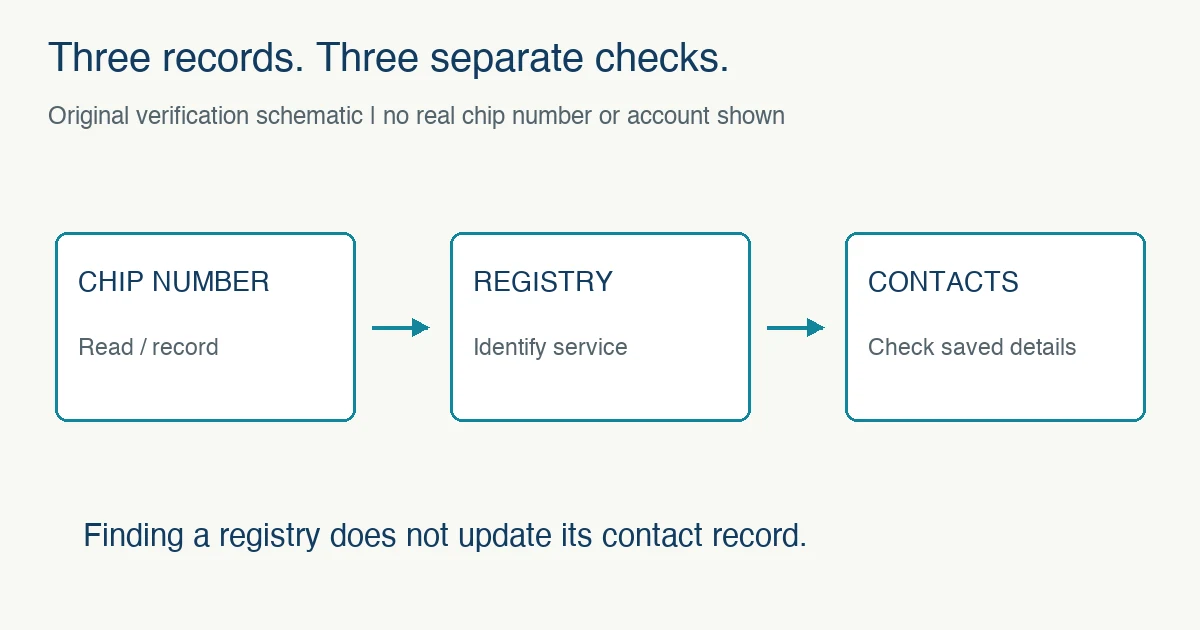
An implanted chip and a reachable contact are separate checks
A cat's microchip identifies the animal through a number read by a compatible scanner. It is not a GPS tracker. To help a finder contact you, that number must lead to a registry record containing your current details [1]. The useful task today is to verify that chain, not simply to find the word “microchipped” in adoption paperwork.
In the United States there is no single central registration database. Your veterinarian's patient record, a registry account and a personal cat profile serve different purposes [1]. Changing a phone number in one does not establish that the others have changed. PurrAtlas does not register chips, update external registries or show a cat's location.
If your cat is already missing, begin the lost-cat response alongside notifying the registry. Updating a record cannot replace searching, checking shelters or responding to a sighting. This page handles record verification; it does not guarantee recovery.
Start with the number, not the brand on a leaflet
Find the chip number in implantation, veterinary or adoption documents. Keep the complete number as text so you do not lose a leading zero when copying it into a spreadsheet. Match it carefully across the documents you hold; a shortened number, transposed digit or a reference to a different animal needs resolving before you rely on it.
If you cannot find the number, ask your veterinary practice about scanning the cat. AVMA advises checking with an adopting shelter for the number and notes that veterinary teams can scan an animal at a checkup [1]. Do not guess a number from the cat's name, an account identifier or the product packaging.
Ask the organisation that implanted the chip what it actually completed: implantation only, registration submission, or a confirmed record in a named registry. AAHA's update guide explains that practices and clinics differ in whether the owner needs to complete registration [3]. A leaflet or an instruction to enrol is not confirmation that someone has enrolled you.
Save the number with the cat's identifying details and the relevant paperwork in a place you can access during an emergency. Do not post private registry credentials or owner contact records as a public example.
Use a lookup to identify the registry, then contact that registry
The AAHA Microchip Registry Lookup accepts a nine-, ten- or fifteen-digit number without spaces or punctuation. It helps identify registries associated with the number. It does not display the owner's contact details and is not an enrolment or editing service [2].
Follow the result rather than assuming the chip manufacturer's brand is the only organisation involved. AAHA explains that some numbers can return multiple potential companies. Its instructions say to contact the first listed company, then work through the list to establish which holds the registration [2]. A list of possible matches is not confirmation that every company has your current information.
Take these questions to the registry:
- Does it hold an enrolled record for this exact chip number and this cat?
- How can you securely access or correct that record?
- Which contact fields will it use if someone reports the cat found?
- What must happen if the record is still associated with a shelter or previous keeper?
This guide has read the lookup's official instructions; it has not submitted a real cat's number or verified a personal registry account. Confirm your own result with the responsible service.
Check the contact record after adoption or a move
Once you reach the correct registry, follow its identity and account-access procedure. Review the cat's number and description, your phone number, email and address. AVMA specifically stresses keeping these contact details current; AAHA also describes recording an alternate contact [1][3]. If you nominate another person, agree that role and check that their details remain usable.
After adoption, do not assume a record transfers because the cat physically moved homes. Ask the registry and adopting organisation about the actual transfer procedure. Do not bypass someone else's account, fabricate ownership information or treat a lookup result as a legal ownership ruling.
After a move or a changed phone number, update the registry promptly. Check the saved record or obtain confirmation through the registry's process; a form being filled in but not saved leaves the task unfinished. Update the veterinary practice separately so its clinical record also has the right contact. The moving-home guide covers the wider handover.
A hypothetical verification note might read: “Chip number matched adoption paperwork; registry account still showed old phone; corrected phone and email; saved-record confirmation retained.” That states what was checked. “Cat profile updated” would not establish that the chip registry changed.
Resolve unclear results without calling them proof of no chip
A scan and a database lookup answer different questions. A scanner detects a readable implant; a lookup searches participating registry information. AVMA notes that detection depends on scanning technique and other factors [1]. If paperwork indicates a chip but a scan does not locate it, ask the veterinary team to investigate rather than deciding yourself that the cat needs another implant.
AAHA explains that an implanted but unregistered chip can produce a list of companies that may have sold it. Those companies may be able to trace purchaser information [2]. Contact the organisations and the implanting practice or shelter to establish the next registration step. A sales trail is different from a confirmed owner-contact record.
If a registry cannot be reached, preserve the number, previous registration evidence and your attempts to contact it. Ask your veterinary team for help deciding how to maintain a usable record. AAHA's current lookup page includes a notice that Save This Life ceased operations and advises affected owners to obtain their chip information and re-register elsewhere if necessary [2]. This is a specific published notice, not a claim that every unsuccessful query means a company has closed.
Do not buy a service merely because a page says “microchip” or “recovery.” Check what it actually provides, its registration and update terms, and any separate optional features. This page has not compared current registry prices or verified subscription requirements.
Leave a record you can maintain
Keep a private note of the chip number, confirmed registry, account-recovery route and date you verified the contact information. Distinguish “number recorded,” “registry identified” and “contact record checked.” Only mark each one completed when you have its own evidence.
AVMA recommends having your veterinarian scan the chip at least annually and keeping registration information up to date [1]. Use routine appointments as an opportunity to ask about detection. Recheck your contact record whenever relevant information changes; waiting for an annual reminder after a phone number changes can leave an avoidable gap.
If the cat is known to have more than one implanted chip, AVMA advises keeping the registry information current for each number [1]. Ask the veterinary team to document the situation. Do not remove or replace an implant yourself.
Microchip records belong within a wider identification and escape-prevention plan. Continue checking doors and windows and maintain an accessible lost-cat contact plan. A correct registry record improves the route from a found animal to its family; it does not tell you where the cat is now or make an unsafe opening secure.