
Confirm the person, visits and fallback before booking
Choose a cat sitter through an interview, references and an in-home meeting. Confirm who actually attends, what each visit covers and what happens if they cannot get in or cannot attend. A friendly profile and a refill service are not enough to establish that your cat will be observed and cared for.
This page is about choosing and agreeing a service. Once that choice is made, use the separate cat-sitter handover for private access details, product instructions and emergency contacts. PurrAtlas does not certify sitters, conduct background checks or guarantee a business listed by another organisation.
Describe the job before asking for a price
Send a short, factual enquiry: dates, number of cats, required visit pattern, current diet or medication requirements and any handling or access issues. Do not publish keys, alarm codes or a detailed home-access description in an open group. Arrange those privately with the chosen person.
Cats Protection recommends at least twice-daily visits and notes that very young, old or medically affected cats may need more frequent attention [1]. Use that as general guidance, then establish your cat's actual needs with the veterinary team when health or medication matters. A visit count alone does not describe its timing, length or completed care.
Ask the sitter to explain the service they can commit to. For a visit package, distinguish an approximate arrival window from a fixed medication time. For a live-in arrangement, ask how long the person expects to be away during the day. “Overnight” should not silently be interpreted as continuous attendance.
An invented enquiry: “Two indoor cats; one avoids visitors. We need individual feeding observations and our clinic's medication schedule followed. Can you meet us, explain who attends and confirm whether the schedule is possible?” This reveals a capability question before either party assumes the booking works.
Check references and the meaning of credentials
NAPPS recommends interviewing candidates, checking references and requesting evidence of insurance and bonding. Its hiring page also says it does not inspect or police member businesses [2]. Directory membership is therefore a way to locate candidates, not a completed check of your proposed service.
Ask a reference about a relevant completed assignment: reliability, communication and what happened when plans changed. A review about dog walks offers less information about caring for a shy, medicated cat than a reference for a comparable cat-care task. Keep claims separate from evidence you have actually received.
If someone displays a certification or association logo, establish what it refers to and verify the claim with its issuer when necessary. NAPPS distinguishes its certification examination from general membership and offers confirmation of claimed membership [2]. Neither an exam nor a logo establishes that a particular person can perform your cat's current medical care.
Request current documentation for insurance rather than treating a profile's “insured” wording as a coverage decision. If cover or exclusions matter to the booking, ask the provider for clarification. This guide does not interpret an insurance contract or promise reimbursement.
Use the meeting to test understanding
Cats Protection recommends meeting the sitter at home in advance and checking relevant experience [1]. Let the cat's response inform the discussion without forcing contact to create a successful introduction. A cat remaining hidden is information about the planned visit, not a failed audition by the cat.
Pet Sitters International advises asking about hiding places, reactions to strangers, behaviour when owners are absent and bite or scratch history. It cautions that an initial meeting does not show every behaviour that may occur later [3]. Tell the sitter what you have actually observed rather than only saying “she is friendly.”
Discuss three situations in plain language:
- The usual hiding place is empty. How will the sitter check accessible locations, contact you and handle a possible escape?
- A cat's meal remains untouched. What will the sitter record and how will they contact you or the clinic rather than report “fed” merely because food was offered?
- The entrance key does not work. Who is contacted, how is safe access arranged and how is a missed visit reported?
These are interview prompts, not instructions to diagnose illness or enter a property without permission. Ask for a concrete response and identify anything the sitter cannot provide. Do not accept “we will sort it out” as a confirmed backup arrangement.
PSI also distinguishes gentle, comfortable brushing from attempting to remove mats during a visit [3]. If optional grooming or play is offered, agree what is appropriate for the actual cat and when to stop. A package of extra services should not override your cat's comfort or substitute for essential observation.
Confirm individual care and a named substitute
CFA's cat-sitter article recommends matching experience to the age and number of cats, dietary needs and medication method, and asking about a reliable backup caregiver [4]. Its author is a pet-care business owner; this is practical interview guidance, not a veterinary assessment of a candidate.
For prescribed care, ask the clinic what competence, timing and observations are required, then confirm whether the sitter can meet that plan. Do not turn a short demonstration into an assumption that an inexperienced visitor can safely carry out any procedure. There are no drug doses or treatment instructions in this selection guide.
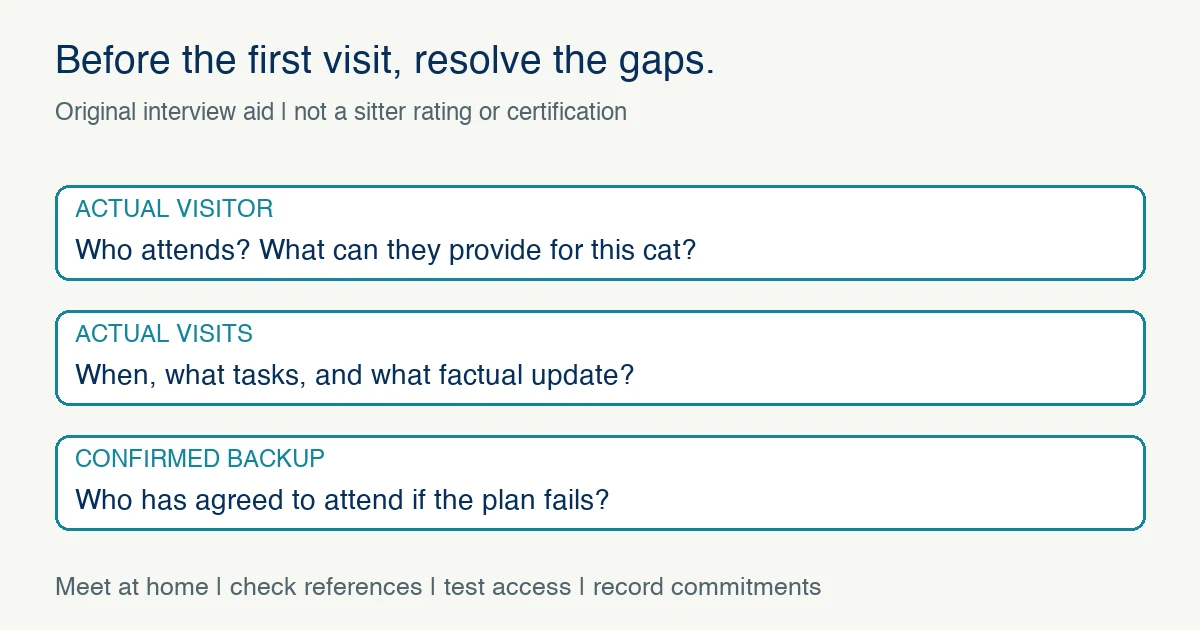
Ask who the substitute is, how they will receive instructions, how you will be notified and whether they have agreed to cover these dates. “I know another sitter” is still an unconfirmed referral. If a company assigns staff, establish whether you will meet the actual visitor and how changes are communicated.
An automatic feeder or a camera can be part of the household setup, but neither tells a substitute how to gain access or carry out the agreed care. Agree what happens after a missed visit, lost connection or equipment problem instead of relying on an alert with no responder.
Read the agreement as a description of real work
NAPPS recommends a contract setting out scope, policies and procedures, and notes that services and fees vary [2]. Confirm the dates, visitors, visit windows, expected tasks, reporting method, emergency arrangements and total quoted charges. Ask about extra visits, delays and cancellation without assuming a universal industry price or legal rule.
CFA recommends discussing veterinary transport and emergency handling [4]. Agree who contacts the clinic, who can transport the cat, how payment is arranged and what happens if you cannot be reached. Use the clinic and sitter's actual forms where applicable; a contact number alone is not authority, transport or a payment arrangement.
Decide what a useful visit update contains. A concise factual note can distinguish cats seen, food offered, observed eating, litter care, medication actually administered and unresolved concerns. “All good” is harder to evaluate if one cat was not located. Photos can supplement the note without proving every task was completed.
Only treat the service as arranged when the essential answers, access test and backup are resolved. Cats Protection specifically recommends testing access and arranging a backup for unexpected cancellation [1]. If an important care requirement remains impossible, keep looking or discuss boarding with suitable care and your veterinary team.
After the first assignment, review actual attendance and reports before booking again. Save the useful observations, correct gaps and recheck changed health instructions or staffing. This gives the next decision an evidence trail rather than a confidence score invented from a profile.