
Arrange the visit around the cat and the reason for the appointment
For a planned veterinary visit, prepare two things together: a tolerable journey for your cat and the information the team needs to assess it. Carrier practice alone will not tell the clinic about a new symptom, and a good written history will not make a noisy waiting room comfortable.
Tell the practice why you are booking, including any new or worsening change, and let the team decide how soon the cat should be seen. Cats Protection advises veterinary assessment of changes in health or behaviour [2]. Do not postpone a needed appointment until you have completed a carrier-training routine. This page is preparation guidance, not an emergency triage service.
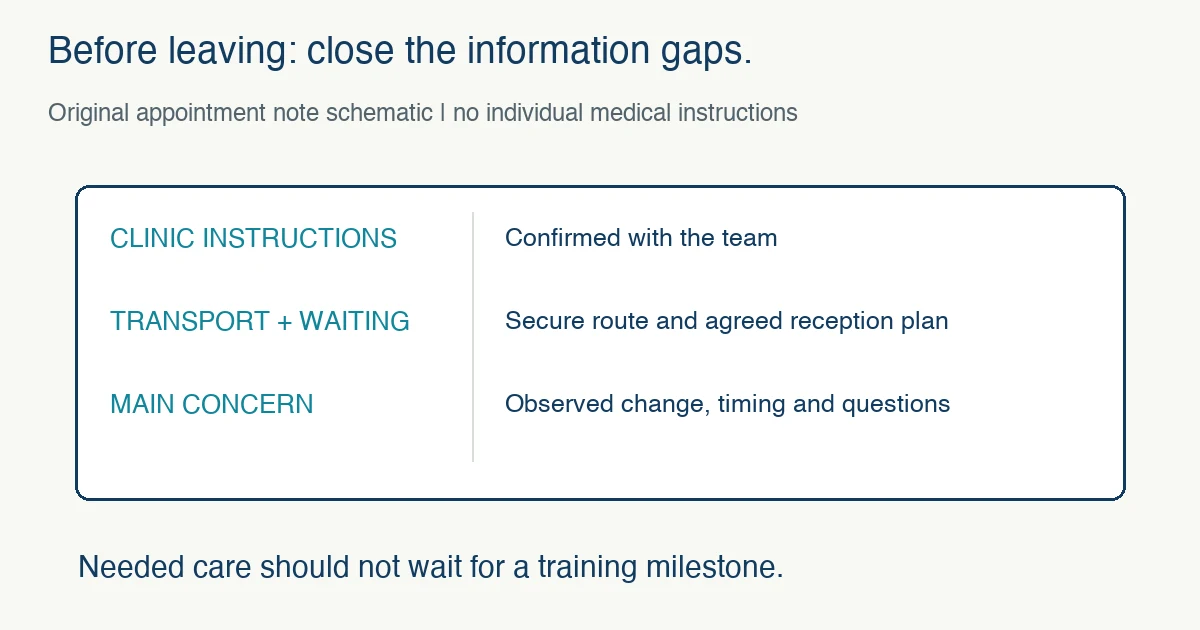
The practical outcome is a confirmed plan: where you are going, how you will transport the cat, what the clinic wants you to do beforehand and which concerns you want addressed. The plan can be brief; it should resolve the uncertainties that would otherwise emerge while you are trying to leave home.
Make one useful call before appointment day
Explain previous difficulties accurately. “Cat hid when the carrier appeared; journey included vomiting; waiting beside barking dogs was difficult” gives the team more useful information than “cat hates vets.” You do not need to label a behaviour with a diagnosis to report what happened.
Ask about a quieter appointment or a waiting arrangement that separates your cat from other animals. Cats Protection suggests asking for quiet times; the FelineVMA describes cat-only waiting areas or alternatives such as direct entry to an examination room [2][3]. Confirm what this particular practice can provide. A feline-friendly label is not evidence that a specific room will be available at your appointment.
Resolve the instructions that depend on the individual visit:
- Should food, water or usual medication change before this appointment, and exactly when?
- Does the team want any records, photos, videos or samples, and how should you bring or send them?
- If the cat becomes difficult to load or the journey is delayed, whom should you call?
- Is there a safe alternative waiting arrangement, and how will reception contact you?
General source articles discuss withholding food before travel, but they do not know your cat's age, illness, medication or planned procedure [1][2]. Get this cat's instructions from the clinic rather than applying a universal fasting period. Do not collect a sample or alter a medication simply because another owner did it.
If previous visits caused marked distress, discuss options with your veterinarian before the day. The FelineVMA advises asking about prescribed pre-visit anxiety medication where appropriate [1]. This page does not recommend a drug, dose or borrowed prescription. If medication is prescribed, confirm timing, administration and what to do if the dose cannot be given.
Prepare the carrier and journey without creating a last-minute chase
For routine visits, introduce the carrier well before departure. The FelineVMA describes leaving it in a familiar area with comfortable bedding and allowing time for acclimation [1]. Follow the carrier-entry guide for the handling practice; there is no deadline that every cat must meet.
Check the carrier's closures and condition, and whether the clinic can examine the cat with minimal removal. A detachable top can help with access, but the actual design must still be assembled and secured according to its instructions. Do not improvise a container with an insecure lid because it seems easier to lift the cat out.
Use familiar bedding and bring a spare in case of a travel accident. Covering the carrier can reduce visual stimulation, but keep ventilation unobstructed; Cats Protection makes that limitation explicit [2]. A cover must not become a reason to ignore conditions inside the carrier.
Plan the route, transport and handover so the cat stays securely contained. Keep noise and driving movements as calm as circumstances permit. Do not open the carrier on the road or in a public waiting area to let the cat stretch. If loading has become unsafe, contact the team about the next step rather than escalating a chase to keep a schedule.
Take a focused history, not an internet diagnosis
Write the most important concern first. Include when you first noticed it, what you actually observed, whether it is changing and which cat is involved in a multi-cat home. Cats Protection recommends preparing questions in advance and putting the important ones at the top [2]. The team can then direct the consultation without relying on what you remember under pressure.
Bring the existing treatment and feeding information the clinic requests. Where quantities matter, keep their units and uncertainty: a measured food amount is different from “one bowl,” and litter-box output seen in a shared tray cannot automatically be assigned to one cat.
A hypothetical appointment note might say: “Since Tuesday, hesitates before jumping to the usual chair; still uses the lower step; video recorded at home; no home pain medication given.” It reports a change without diagnosing arthritis or promising that the video will replace examination. Ask how the clinic wants a recording delivered; avoid stressing the cat to stage a symptom for the camera.
Use the vet-visit record guide to organise observations if useful. Do not keep collecting information while delaying veterinary advice about a concerning change. The record supports a conversation; it does not determine urgency or treatment.
Keep the waiting arrangement safe
On arrival, let reception know you are there and follow the agreed plan. The FelineVMA suggests asking about direct examination-room entry when dogs or an anxious waiting situation are a problem [1]. If the practice offers raised carrier space, make sure the support is stable and keep the carrier closed.
Some clinics can call you while you wait elsewhere. Waiting in a vehicle is only an option when you can maintain safe conditions and stay with the cat. The FelineVMA explicitly qualifies car waiting with appropriate heating or cooling in extreme weather [1]. Do not leave a cat in a parked vehicle or assume a short wait makes heat risk irrelevant. If the environment cannot be kept suitable, tell reception and agree another arrangement.
Keep the cat away from other animals where possible. A person wanting to greet your cat or another owner wanting to bring a dog closer does not need access to the carrier. Avoid opening it or repeatedly reaching in to reassure the cat in an exposed setting.
Let the team direct handling and leave with clear instructions
In the examination room, keep the cat in the carrier until a team member asks you to do otherwise [1][2]. Do not tip it out or force an interaction. Tell the team what handling it normally accepts and let them choose how to proceed. FelineVMA's practice guidance describes adapting the examination location and pausing when stress increases [3].
You can ask what is happening and clarify the next decision without taking over restraint. If a procedure cannot be completed comfortably, discuss the team's alternative rather than treating greater force as the only solution. Which approach is medically appropriate belongs to the veterinary team and this cat's circumstances.
Before leaving, clarify any home instructions: what to give or change, the exact timing, what to monitor, when to recheck and whom to contact with a problem. If the cat is staying in hospital, ask what belongings can be accepted. The FelineVMA suggests sharing usual food, litter and preferences to help staff care for the cat [1]; that does not mean every ward can accept every item.
At home, provide a quiet return and follow the discharge instructions. Cats Protection advises allowing the cat to leave the carrier at its own pace and avoiding additional disturbance [2]. For the next appointment, record which arrangements helped and which failed. A useful improvement might be an earlier reception call or a different waiting route; it need not be a new purchase or a claim that every visit will now be stress-free.