
Most cats do not need a routine bath
A cat that is keeping its coat clean through normal grooming generally does not need bathing on a weekly or monthly schedule. Cats Protection says a soft cloth with warm water is often enough for ordinary dirt [1]. Decide what needs attention before choosing shampoo or filling a tub.
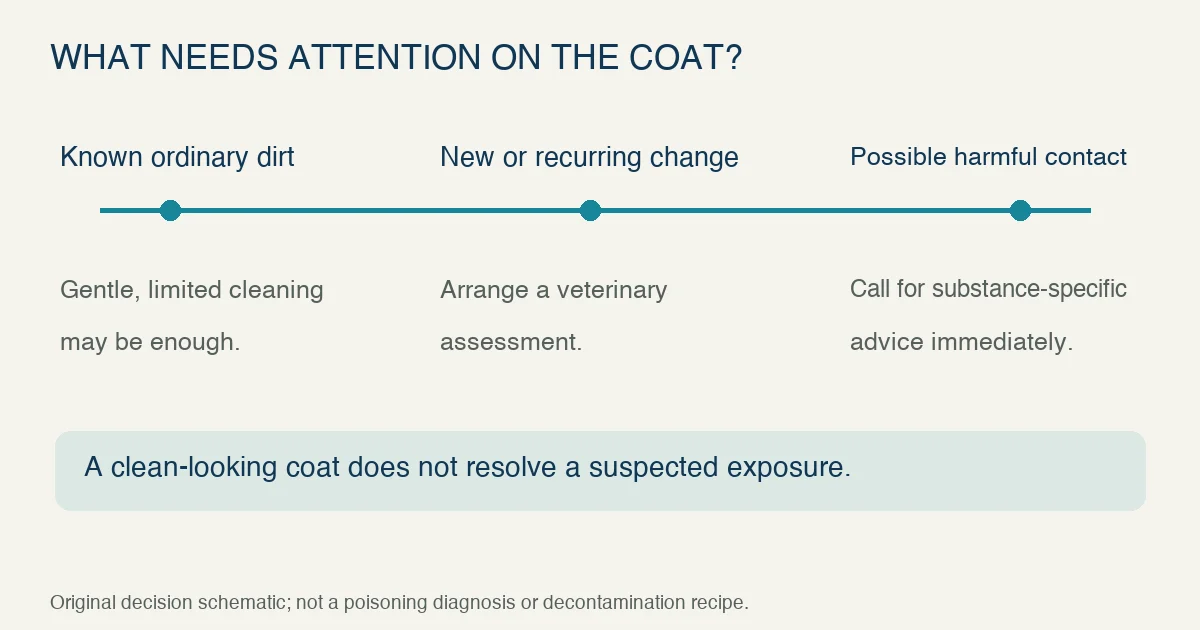
If the coat has become greasy, matted or dirty because the cat is grooming less, a bath does not explain the change. Arrange a veterinary assessment for new grooming changes [1]. If the cat has something potentially harmful on its skin or fur, contact a veterinary professional immediately: the substance and possible ingestion determine the response [3]. Do not treat suspected poisoning as a routine grooming project.
Identify what is on the coat before cleaning it
For known, ordinary dirt in a small area, start with the least extensive cleaning that meets the need. Use a soft cloth dampened with warm water, work gently and stop if the area is painful or the cat cannot tolerate handling. Do not scrub sore skin just because it looks dirty.
For an unidentified spill, chemical residue, paint or another potentially harmful substance, keep the packaging or product name available and call your veterinarian. Describe when contact happened, where it is on the cat and whether licking or ingestion may have occurred. ASPCA emphasizes that different substances have different risks and recommendations [3]. A clean-looking coat afterward does not establish that an exposure has been resolved.
Protect yourself from contact with the substance as directed, and ask how to prevent further licking safely. Follow the professional's instructions about whether and how to wash the cat. Avoid choosing solvents, household cleaners or an online oil-removal recipe by appearance alone. If handling is unsafe or the cat is unwell, tell the clinic rather than forcing a bath first.
Investigate recurring soiling and skin changes
Repeatedly washing the same patch is not a long-term plan for a recurring problem. Note whether dirt follows toileting, whether the cat can reach the area, and whether there is a change in movement or grooming. Record redness, wounds, hair loss or discomfort without diagnosing a skin disease.
Cats Protection recommends a vet visit when grooming increases or decreases unexpectedly; ASPCA also advises investigation of skin problems and unusual hair loss [1][2]. Bring observations and, if useful, a photograph taken without stressing the cat. Ask whether coat care, health assessment or both are needed.
For tangles or mats, use the long-haired grooming guide and obtain professional help when appropriate. Do not use a bath as a substitute for assessing a tight mat or painful skin. For a cat struggling to reach resources or groom itself, review senior-cat home equipment alongside veterinary advice; age alone does not establish the cause.
If a bath is needed, prepare before handling the cat
For ordinary coat cleaning that genuinely requires bathing, use a product specifically intended for cats and follow its label or your veterinary team's directions. Human shampoo is not an interchangeable substitute [1][2]. A medicated product requires the prescribed instructions, including where it may be used, contact time and rinsing requirements; obtain clarification rather than borrow another animal's treatment.
Prepare a stable washing area with a non-slip surface, lukewarm water, towels and the approved product within reach. ASPCA's bathing guidance supports a non-slip mat, avoiding hot water and protecting the face, eyes, ears and nose from spray [2]. Read the product directions before starting, not while trying to keep hold of a wet cat.
Check that you can complete washing, rinsing and drying with gentle handling. If the cat fights the process and either of you could be injured, ASPCA recommends a professional groomer or veterinarian [2]. Ask a prospective groomer about handling cats and what happens when a cat cannot tolerate the procedure; a bath appointment should not require completing the wash at any cost.
Keep water and product away from the face and rinse properly
Apply only the approved product in the manner instructed, avoiding sensitive areas. Use a damp cloth for appropriate gentle face cleaning rather than directing a spray at the eyes, ears or nose. Rinse as instructed so shampoo residue does not remain on the coat [2]. There is no universal dilution for every cat shampoo: a recipe from one guide does not override the actual product label.
Keep the session calm and stop if handling becomes unsafe. Do not escalate restraint to finish a cosmetic task. For an exposure-related wash, promptly tell the veterinary professional if you cannot carry out the instructions so another arrangement can be made.
Dry gently with towels in a warm place away from drafts. ASPCA's decontamination guidance specifically advises against blow drying after exposure because heat may irritate skin or spread residues [3]. This guide uses towel drying rather than recommending a dryer for an unassessed situation.
Separate routine shampoo from exposure instructions
A recommendation for a cleaning agent in a poison-control context does not make it a routine cat shampoo. Likewise, a cat shampoo suitable for ordinary bathing may not be the correct response to a chemical exposure. Use the instructions for the actual situation and substance [1][3].
If a professional advises an exposure wash, record the product and method they specify. Do not substitute dishwasher detergent for dishwashing liquid, change mixtures or repeat washes indefinitely. ASPCA warns that repeated bathing can irritate or dry skin [3]. Contact the team again if material remains or the cat develops concerning signs.
The home-renovation guide helps prevent access to work materials. Preventing another contact matters after the immediate cleaning problem has been addressed.
Decide what changes after cleaning
For a small patch of ordinary dirt that is removed comfortably, returning to normal grooming may be all that is needed. For recurring soiling, reduced grooming, skin damage or difficult handling, agree a specific follow-up with your veterinary team rather than adding baths to the calendar.
Keep the useful facts: what was on the coat, which area was affected, the cleaning product used, the cat's response and any veterinary advice. For a suspected harmful exposure, follow the clinical plan even if the fur now looks clean. The aim is appropriate coat care without losing sight of the reason cleaning became necessary.