
Buy for a specific access problem
Before shopping, write the task the item must make easier: reaching a favourite resting place, entering a tray, or resting on a usable surface. Then record the actual space and the cat's response. An age label does not establish the right step height, entrance, traction or bedding for an individual cat.
Discuss new movement or care difficulties with your veterinary team. FelineVMA's home-modification guidance prioritises reachable essentials, accessible resting places, low-entry trays and stable routes for cats with mobility needs [1]. A purchase can change the environment; it cannot diagnose or treat the cause of a new difficulty.
This is a specification-based buying guide. PurrAtlas has not physically tested the products below, assessed an individual cat using them, or verified therapeutic benefits. They illustrate different specification questions, not competing winners in a “best senior cat products” ranking.
Measure the whole route before selecting stairs
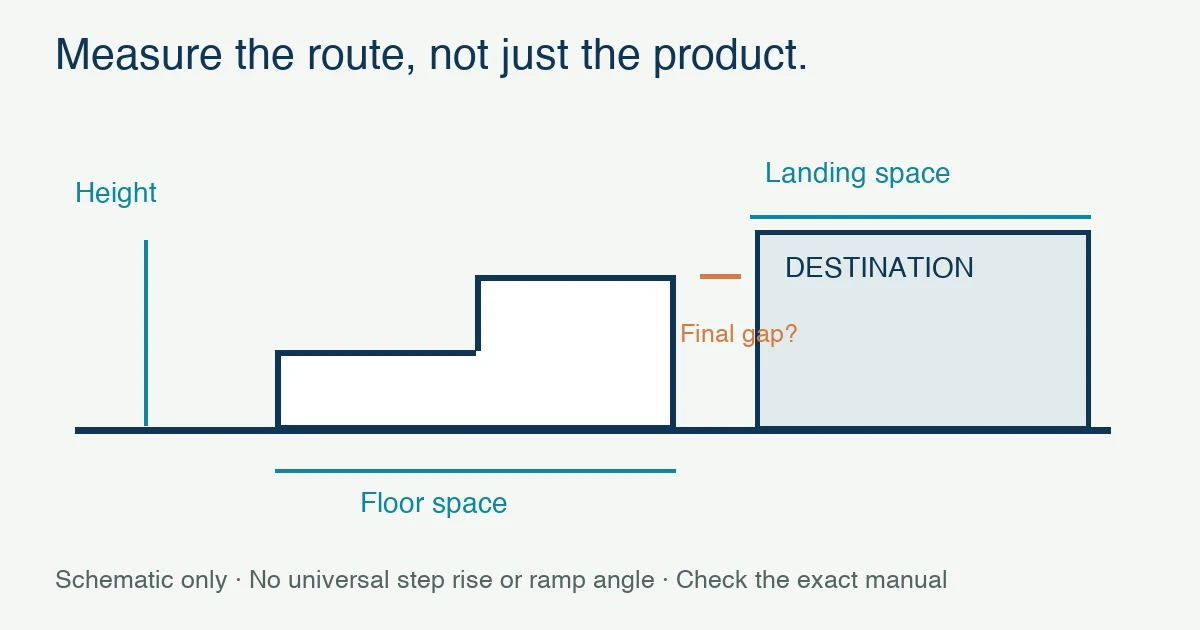
Record the height of the destination, the floor space in front of it and the available landing space. A staircase that fits its footprint may still finish below the intended surface, leave an awkward final gap or block the route to a tray. Do not subtract overall product height from furniture height and assume the remaining movement will suit your cat.
Ask for individual step rises, usable tread depth and width, surface treatment, base grip and assembly requirements. Check how the cat could turn and come down as well as go up. FelineVMA describes a stable ramp with a gentle incline or suitable steps as access options [1], but this article supplies no universal ramp angle or step rise for a cat with a medical condition.
You may be able to provide a reachable resting alternative without buying stairs. If the actual problem is access to water or a tray, putting every essential resource above a new staircase creates another dependency. Review senior-cat home care for the broader arrangement before choosing an item.
Read two actual product specifications
The following details were checked on the manufacturers' pages on 9 October 2026. Dimensions belong to these specific listings; they are not measured by PurrAtlas. Neither item establishes that an individual cat will use it comfortably.
| Item and listing | Verified details | Questions still to resolve |
|---|---|---|
| Pet Gear Easy Step II, Essential Grey; listing item PG9720EGU | Overall product 22 in L × 16 in W × 16 in H; listed step height 6 in; first tread depth 11.5 in and second 12.25 in. Removable machine-washable carpet tread and rubber base grippers are listed [2]. | Confirm complete rise and landing geometry for your destination. The checked text does not identify the exact structural material. Suitability for your cat is not established by the listing. |
| K&H Self-Warming Pet Pad, Oatmeal/Chocolate | Listed size 21 × 17 in; microfleece top and reversible sides; no electricity required. Manufacturer instructions say gentle cold wash, then line dry or use a no-heat dryer cycle [4]. | Thickness, full material composition and a quantified cushioning rating are not supplied in the checked page text. Grip on your floor and comfortable entry need assessment. |
These are different categories: steps address a route, while a pad provides a resting surface. Do not compare them as alternatives for the same task. The K&H pad is not its electric Thermo-Kitty Mat or an insert heater. A matching brand name does not make instructions interchangeable.
For the stairs, the product listing's overall 16-inch height and 6-inch step-height field describe different measurements. Do not infer that adding two identical vertical rises reproduces the full geometry. Ask the manufacturer to clarify anything your intended placement depends on. Keep the exact model and colour variant with the inquiry rather than asking about “the two-step one.”
Include the manual in the purchase decision
The Pet Gear manual linked by that listing covers the PG9710/PG9720 series. It directs assembly without gaps between parts, use of Pet Gear replacement parts, and includes a warning not to leave the pet unattended [3]. That warning is relevant if you wanted stairs to remain an unattended everyday access route; ask the manufacturer for clarification before buying for that use.
Do not reduce the decision to a claimed weight capacity. Capacity does not answer traction, approach, turning, pain or whether the cat can manage the movement. Rubber grippers and washable carpet are listed features [2], not results from a PurrAtlas stability or wear test.
Check instructions and suitability again when the delivered item arrives. If a different model, missing part or changed manual comes with it, resolve the discrepancy before cat access. This guide does not certify assembly, repair a damaged product or replace its instructions.
Separate bedding access from warming claims
Look at the entrance or edge, usable resting area, cover care and where the bed can be placed. A thick bolster may change access even if the overall length sounds generous. Confirm whether quoted dimensions describe the outside or the sleeping space; do not invent an interior size by estimating a photograph.
The K&H page describes its pad as reflecting the animal's own warmth without electricity [4]. That is a manufacturer description, not a measured temperature gain or proof of pain relief. Its soft surface also does not establish an orthopaedic performance rating. The page does not supply those results, and PurrAtlas has not tested them.
Keep self-warming and powered products separate when comparing instructions. If considering an electric bed, obtain that exact model's electrical, cover and use instructions and discuss suitability with your veterinary team. Do not add a household heating pad or an unlisted insert to a product because a warmer surface sounds helpful.
Consider whether cleaning leaves the cat without its only usable resting option. Confirm drying instructions and provide another accessible choice while an item is being cleaned. A washable label does not mean every detergent, dryer setting or removable component is approved.
Check tray entry rather than shopping by age category
FelineVMA recommends low-entry trays with usable turning space and accessible placement for mobility needs [1]. Ask for the actual entrance threshold and internal usable dimensions, not only overall wall height. An advertised “low front” without a measurement leaves a question unanswered.
Choosing a litter box compares two ordinary trays and identifies missing entrance or internal measurements. Read those limitations before assuming either is an appropriate senior-cat option. A separate purchase table here would duplicate that work without providing a better answer.
An invented purchase note could read: “Need easier tray entry; current threshold measured; cat's response recorded; supplier asked for the proposed model's entrance measurement; existing usable tray retained.” This is a planning example, not a veterinary recommendation or a tested product result.
Decide what evidence would change the purchase
Finish with the unresolved questions that matter for your intended use. If a landing measurement, structural material, care requirement or manual warning prevents a decision, ask about it before ordering. Check the seller's actual return conditions yourself; this page does not promise approval, free returns, stock or a price.
If you introduce an appropriate item, observe voluntary use and keep usable familiar options. A refusal is a reason to review the placement and discuss persistent difficulty, not force the cat to prove that the purchase works. Vet-visit records can help you describe the difficulty clearly.
The result should be a decision about one task, with exact product information and remaining uncertainty. Sometimes that decision is to change the layout, request clarification or obtain clinical advice before buying.