
Practical cat care guides

Start with the question that matters to you and your cat.

79 results

Illustration of a cat exploring beside an open carrier
Indoor life

Bringing a Cat Home: First Night and Settling In

Prepare a secure room, familiar supplies and a first-night handover. Record what you observe and separate arrival care from cat introductions.
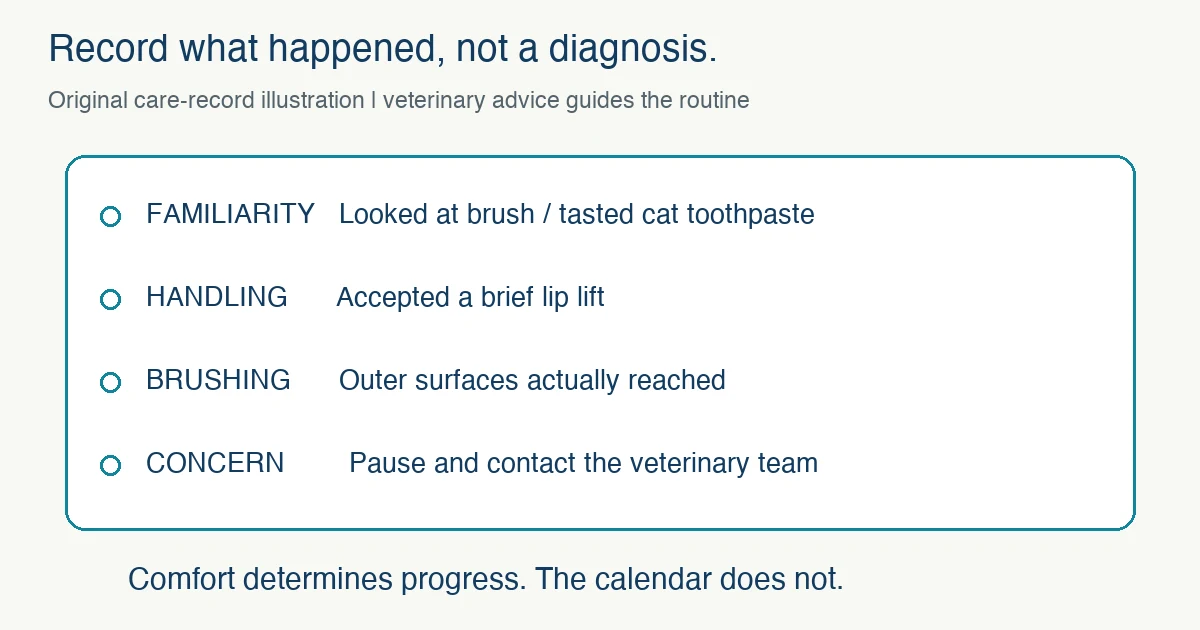
Original care-record illustration distinguishes familiarity with cat toothpaste, accepted lip handling, actual outer-surface brushing and concerns requiring veterinary contact.
Behavior

Brushing Your Cat’s Teeth: Getting Started Without Forcing It

Check whether home brushing is appropriate, build comfortable handling gradually, and distinguish toothpaste familiarity from actual cleaning and veterinary assessment.
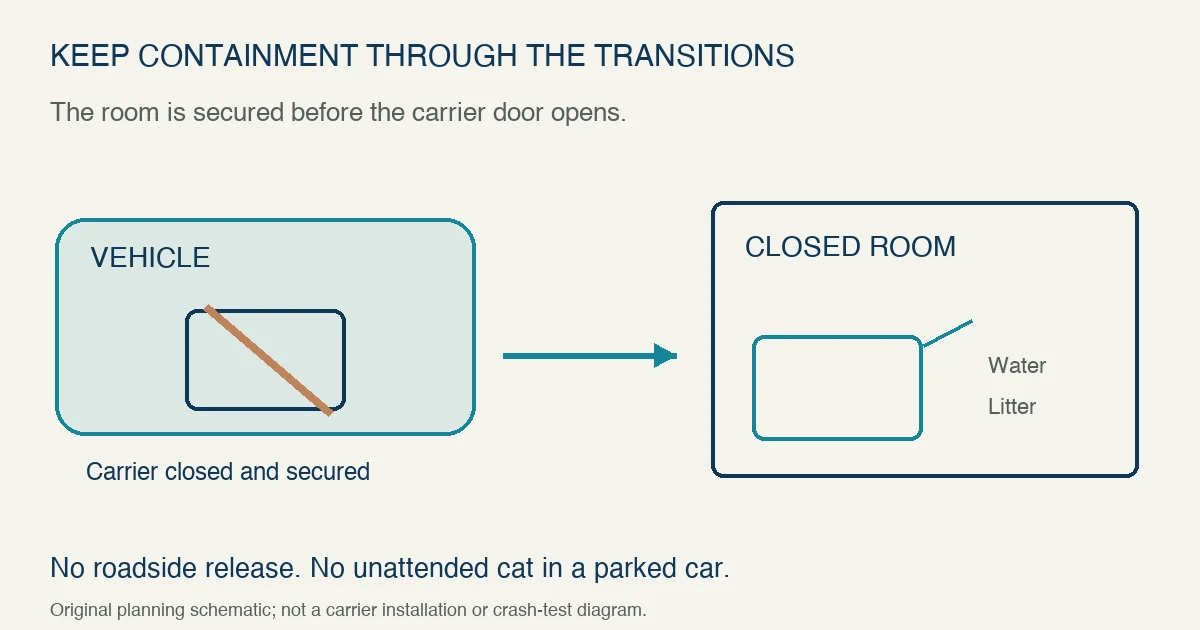
Original travel planning diagram: keep a carrier closed and secured in the vehicle, then move it into a closed destination room before opening it; no unattended parked-car stop.
Indoor life

Car Travel with a Cat: Carrier, Stops and Safe Arrival

Plan a necessary road journey around a secured carrier, your cat’s care requirements, contained stops and a prepared destination room.
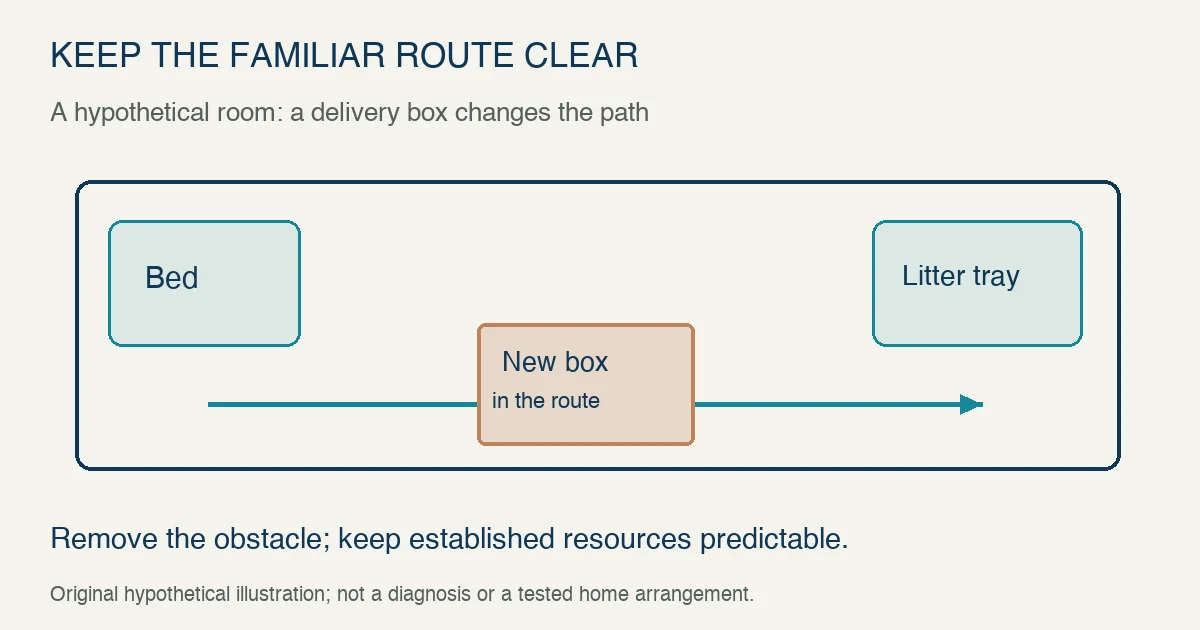
Original hypothetical room diagram shows a delivery box obstructing the familiar route from a bed to a litter tray; remove temporary obstacles and keep established resources predictable.
Indoor life

Caring for a Blind Cat: Familiar Routes and Safer Daily Care

Respond to new vision changes promptly, then make familiar routes, resources, handling and carer instructions usable for a cat with established sight loss.
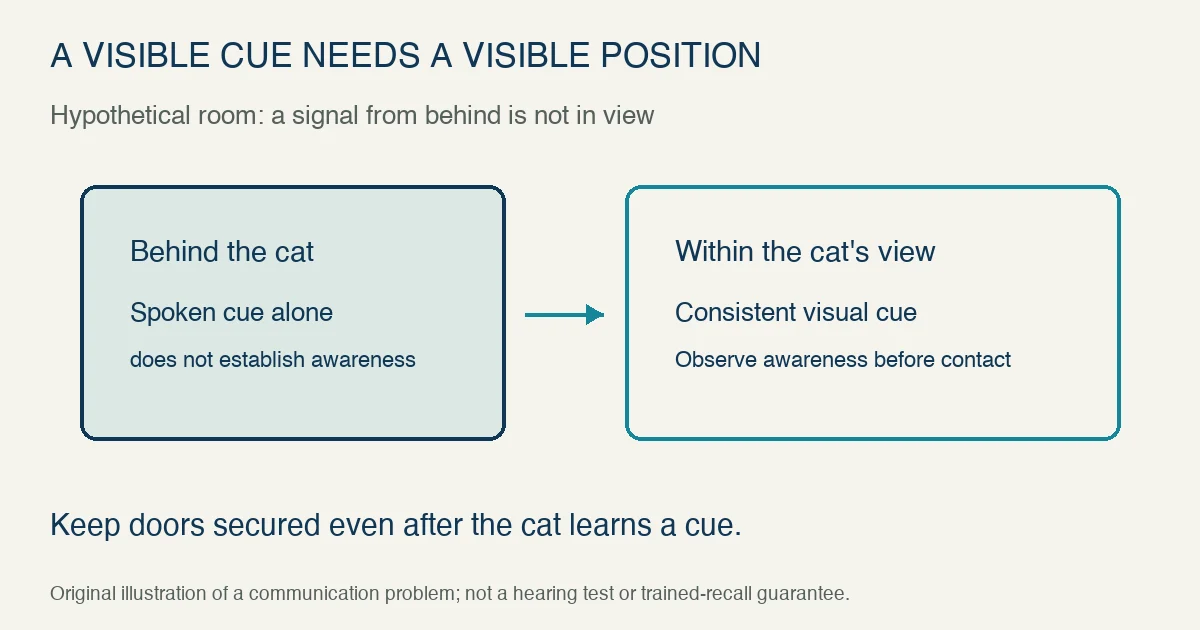
Original hypothetical comparison distinguishes approaching behind a deaf cat with speech from offering a consistent cue within its view; observe awareness and retain secured doors.
Indoor life

Caring for a Deaf Cat: Communication, Waking and Door Safety

Use visible, consistent cues and considerate approaches for a cat with assessed hearing loss. Review waking, household entrances and new ear or behavior changes.
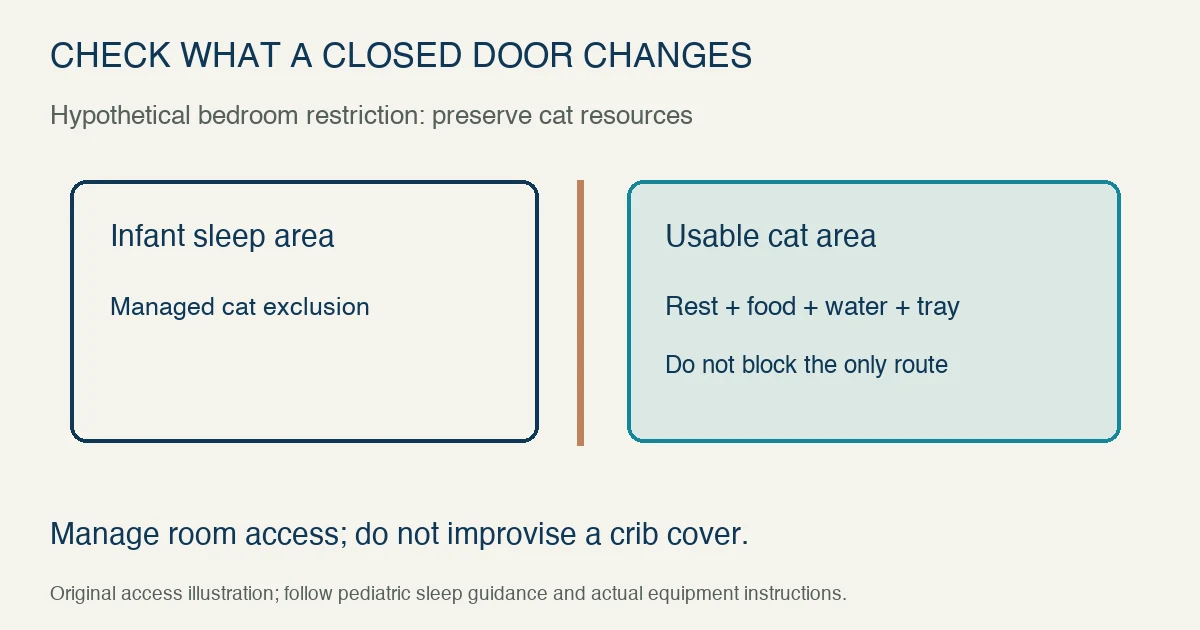
Original hypothetical home access plan separates an infant sleep area from a usable cat area with rest, food, water and tray access; manage cat exclusion without improvising a crib cover.
Indoor life

Cat and New Baby: Prepare Resources, Care and Safe Separation

Prepare the cat's resources and caregiver routine before a baby arrives. Plan supervised contact and cat exclusion without improvising infant sleep equipment.
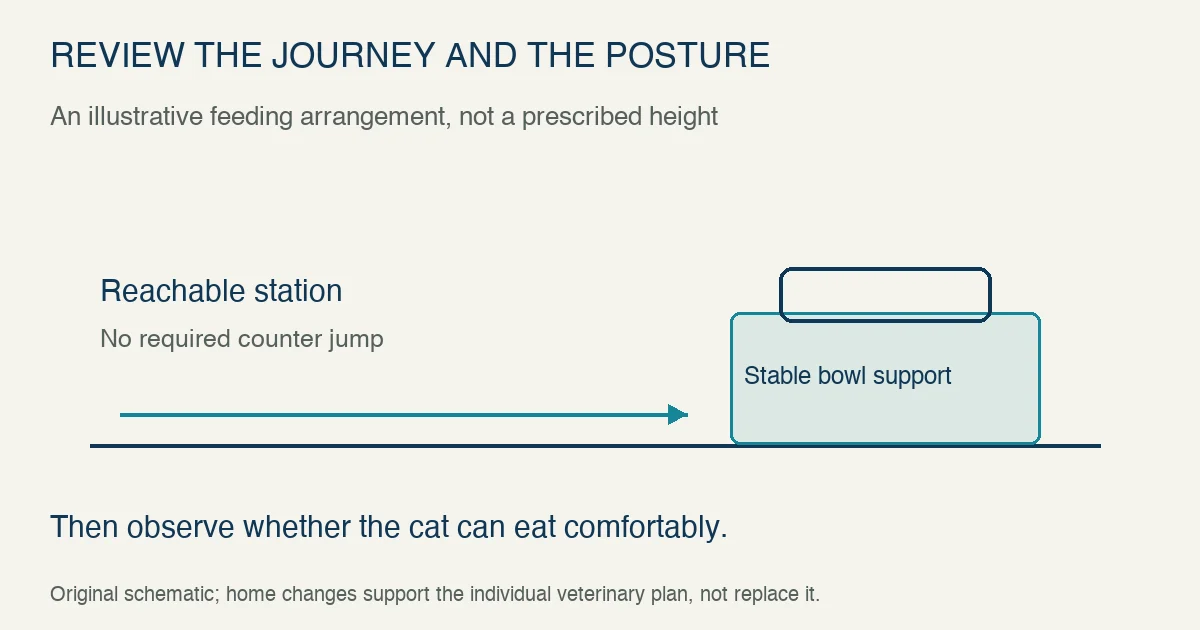
Original illustrative feeding setup separates reaching a station without a counter jump from eating comfortably at a stable bowl support; no prescribed height or clinical outcome.
Senior care

Cat Arthritis Home Care: Mobility Notes and Usable Resources

Take concrete movement changes to the vet, then review the route to trays, food and resting places alongside the cat's individual treatment plan.

A tuxedo cat sits beside a person whose relaxed hand rests away from the cat.
Behavior

Cat Bites When Petted: When to Stop and What to Change

Stop at early warning signs, give your cat a choice about contact, and separate touch intolerance from play, nearby triggers and changes needing a vet.
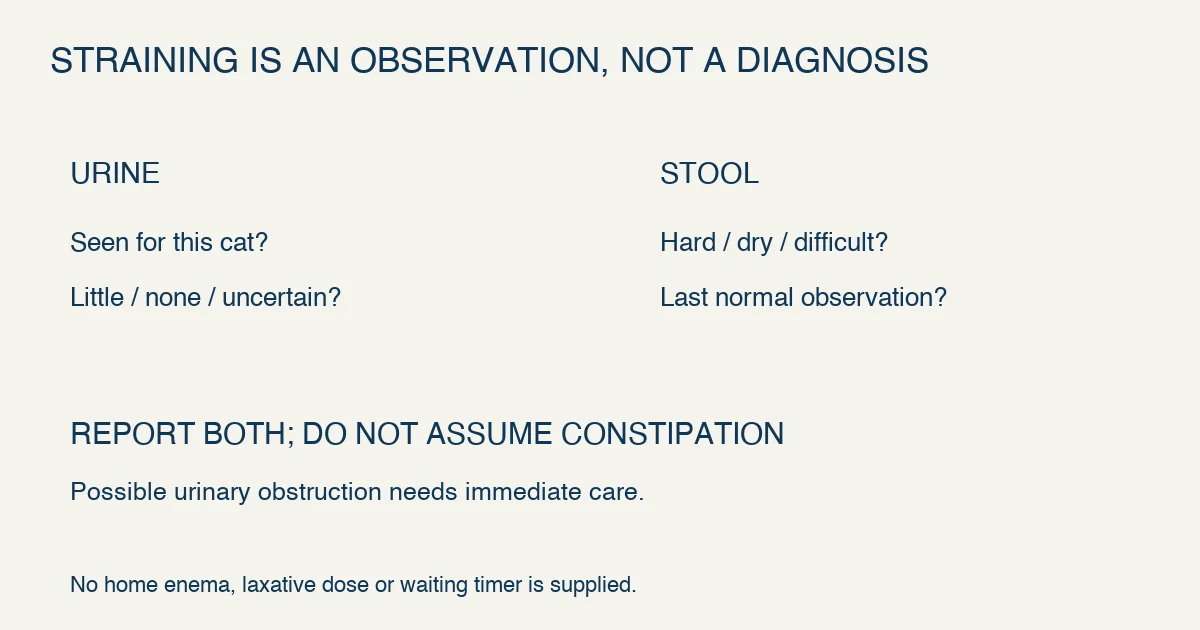
Original straining decision reminder separates urine observations from stool observations and directs unknown urine output to immediate veterinary advice rather than a constipation remedy.
Food & feeding

Cat Constipation: Check Urine Output and Build a Vet-Led Plan

Avoid confusing litter-box straining with constipation. Record stool, urine, intake and access problems, then follow an individual veterinary plan.
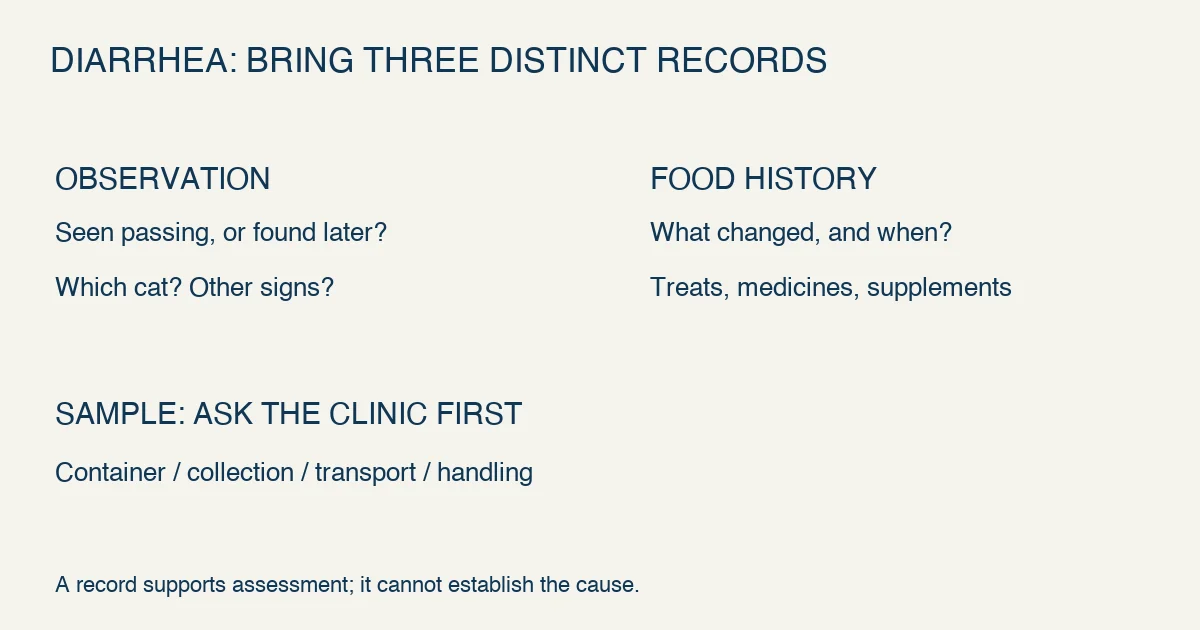
Original diarrhea preparation notes distinguish the observed stool event, the food-change timeline and clinic-specific sample instructions; these are records, not diagnoses.
Food & feeding

Cat Diarrhea: Get Help, Record Changes and Prepare for the Vet

Decide when diarrhea needs veterinary attention, preserve a useful stool and food history, and avoid turning home remedies into a treatment plan.
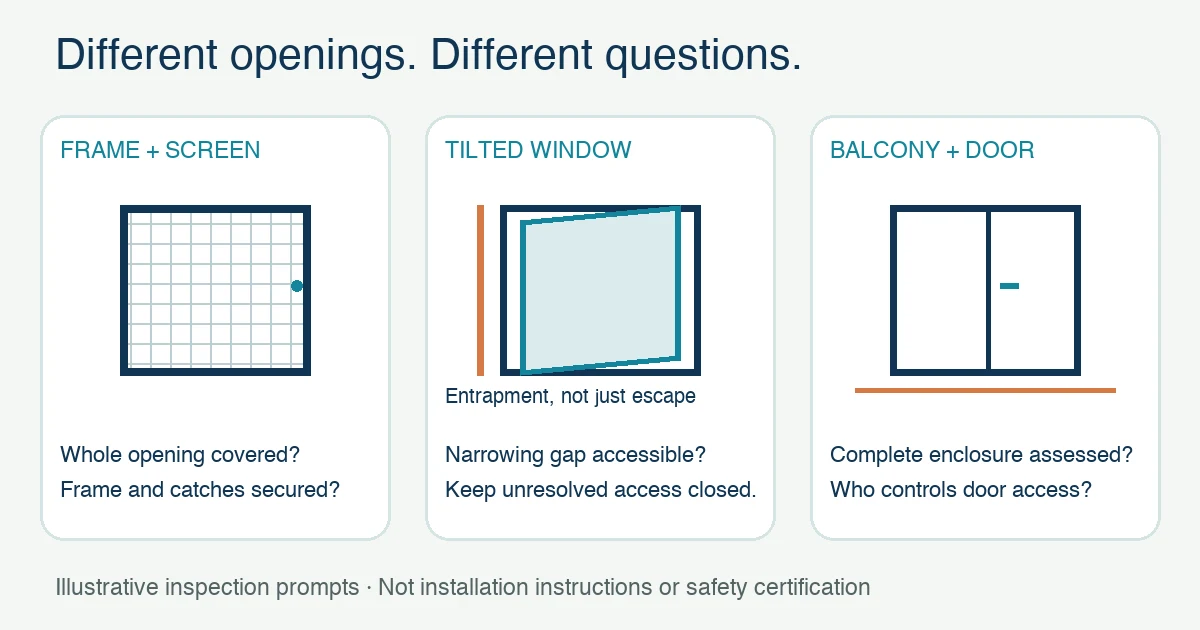
Inspection prompts for a screen and frame, a tilted window gap, and balcony-door access; schematic, not installation instructions.
Indoor life

Cat Door and Window Safety: Screens, Gaps and Access

Inspect window frames, tilted openings, balcony access and exterior-door routines. Separate escape, fall and entrapment risks before restoring cat access.
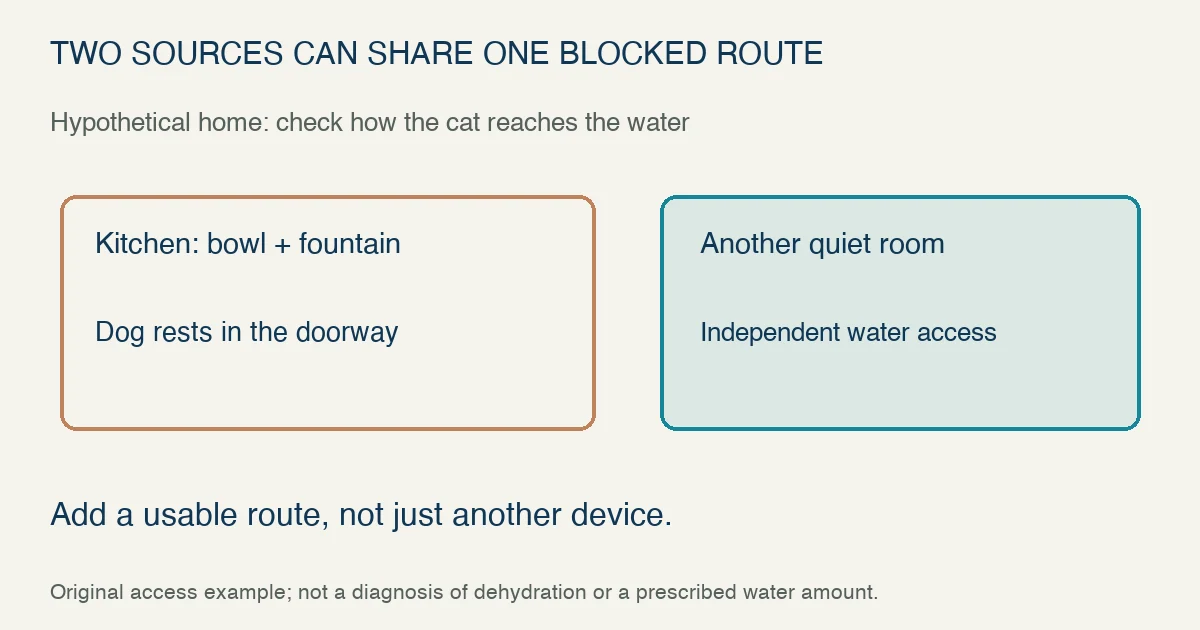
Original hypothetical water-access plan: a kitchen bowl and fountain share a doorway where a dog rests; another quiet room provides an independent route to water, without prescribing an intake amount.
Food & feeding

Cat Drinking Water: Check Changes, Food Moisture and Real Access

Interpret drinking observations alongside food and household access. Keep fresh water available, record changes honestly and recognize when veterinary assessment matters.

A little guidance before your next step

Explore care tools

A cat is arriving

Prepare the first night. For a kitten, add age-appropriate preparation. Resident cats need a separate introduction plan; a ready room does not mean they are ready to meet.

A daily routine is unclear

Start with food labels and intake records or litter access and cleaning. If you cannot tell who ate, use meal separation. Each guide ends with a specific next action.

The home needs a review

Map indoor choices and each cat's resource access. Adapt play to observed responses. New movement difficulties need a veterinary conversation alongside accessible home changes.

Breeds

BengalBritish ShorthairMaine CoonPersianRagdollSiamese

Behavior

Brushing Your Cat’s Teeth: Getting Started Without Forcing ItCat Bites When Petted: When to Stop and What to ChangeCat Harness Training: Suitability, Indoor Practice and When to StopCat Hiding: Check Changes, Protect Retreats and Know When to CallCat Peeing Outside the Litter Box: Urgency, Observations and AccessCat Scratching Furniture: Fix the Scratcher SetupCat Waking You at Night: Check Needs and Build a Workable Routine

Nutrition

Cat Constipation: Check Urine Output and Build a Vet-Led PlanCat Diarrhea: Get Help, Record Changes and Prepare for the VetCat Drinking Water: Check Changes, Food Moisture and Real AccessCat Feeding Guide: Labels, Portions and IntakeCat Food Storage: Dry Bags, Opened Wet Food and Useful RecordsCat Not Eating: Contact the Vet and Keep Actual Intake in ViewCat Vomiting: Decide the Next Step and Record the Whole Pattern

Indoor life

Bringing a Cat Home: First Night and Settling InCar Travel with a Cat: Carrier, Stops and Safe ArrivalCaring for a Blind Cat: Familiar Routes and Safer Daily CareCaring for a Deaf Cat: Communication, Waking and Door SafetyCat and New Baby: Prepare Resources, Care and Safe SeparationCat Door and Window Safety: Screens, Gaps and AccessCat Ear Care: Know When to Stop Cleaning and Call the Vet

Useful tools

Litter box plannerFood calorie converterHome resource checklistMeal portion plannerEveryday care checklistWeight record