
Practical cat care guides
Start with the question that matters to you and your cat.
79 results

How to Introduce Cats: Stages and When to Pause
Prepare separation, scent and supervised contact. Progress according to both cats and know when to pause or return to a workable stage.

How to Play With Your Cat: Adaptable Games
Adapt toy movement and food-puzzle difficulty to observed responses. Keep play safe, voluntary and appropriate to your actual cat.

Indoor Cat Home Setup: Routes, Rest and Enrichment
Audit retreats, scratching, climbing routes and overnight access. Choose a useful home change before buying more cat furniture.
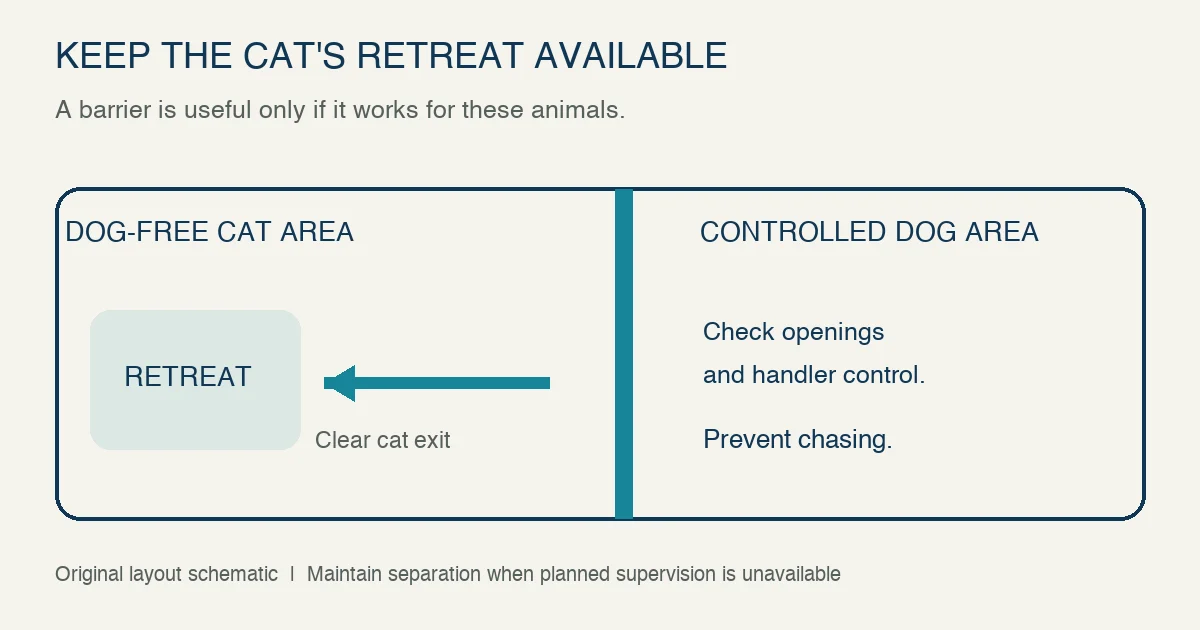
Introducing a Cat to a Dog: Separation, Barriers and Cat Retreats
Prepare dog-free resources, check the actual barrier and retreat route, and decide when a controlled introduction should pause for professional help.
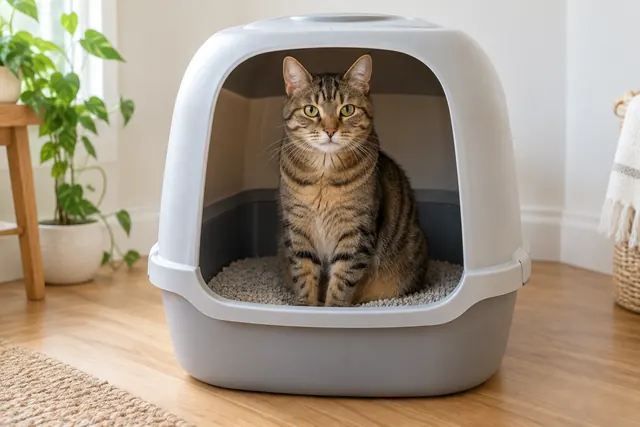
Litter Box Setup: Access, Size and Cleaning
Review tray interiors, separate locations and cleaning responsibilities. Know when a toileting change needs immediate veterinary help.
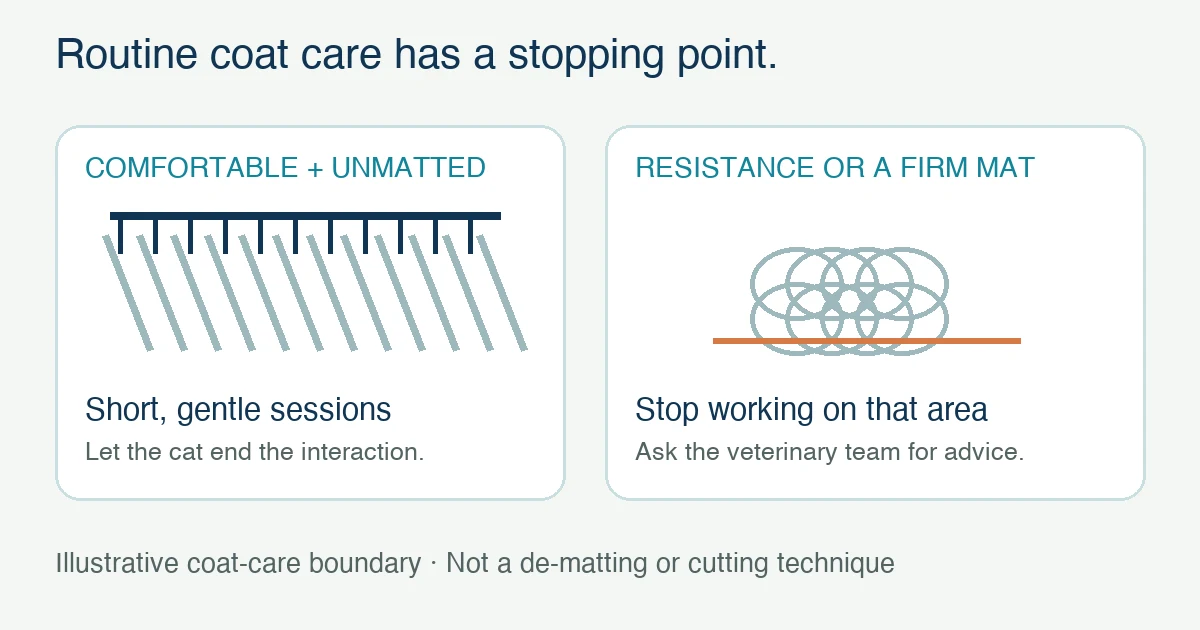
Long-Haired Cat Grooming: Routine Care and Matted Fur
Build tolerable coat-care sessions, notice areas you cannot check, and recognise when mats or changing grooming need veterinary help. No DIY mat-cutting instructions.
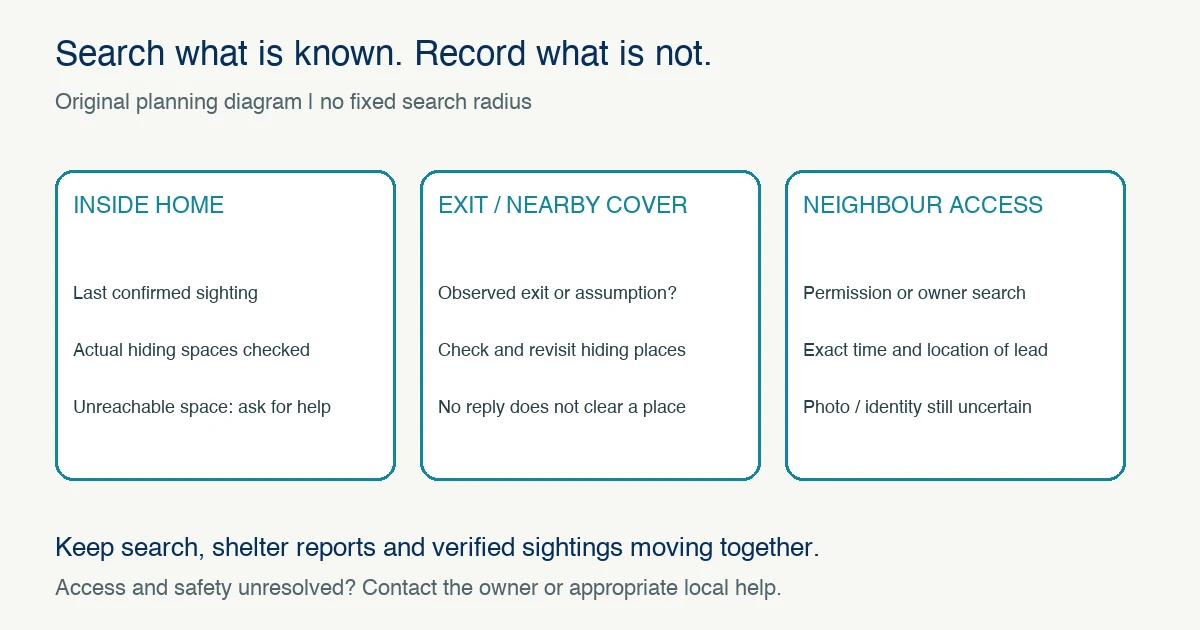
Lost Indoor Cat: Search Nearby and Act on Sightings
Start physical searches, coordinate neighbour access, verify sighting details and contact local organisations without relying on a litter lure or guaranteed return time.
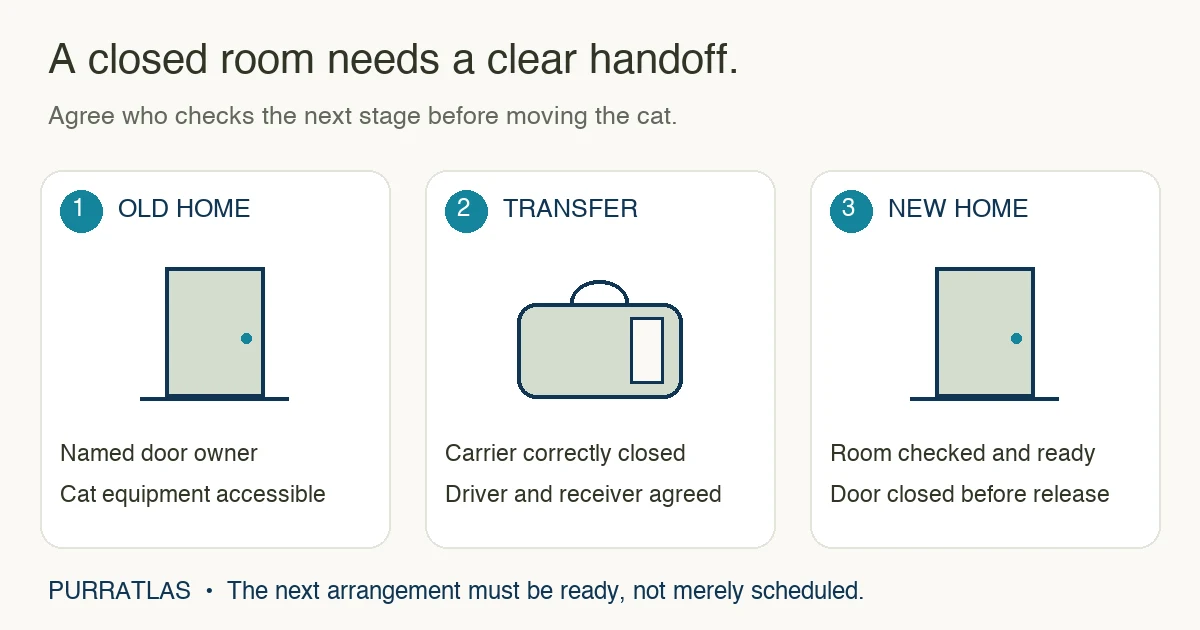
Moving House With a Cat: Doors, Transport and Room Handoffs
Assign responsibility during packing, prepare the destination before releasing your cat, and keep care information available through the move.

Multi-Cat Home Setup: Resources for Each Cat
Map individual food, litter, rest and play access. Look beyond resource counts and the absence of fights in a shared home.

New Kitten Checklist: Supplies and First-Week Care
Confirm age and care records, prepare reachable essentials and plan veterinary follow-up. A first-week checklist beyond purchases.
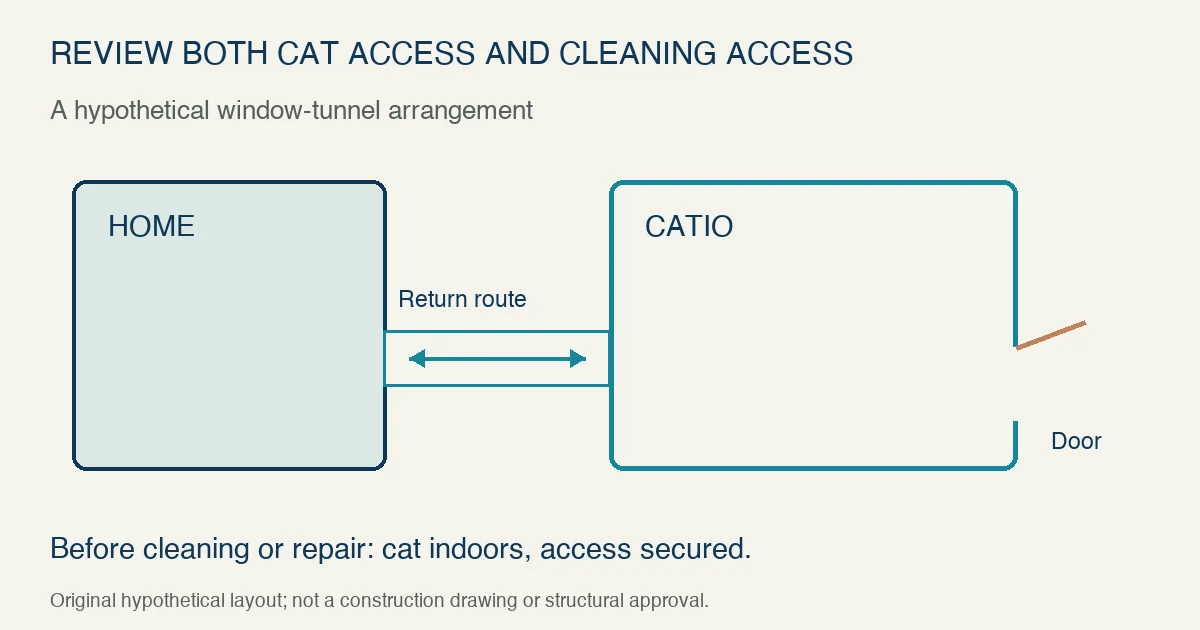
Planning a Catio: Containment, Return Access and Daily Use
Review the actual location, enclosure boundary, voluntary return route, furnishings and cleaning access before letting a cat use a catio.
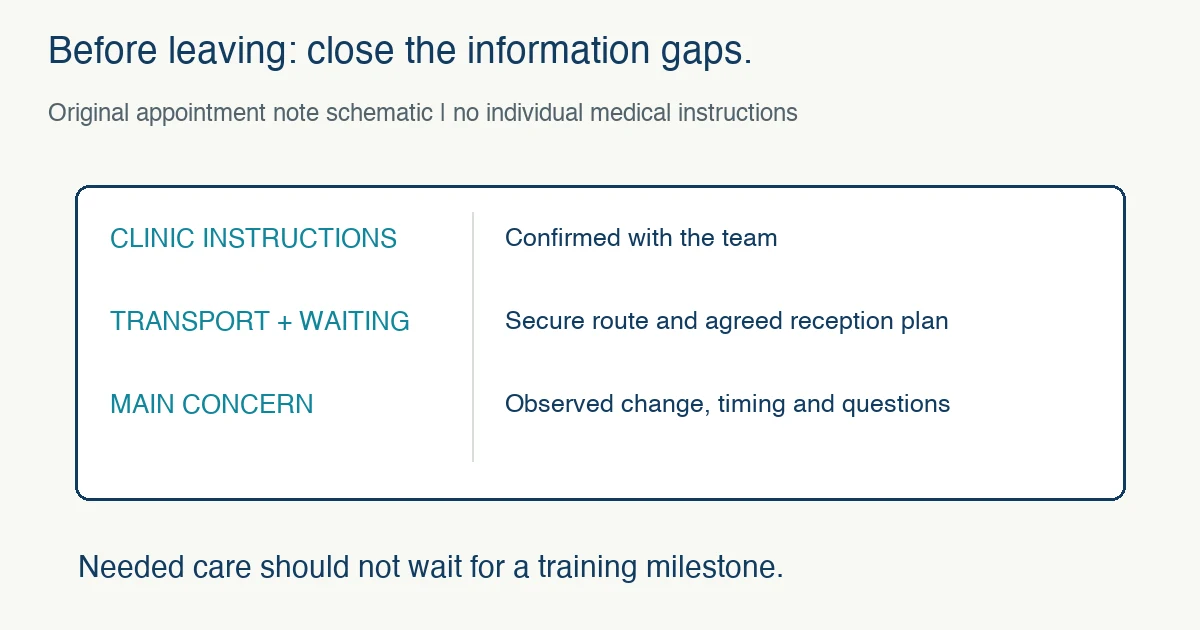
Preparing Your Cat for a Vet Visit
Agree the clinic’s instructions, prepare secure transport and a quieter waiting plan, and bring a focused history without delaying needed care.
A little guidance before your next step
Explore care toolsA cat is arriving
Prepare the first night. For a kitten, add age-appropriate preparation. Resident cats need a separate introduction plan; a ready room does not mean they are ready to meet.
A daily routine is unclear
Start with food labels and intake records or litter access and cleaning. If you cannot tell who ate, use meal separation. Each guide ends with a specific next action.
The home needs a review
Map indoor choices and each cat's resource access. Adapt play to observed responses. New movement difficulties need a veterinary conversation alongside accessible home changes.