
Practical cat care guides
Start with the question that matters to you and your cat.
79 results
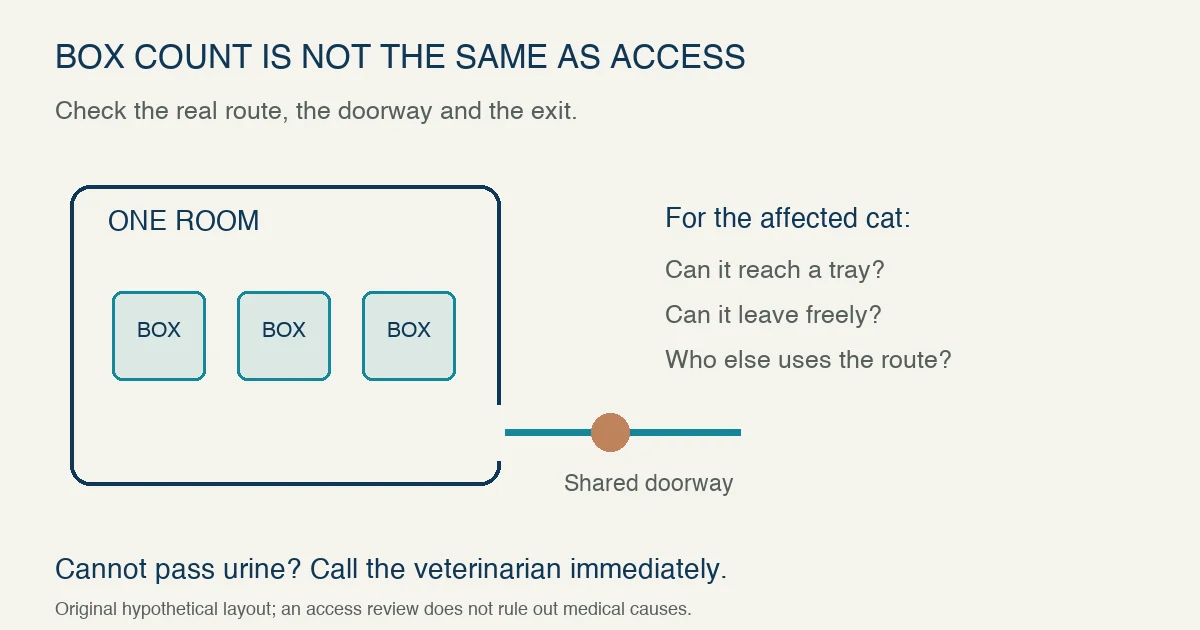
Cat Peeing Outside the Litter Box: Urgency, Observations and Access
Know when trouble passing urine needs an immediate call. Record the event, check actual litter-box routes, preserve usable options and clean affected materials.
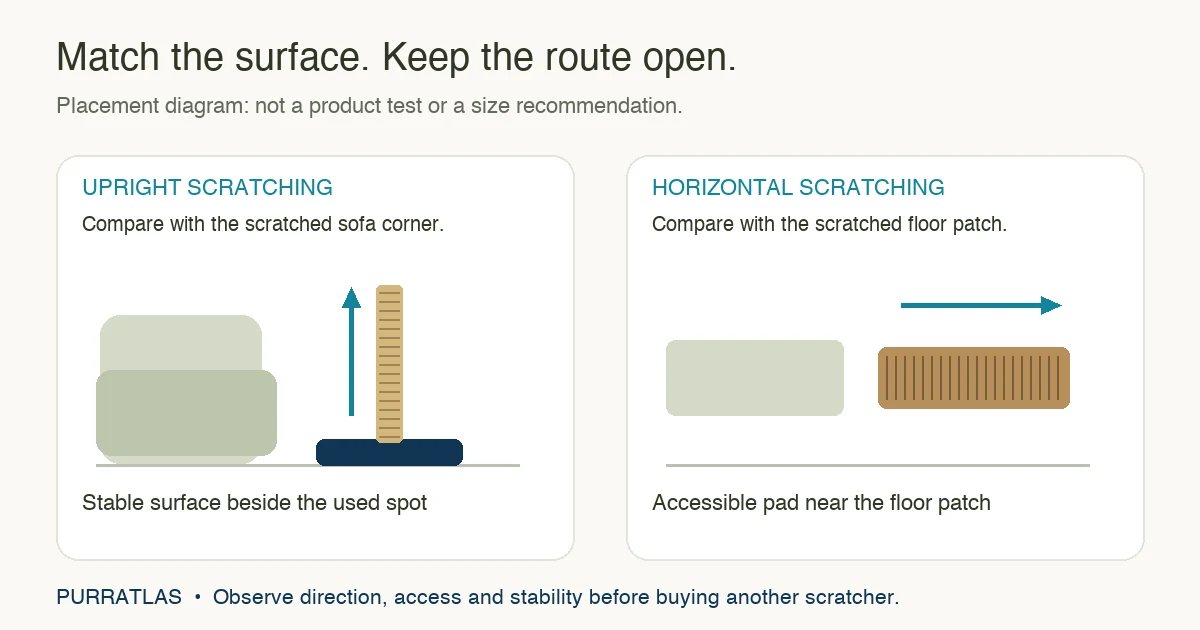
Cat Scratching Furniture: Fix the Scratcher Setup
Compare the scratched spot with your current scratcher. Check direction, stability and access, protect furniture without punishment, and keep useful observations.
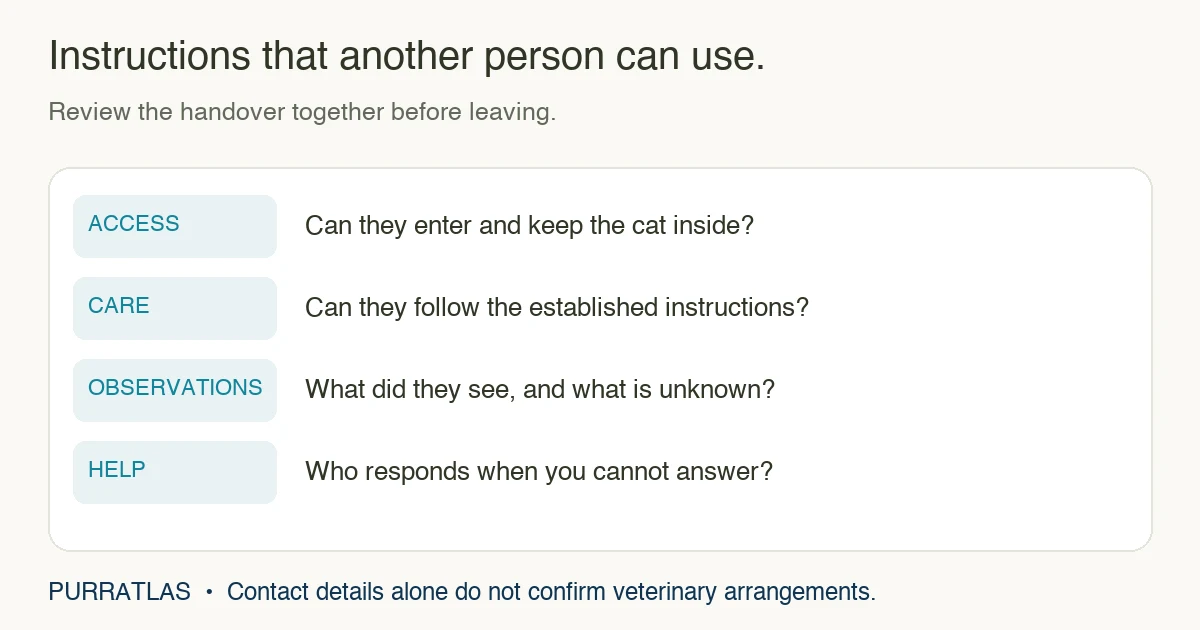
Cat Sitter Handover: Access, Care Instructions and Emergency Plans
Check that your sitter can enter, identify each cat, follow established care instructions and reach veterinary help when you are unavailable.
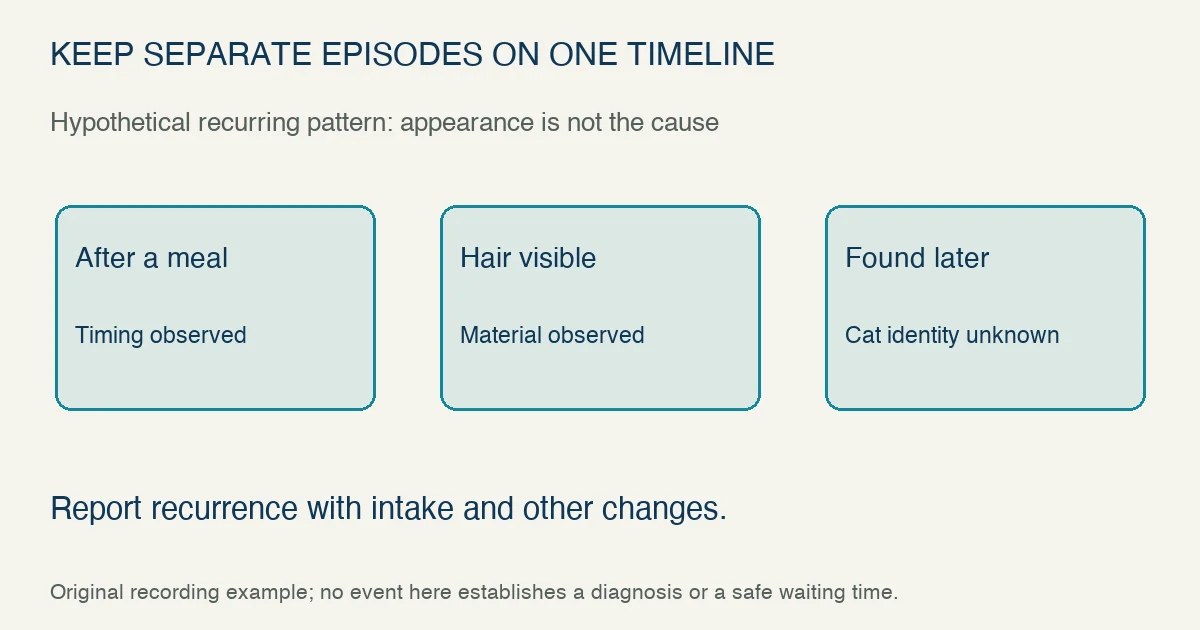
Cat Vomiting: Decide the Next Step and Record the Whole Pattern
Recognize reasons for prompt veterinary contact, record episodes and possible exposure, and avoid diagnosing vomiting by color or following a generic fasting recipe.
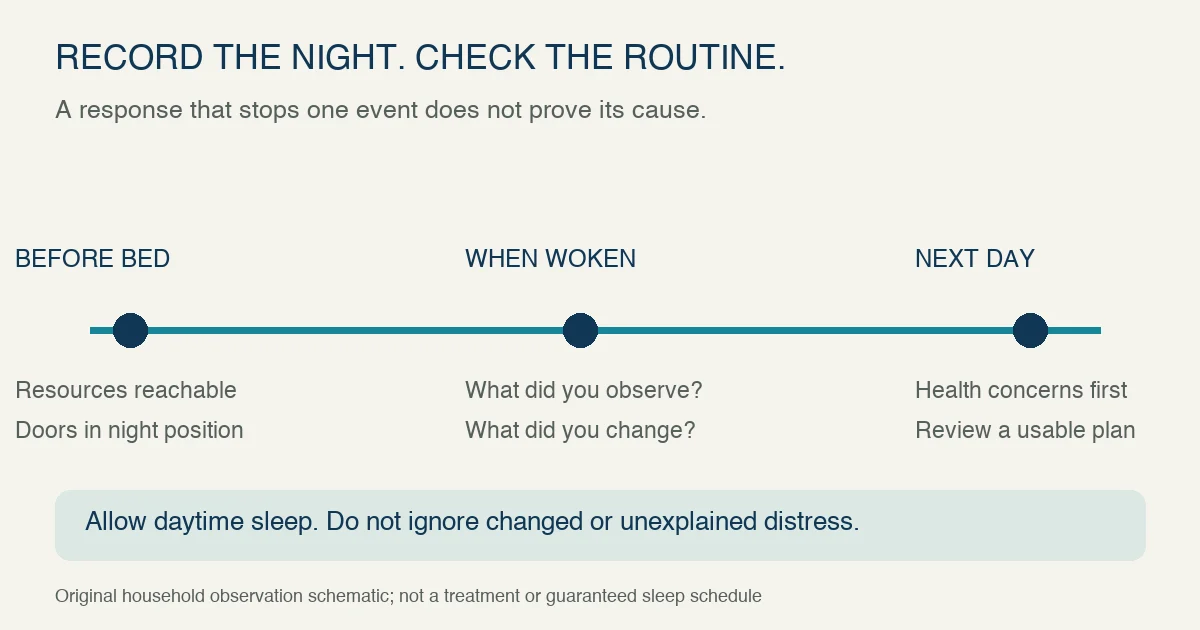
Cat Waking You at Night: Check Needs and Build a Workable Routine
Record night waking without guessing the cause. Check health concerns and overnight access, then review feeding, play, sleep and household responses.
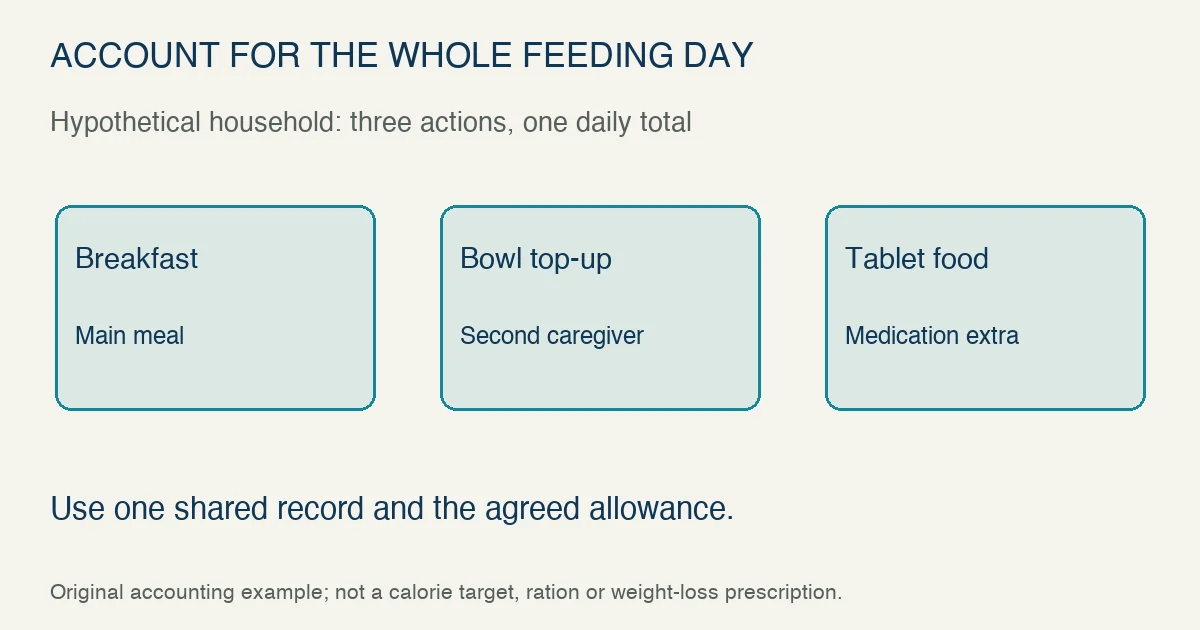
Cat Weight Management: Make the Veterinary Plan Work at Home
Track all food sources, measure the agreed daily allowance and coordinate feeding and rechecks. Use an individual veterinary plan rather than drastic restriction.
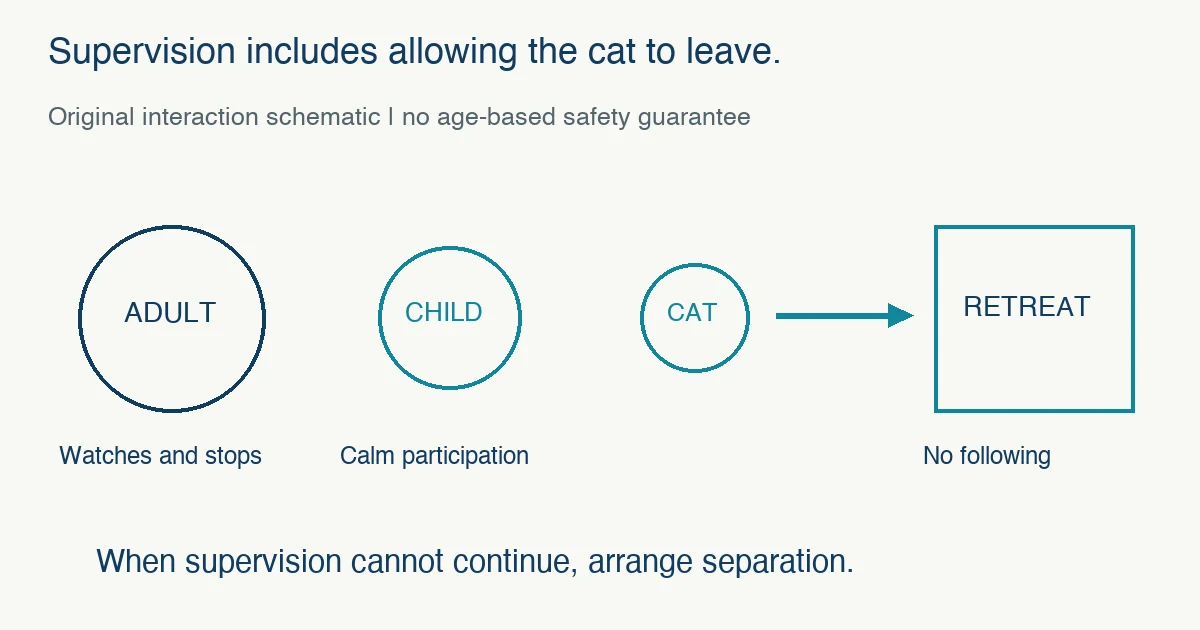
Cats and Children: Supervision, Retreats and Gentle Interaction
Plan adult supervision, a protected cat retreat and appropriate child participation. Know when to stop contact and keep hygiene and injury response under adult control.
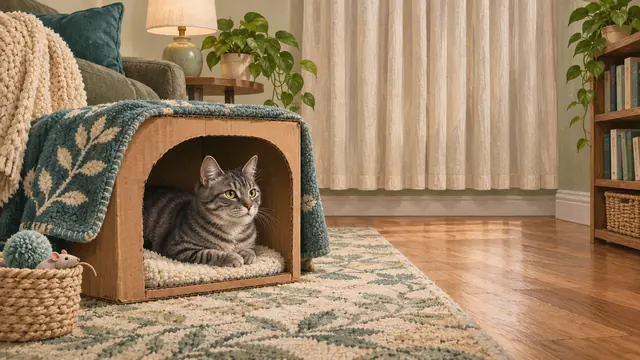
Cats and Fireworks: Help Tonight and Prepare for Next Time
Keep your cat indoors, protect familiar retreats and resource routes, and know when to get veterinary help. Plan ahead for the next noisy event.
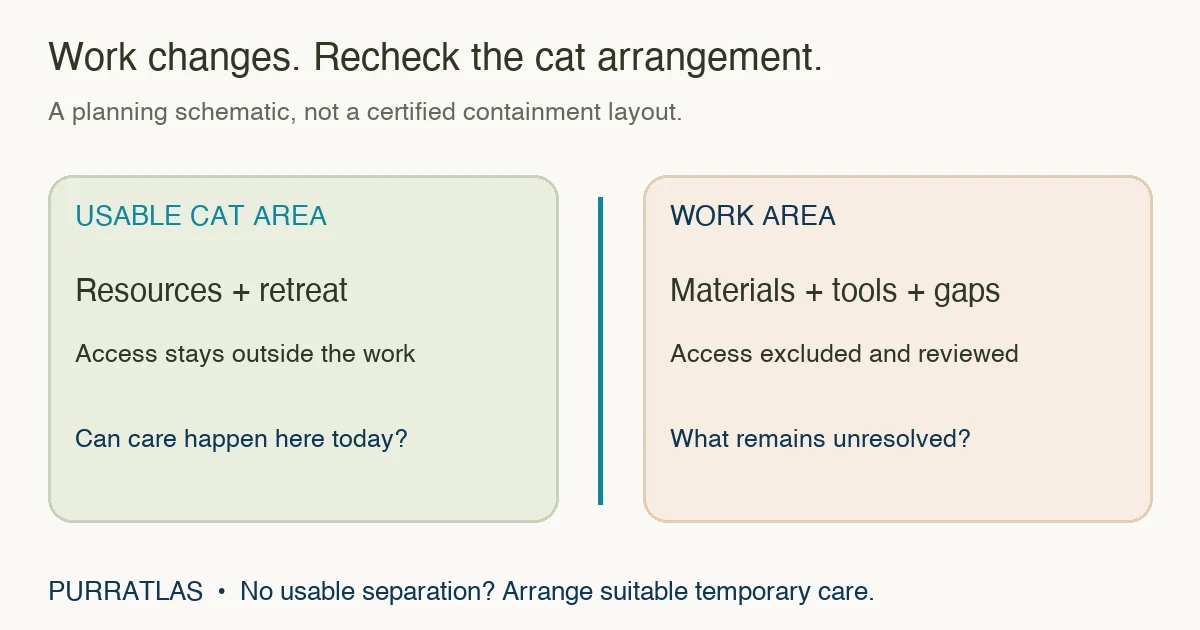
Cats During Home Renovation: Work Zones, Materials and Care
Decide where your cat can stay, coordinate contractor access and changing work areas, and keep material-specific questions and exposure contacts clear.
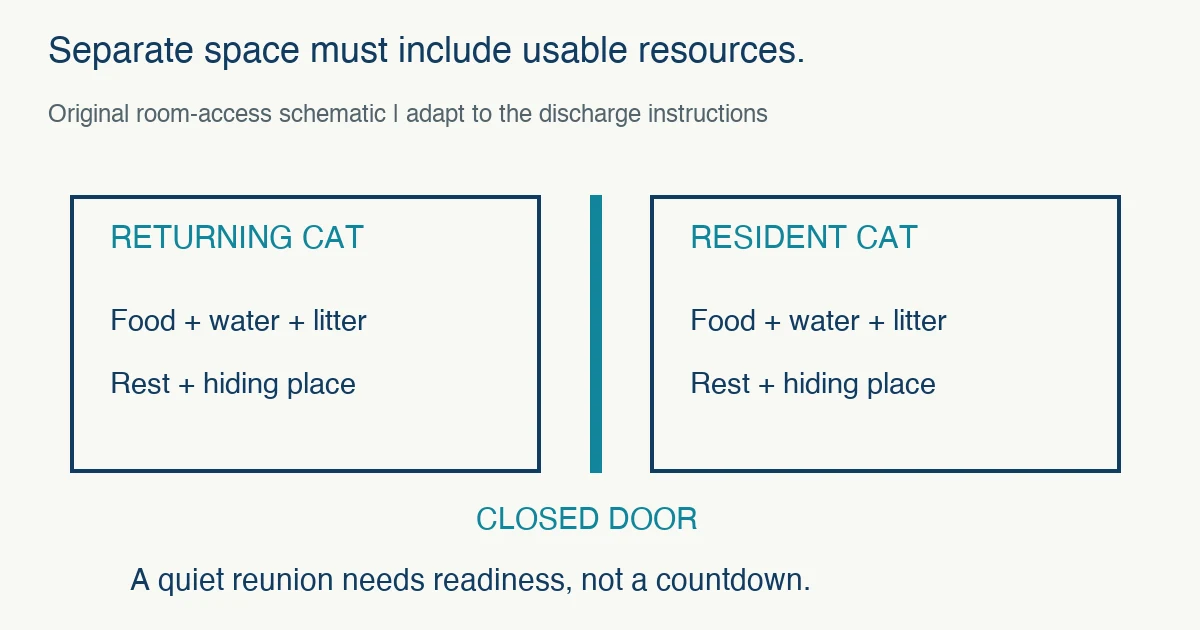
Cats Hissing After a Vet Visit: A Safer Return Home
Separate a tense reunion safely, provide usable resources for both cats, and reintroduce contact according to behaviour and the returning cat’s recovery instructions.
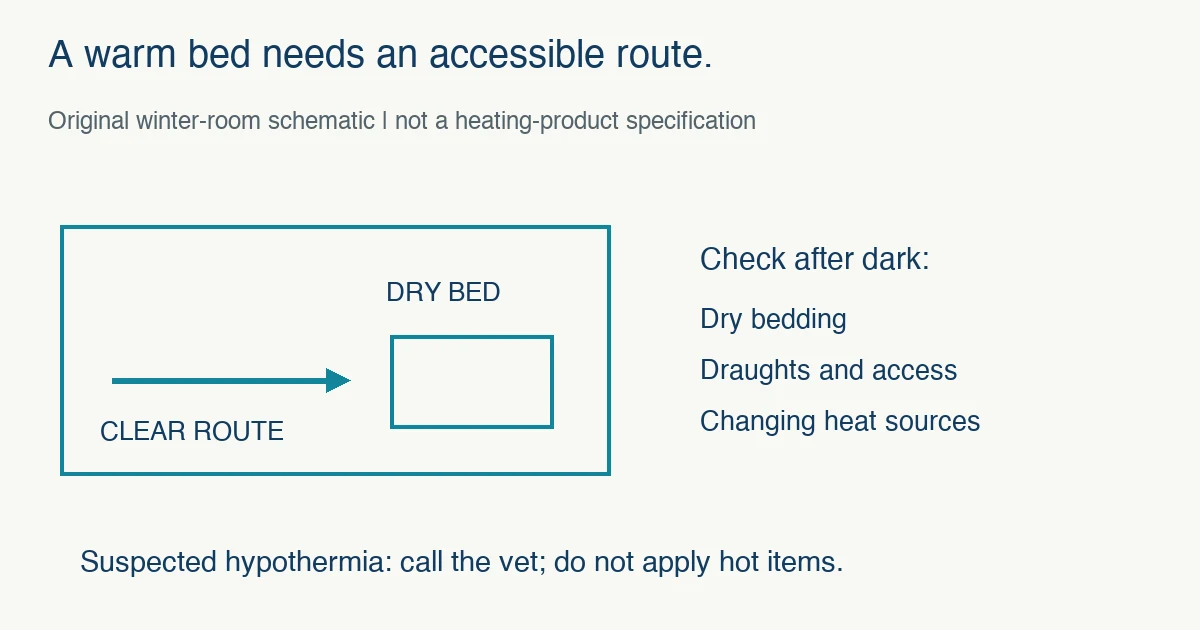
Cats in Cold Weather: Reachable Warmth and Winter Checks
Prepare dry, accessible indoor resting places, check return routes and heat sources, and distinguish routine winter care from urgent cold or chemical exposure.
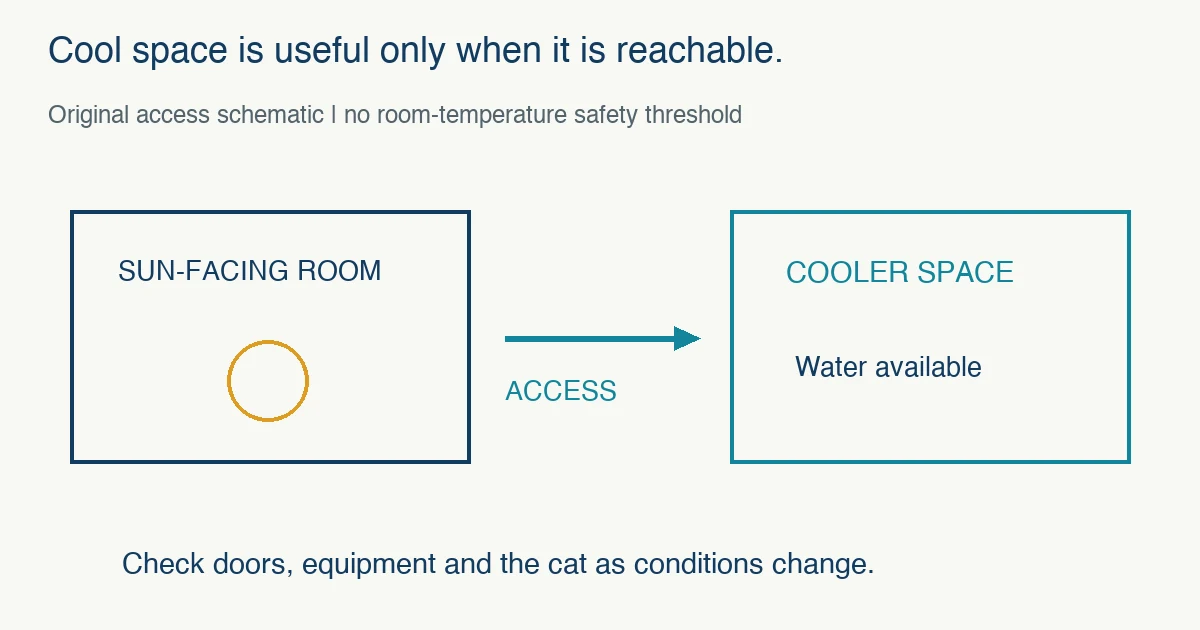
Cats in Hot Weather: Cooler Spaces and Daily Checks
Make cooler resting places and fresh water genuinely accessible, prevent hot-room entrapment, and plan ventilation, essential journeys and individual veterinary advice.
A little guidance before your next step
Explore care toolsA cat is arriving
Prepare the first night. For a kitten, add age-appropriate preparation. Resident cats need a separate introduction plan; a ready room does not mean they are ready to meet.
A daily routine is unclear
Start with food labels and intake records or litter access and cleaning. If you cannot tell who ate, use meal separation. Each guide ends with a specific next action.
The home needs a review
Map indoor choices and each cat's resource access. Adapt play to observed responses. New movement difficulties need a veterinary conversation alongside accessible home changes.