
Practical cat care guides

Start with the question that matters to you and your cat.

79 results
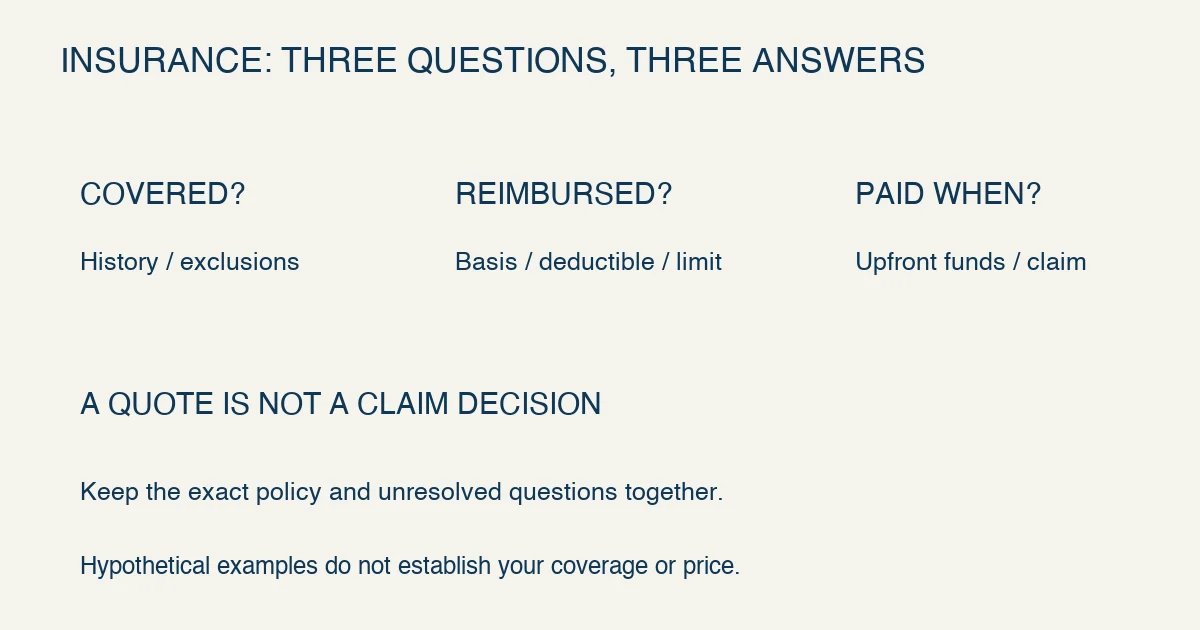
Original insurance comparison note separates eligible expenses, reimbursement calculation and funds available at the veterinary visit; a percentage alone cannot answer all three.
Indoor life

Choosing Cat Insurance: Read Coverage, History and Payment Terms

Compare cat insurance using exclusions, medical history, reimbursement rules and the money needed at treatment—not a premium or percentage alone.
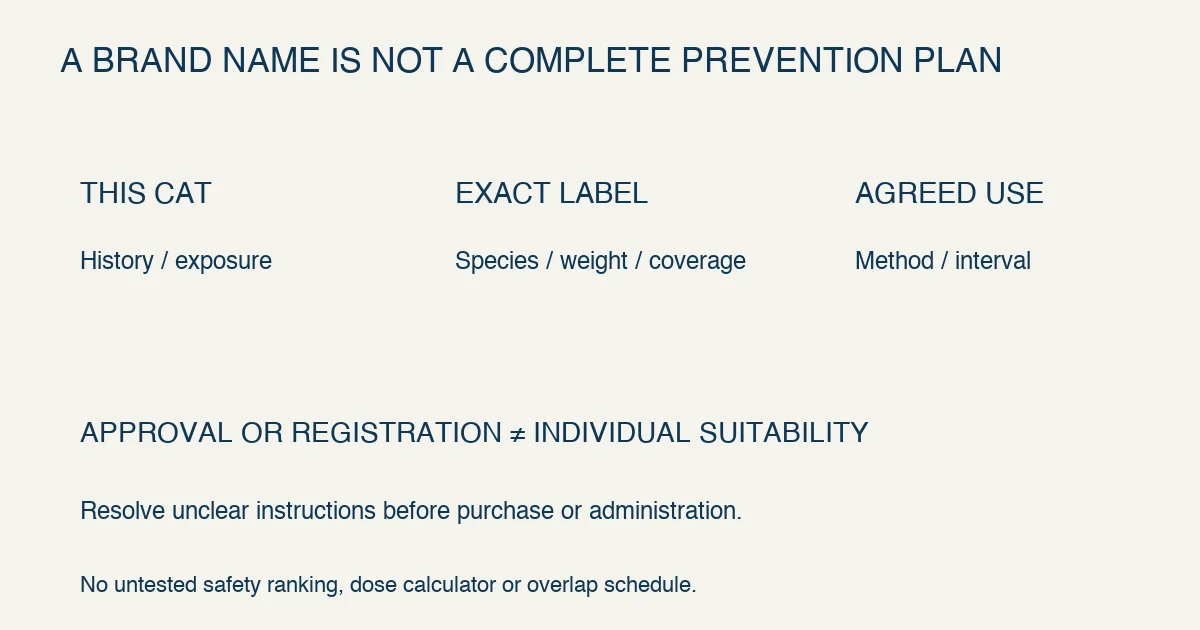
Original product-selection note progresses from the cat’s actual needs to an exact product label and an agreed administration plan; a brand family name alone is insufficient.
Indoor life

Choosing Cat Parasite Prevention: Read the Exact Label With Your Vet

Compare actual cat-product versions, parasite coverage, warnings and administration needs without assuming brands or agency identifiers prove individual suitability.
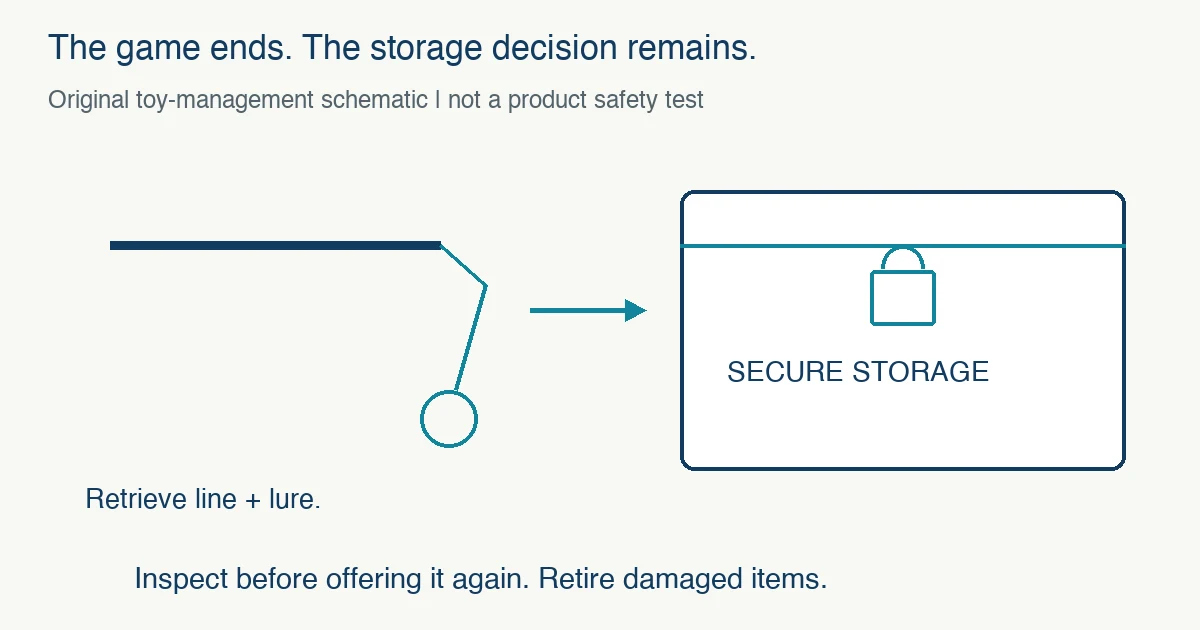
Original toy-management schematic shows retrieving a wand line and lure into secure storage, inspecting before reuse and withdrawing damaged items.
Behavior

Choosing Cat Toys: Parts, Supervision and Safe Storage

Inspect the whole toy and its attachments, match it to attended or independent play, and make a clear decision about storage, damage and possible ingestion.
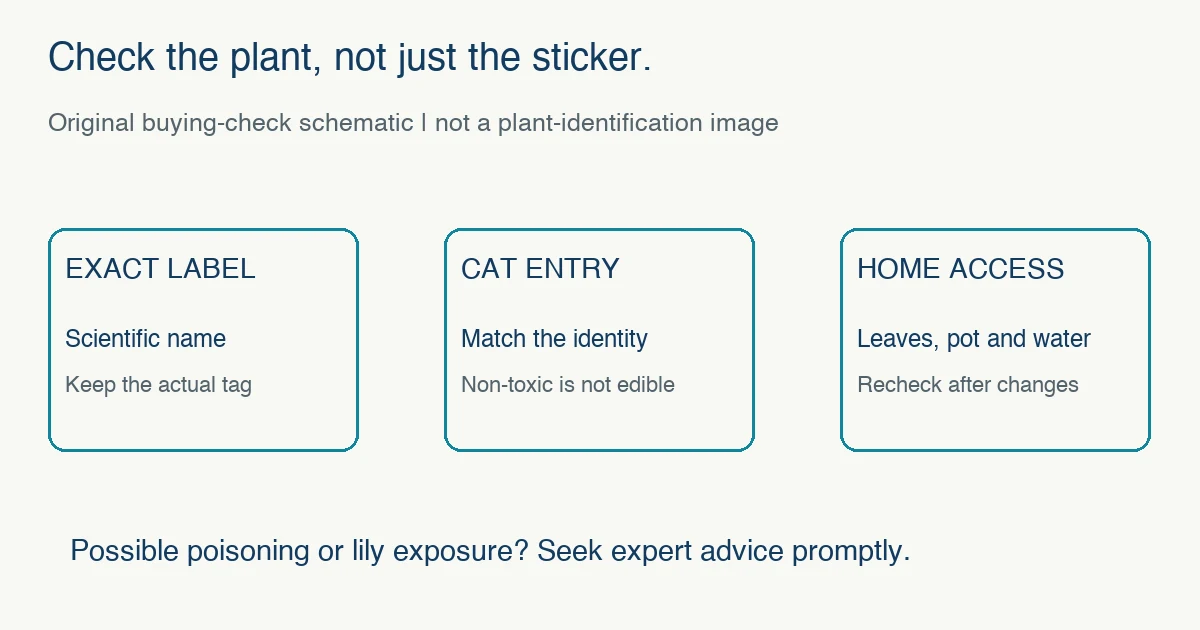
Original plant-buying schematic: match the scientific label to a cat-specific database entry, then assess access; non-toxic is not edible and possible poisoning needs prompt expert advice.
Indoor life

Choosing Houseplants for a Home With Cats

Verify the scientific name, understand the limits of non-toxic plant lists, check incoming bouquets and know when possible exposure needs immediate expert advice.
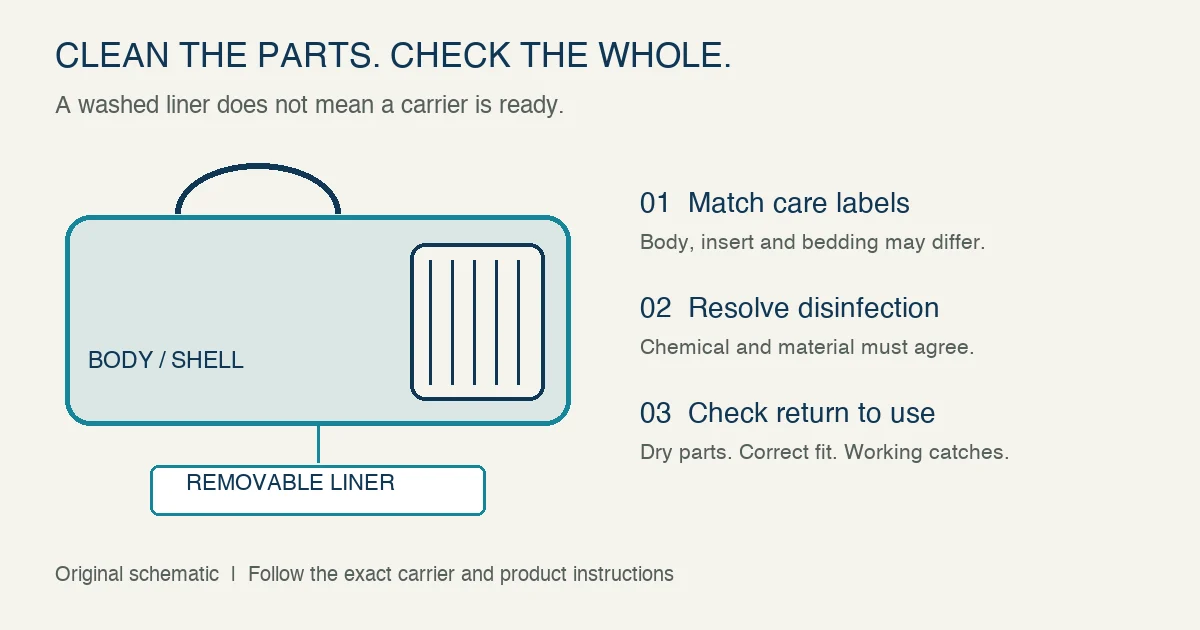
Original exploded carrier schematic separates the body and removable liner, then identifies care labels, compatible disinfection and complete drying with correct reassembly as separate checks.
Indoor life

Cleaning a Cat Carrier: Parts, Products and Safe Reassembly

Check the care instructions for each part, separate routine cleaning from disinfection, and inspect drying and fastenings before your cat travels.
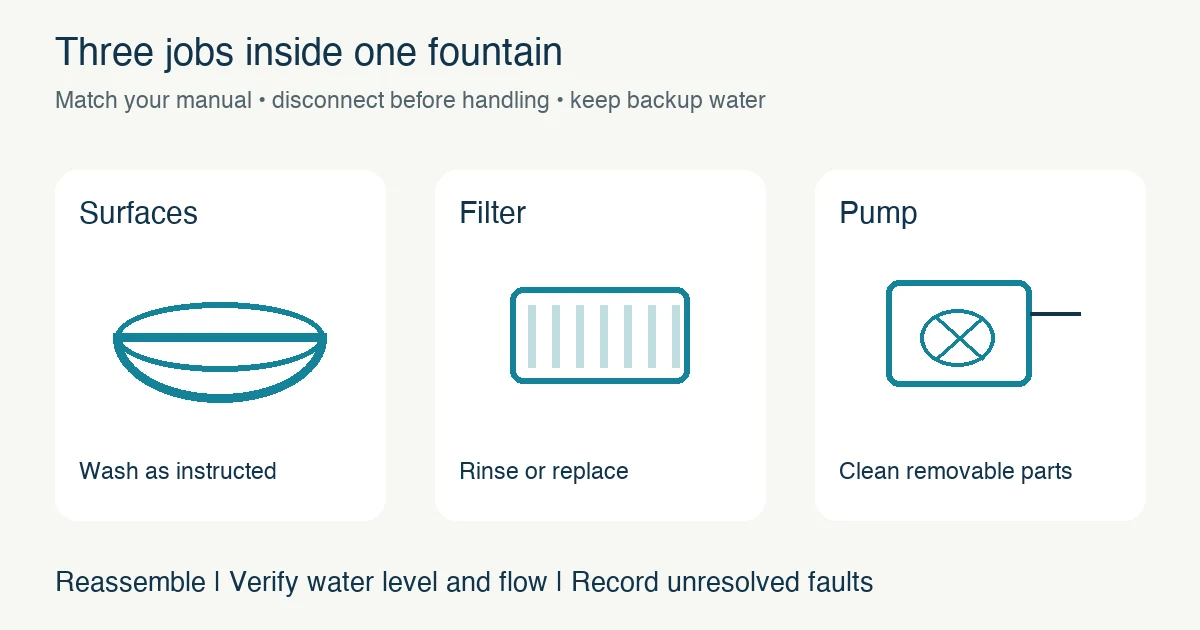
Maintenance planning separates fountain surfaces, the filter and removable pump parts, followed by restart checks; schematic, not a model-specific disassembly guide.
Indoor life

Cleaning a Cat Water Fountain: Pump, Filter and Restart

Match the manual to your fountain, separate surface cleaning from filter and pump care, and verify restart without leaving your cat without water.
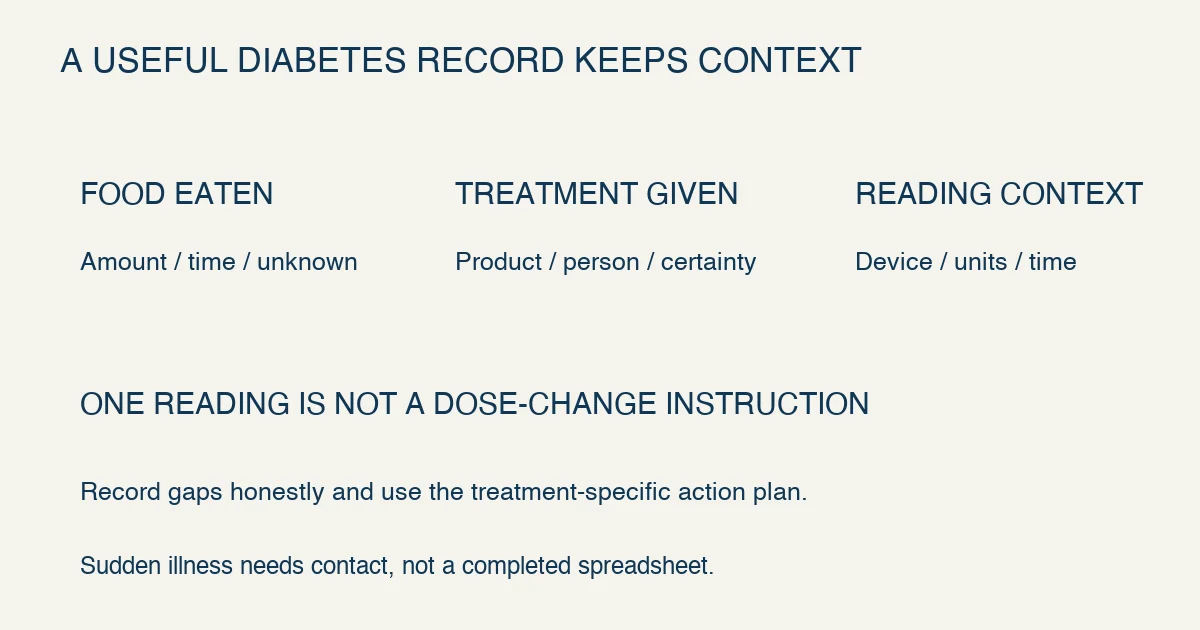
Original home-record note separates food actually eaten, treatment completed or uncertain, and measurements with units and timing; truthful gaps help the veterinary team more than invented complete entries.
Indoor life

Diabetic Cat Home Record: Food, Treatment and Meaningful Observations

Keep a usable diabetes record with actual food intake, completed or uncertain medication, labeled readings and a clear route for new problems.
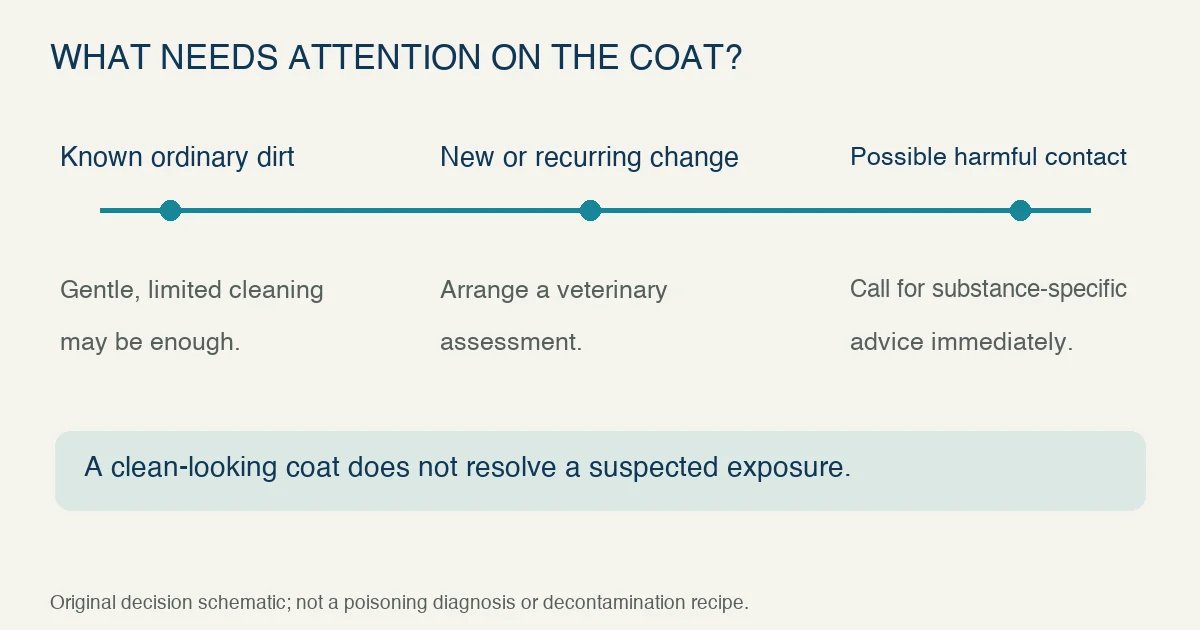
Original coat-care decision diagram distinguishes known ordinary dirt, a new or recurring grooming change and possible harmful contact requiring immediate substance-specific veterinary advice.
Indoor life

Does Your Cat Need a Bath? Dirt, Coat Changes and Exposure

Most cats need no routine bath. Assess ordinary dirt, recurring grooming changes and possible harmful exposure before choosing a cleaning method.
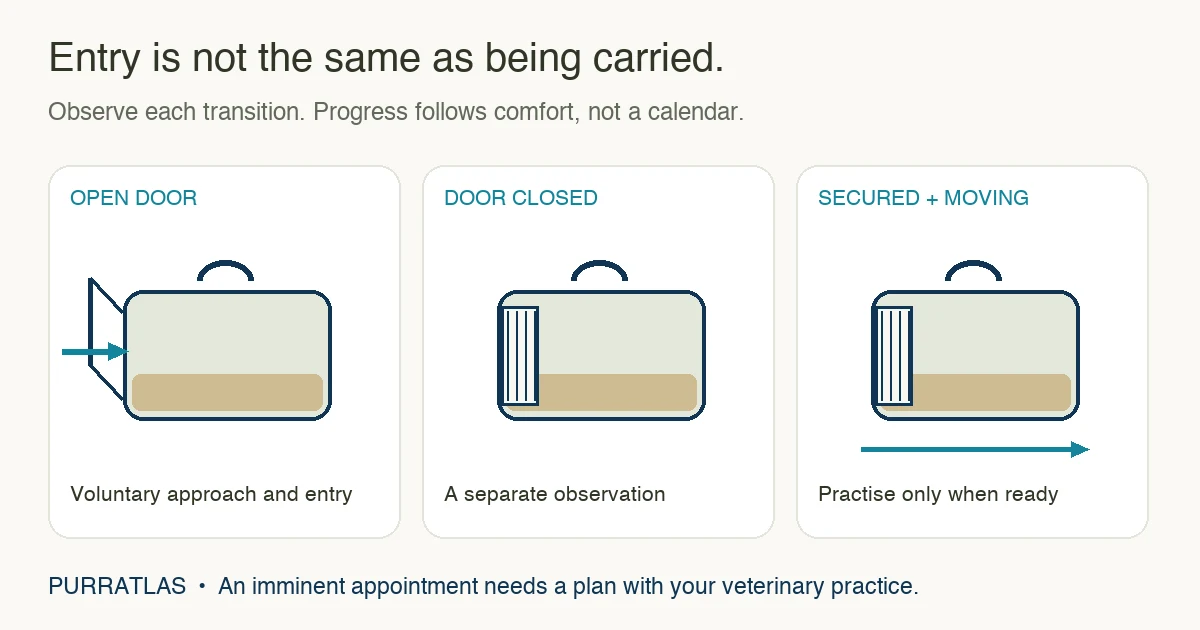
Diagram distinguishing open-door carrier entry, a closed door, and movement of a secured carrier
Behavior

Getting Your Cat Into a Carrier: Entry, Door and Movement

Separate advance carrier practice from an appointment that needs help now. Observe entry, door closure and movement, and plan safe veterinary support.
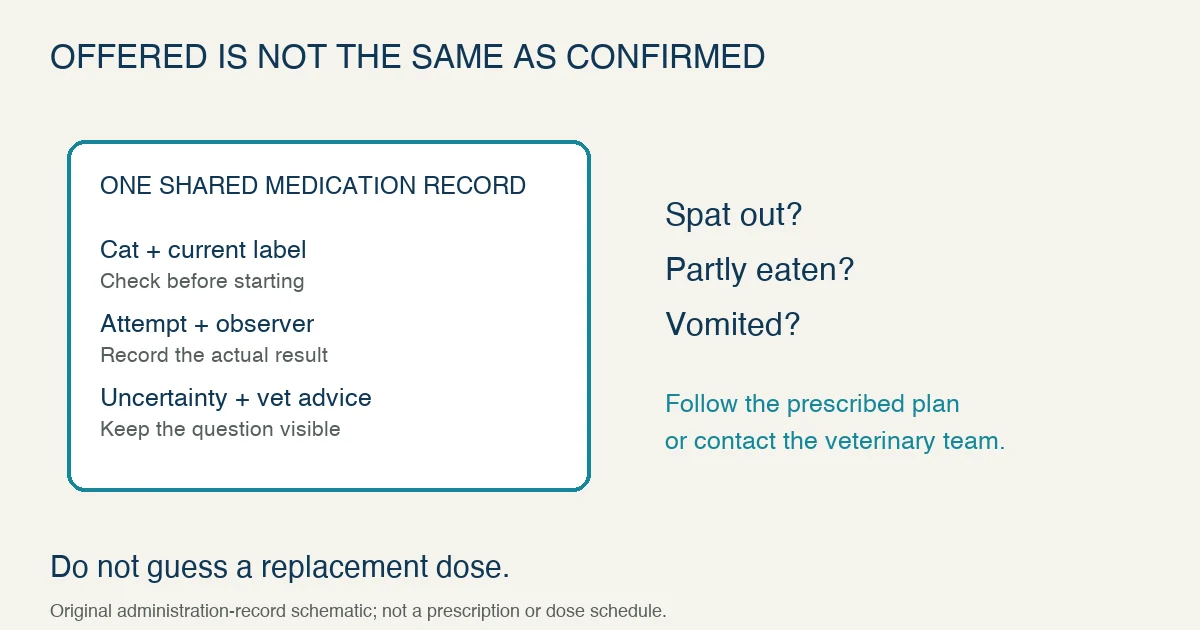
Original medication-record schematic separates the current cat prescription, observed administration and unresolved events; a spat-out, partly eaten or vomited tablet needs specific veterinary advice rather than a guessed replacement dose.
Indoor life

Giving a Cat a Tablet: Approved Methods and Uncertain Doses

Check the exact prescription, food and crushing permissions, get a handling demonstration and record actual administration without guessing a replacement dose.
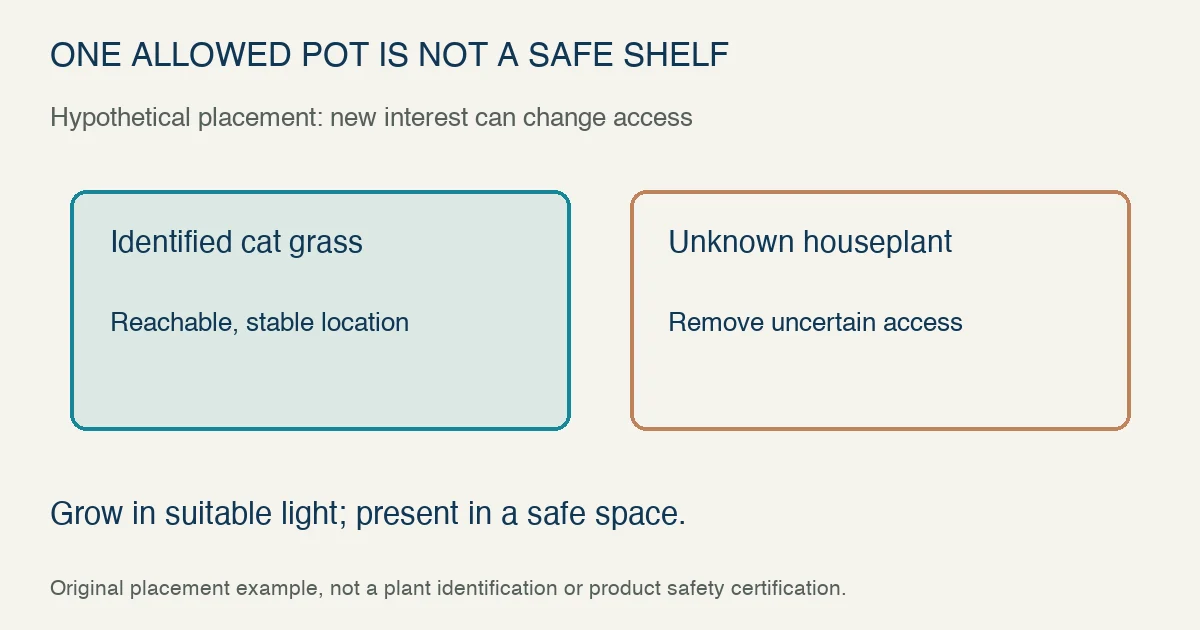
Original hypothetical shelf access example: identified cat grass needs a reachable stable location, while an unknown houseplant needs its access removed; growing light and safe presentation can be arranged separately.
Indoor life

Growing Cat Grass: Identify the Materials and Plan a Safe Nibbling Space

Choose identified cat-grass materials, grow and inspect a manageable pot, and separate optional nibbling from toxic houseplants and unsupported health claims.
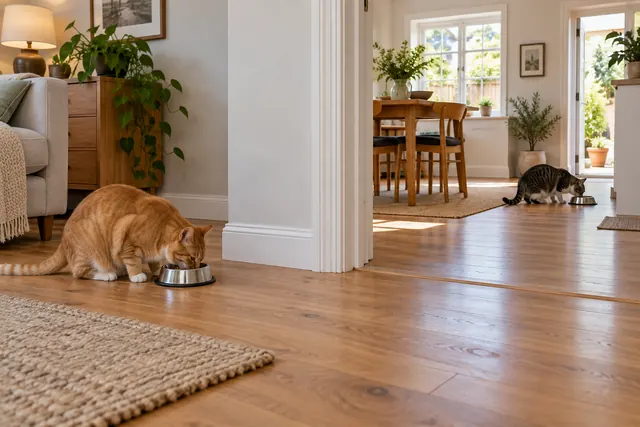
Illustration of two cats eating in separate rooms
Food & feeding

How to Feed Cats Separately: Methods and Intake

Compare rooms, supervision and controlled feeders. Prevent food sharing, record individual intake and prepare a workable caregiver fallback.

A little guidance before your next step

Explore care tools

A cat is arriving

Prepare the first night. For a kitten, add age-appropriate preparation. Resident cats need a separate introduction plan; a ready room does not mean they are ready to meet.

A daily routine is unclear

Start with food labels and intake records or litter access and cleaning. If you cannot tell who ate, use meal separation. Each guide ends with a specific next action.

The home needs a review

Map indoor choices and each cat's resource access. Adapt play to observed responses. New movement difficulties need a veterinary conversation alongside accessible home changes.

Breeds

BengalBritish ShorthairMaine CoonPersianRagdollSiamese

Behavior

Brushing Your Cat’s Teeth: Getting Started Without Forcing ItCat Bites When Petted: When to Stop and What to ChangeCat Harness Training: Suitability, Indoor Practice and When to StopCat Hiding: Check Changes, Protect Retreats and Know When to CallCat Peeing Outside the Litter Box: Urgency, Observations and AccessCat Scratching Furniture: Fix the Scratcher SetupCat Waking You at Night: Check Needs and Build a Workable Routine

Nutrition

Cat Constipation: Check Urine Output and Build a Vet-Led PlanCat Diarrhea: Get Help, Record Changes and Prepare for the VetCat Drinking Water: Check Changes, Food Moisture and Real AccessCat Feeding Guide: Labels, Portions and IntakeCat Food Storage: Dry Bags, Opened Wet Food and Useful RecordsCat Not Eating: Contact the Vet and Keep Actual Intake in ViewCat Vomiting: Decide the Next Step and Record the Whole Pattern

Indoor life

Bringing a Cat Home: First Night and Settling InCar Travel with a Cat: Carrier, Stops and Safe ArrivalCaring for a Blind Cat: Familiar Routes and Safer Daily CareCaring for a Deaf Cat: Communication, Waking and Door SafetyCat and New Baby: Prepare Resources, Care and Safe SeparationCat Door and Window Safety: Screens, Gaps and AccessCat Ear Care: Know When to Stop Cleaning and Call the Vet

Useful tools

Litter box plannerFood calorie converterHome resource checklistMeal portion plannerEveryday care checklistWeight record